
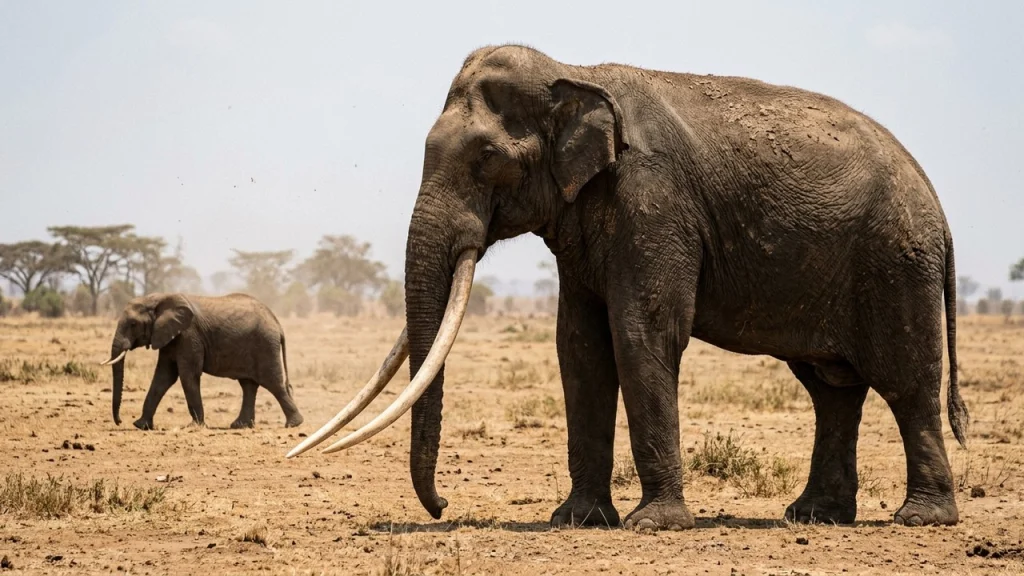
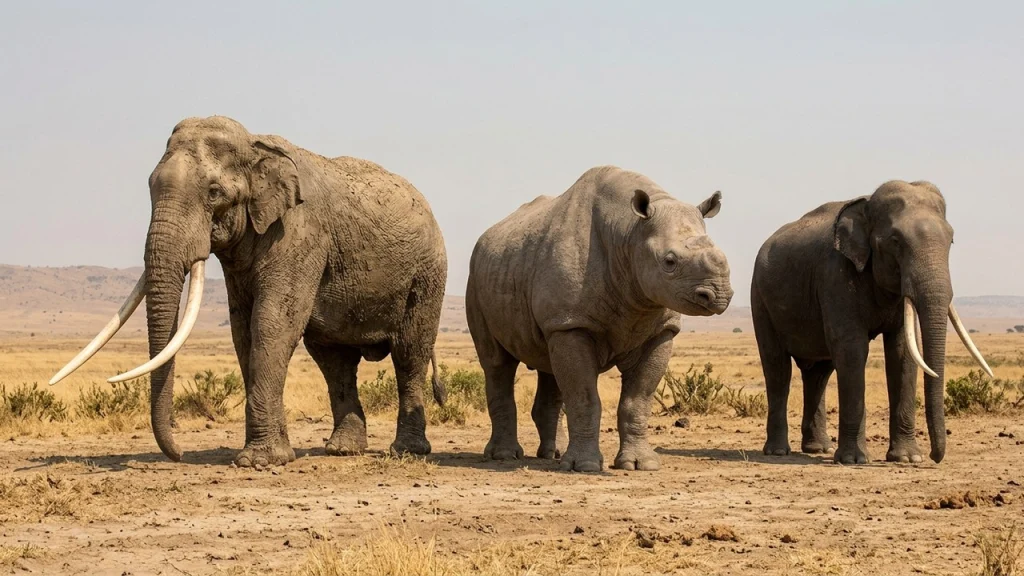
The best supported answer points to a group of proboscideans rather than one named animal. A study in Acta Palaeontologica Polonica reports that a few of the largest proboscideans, among them Mammut borsoni and Palaeoloxodon namadicus, reached and passed the body size of the largest indricotheres. The same study adds that the largest land mammal ever to exist seems to fall inside the order Proboscidea, which runs against earlier understanding.
The older view went the other way: belief once placed the record with the huge indricothere hornless rhinoceros, as the study in Acta Palaeontologica Polonica notes. None of the journal, wildlife agency or research sources behind this article names a single elephant specimen as the largest that ever lived.
How the study measured extinct elephants
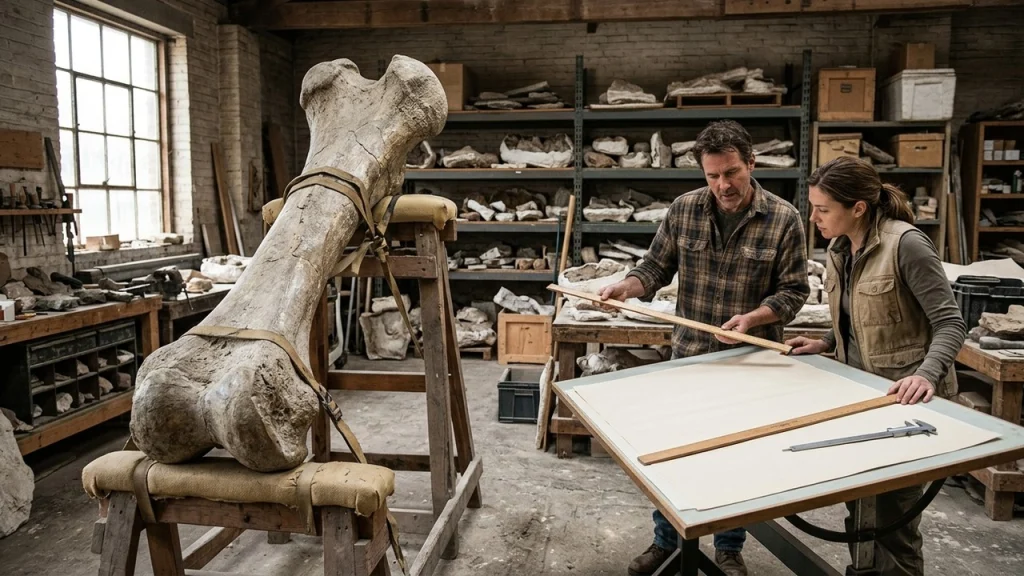
Body mass for a long list of extinct proboscideans came from the Graphic Double Integration volumetric method, which works from technical restorations of graphical reconstructions of the fossils. When the method was tested on living elephants, it recovered their masses with high accuracy.
The authors were also careful about its limits. They say their formulae do not give accurate results, because extinct animals often carried different body proportions and some lay outside the size range of extant samples.
Straight-tusked elephants and their size estimates
A separate study in Scientific Reports looked at straight-tusked elephants. Its maximum shoulder height estimates run from 300 to 420 cm, and its body mass figures from 4.5 to 5.5 tonnes for a female to 13 tonnes for a male. In the same work, females generally stayed at or below 300 cm at the shoulders and weighed not more than 5.5 tonnes, while males kept growing into their fifties.
The authors report that a male Palaeoloxodon antiquus reached up to three times the mass of a male Asian elephant and twice the mass of a living male African bush elephant. Recent genetic analyses in the same journal place Palaeoloxodon antiquus as a close relative of the smaller African forest elephant Loxodonta cyclotis. That work treats the species as a browser of forest habitats common in interglacial periods, while grazer mammoths typified glacial steppes.
The record for living elephants
The San Diego Zoo Wildlife Alliance lists the largest elephant on record as an adult male African savanna elephant, estimated at about 24,000 pounds (10,886 kilograms) and measured at 13 feet (3.96 meters) tall at the shoulder. The same zoo organization calls African elephants the largest mammals on land.
A living elephant eats roughly 165 to 330 pounds (75 to 150 kilograms) of food a day, some 4 to 6 percent of its body weight.
Where these fossils come from
Indian finds of the genus, especially from central areas such as the Narmada Valley, are attributed mostly to P. namadicus. Nature India reports that the elephants it describes evolved in Africa about a million years ago and then spread across Eurasia.
Nature India also reports that no fewer than three straight-tusked elephants left fossils preserved beside 87 stone tools at Pampore in the Kashmir Valley. In a separate report, the skull belonged to Palaeoloxodon turkmenicus, previously known only from Turkmenistan. Megaherbivores of the period lived near a river that once drained an ancient lake in the Kashmir Valley.
Two giant femora from India
The study in Acta Palaeontologica Polonica notes that Prinsep described two giant femora from Sagauni at Narsinghpur district in India. On the assumption that the recovered portion was only 20% larger, a complete femur could have reached up to 1,900 mm in length.
Those fossils are likely kept in the Indian Museum of Kolkata, and the study adds that its size estimate will remain speculative until the collection is revised.
Sources
- Acta Palaeontologica Polonica (BioOne): Shoulder height, body mass and shape of proboscideans
- Acta Palaeontologica Polonica: Shoulder height, body mass and shape of proboscideans (article page and abstract)
- Acta Palaeontologica Polonica: Shoulder height, body mass and shape of proboscideans (full text PDF, figures and tables)
- Scientific Reports: First tracks of newborn straight-tusked elephants (Palaeoloxodon antiquus)
- Nature India: Elephant fossils and stone tools reveal India’s first butchery site
- San Diego Zoo Wildlife Alliance: Elephant | San Diego Zoo Animals & Plants