
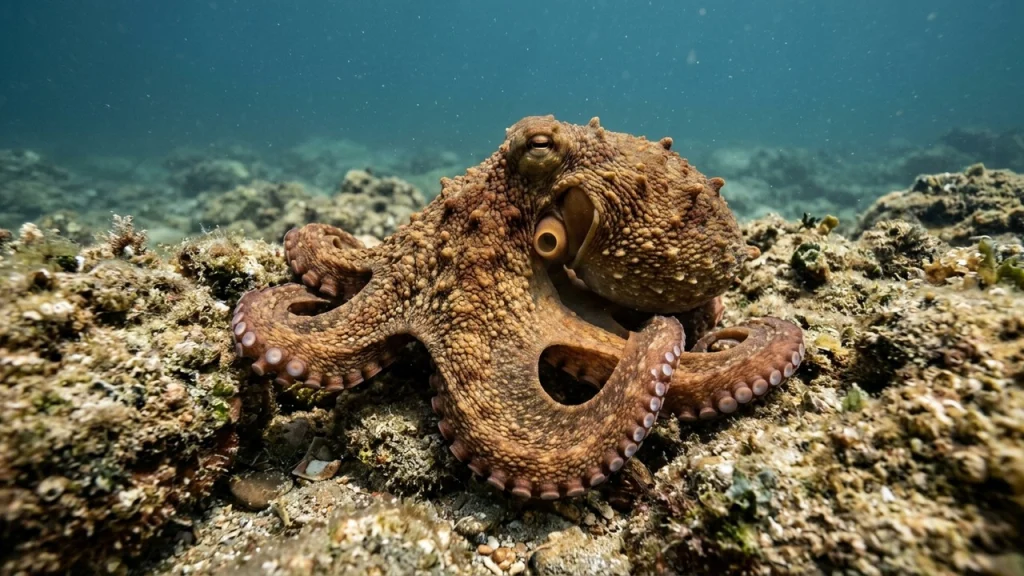
Octopuses possess three hearts because two branchial hearts pump blood through the gills to oxygenate it, while one systemic heart pumps oxygenated blood to the rest of the body.
A study published by The Company of Biologists notes that three distinct cardiac organs exist in octopuses, squids, and cuttlefishes, divided into two branchial pumps and a solitary systemic organ. The branchial structures assist in enriching fluid with oxygen inside the gills before directing it into the systemic heart, which distributes the supply across the entire body. BioMed Central indicates that this cephalopod circulatory system relies on three hearts pushing haemolymph containing the blue carrier protein haemocyanin through closed vessels at elevated invertebrate pressures, measuring 5.3 to 9.3 kPa in Enteroctopus dofleini.
Branchial anatomy and gill circulation
An investigation in MDPI describes how each branchial organ rests near the foundation of a gill, gathering oxygen-depleted blood as it returns from body tissues. The publication notes that from these positions, fluid moves directly into the gills to receive fresh oxygen. In addition to propelling fluid, MDPI reports that branchial hearts fulfill an excretory role. In terms of spatial orientation, The Company of Biologists observes that the branchial heart sits in a more ventral position than the systemic organ.
Research in Frontiers Media details how primary excretory organs in Octopus vulgaris link directly into this vascular route. Venous fluid returning from the body passes the vena cava into lateral channels, flowing toward renal appendages where urine enters the renal sac. The fluid then courses past branchial heart appendages into the branchial heart itself, which propels it through 1st order afferent gill vessels before it exits through efferent 1st order vessels into the systemic heart to be pumped across the organism.
Embryonic heartbeat development
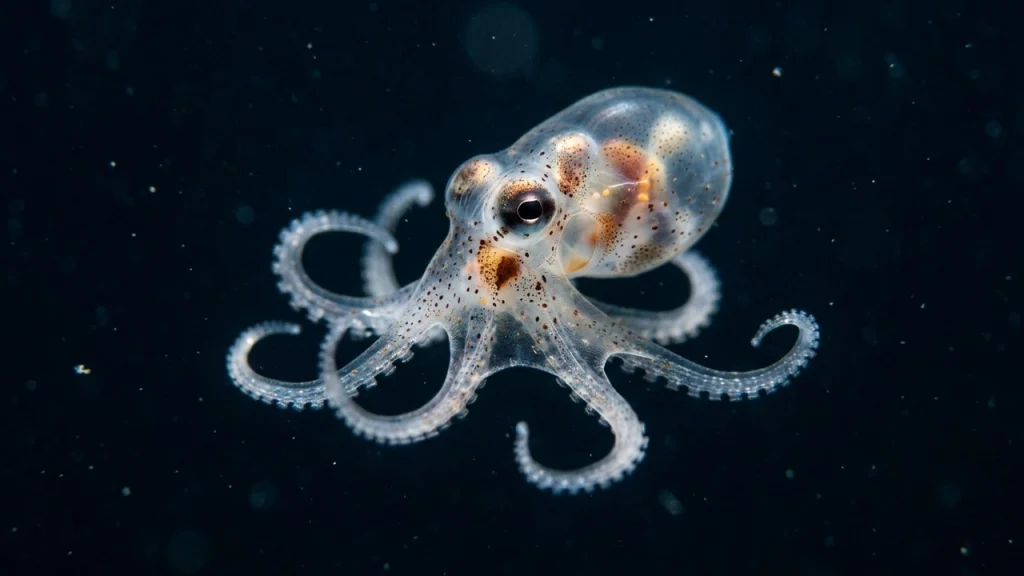
Embryonic examinations of Octopus insularis detected regular pulsations beginning at developmental stage XV in two lateral mantle zones positioned along the embryo’s posterior region. In Octopus insularis, branchial hearts begin beating around stage XV, but regular contractions of the systemic heart are not observed until stage XVIII. This developmental gap suggests that branchial chambers might provide the pacemaking rhythm for the systemic heart.
At stage XV, embryonic branchial hearts beat out of sync at approximately one beat every 2 s. By stage XVIII, they beat synchronously at one beat per s, while the systemic rate reaches one beat every 0.93 s with a standard deviation of 0.065. Recorded video shows an individual contraction and relaxation sequence of a branchial chamber followed by a subsequent contraction and relaxation motion of the central pump. In mature Octopus vulgaris, cardiac ganglions on branchial hearts are considered probable sites of pacemaker activity.
Evolutionary traits and cardiac rates
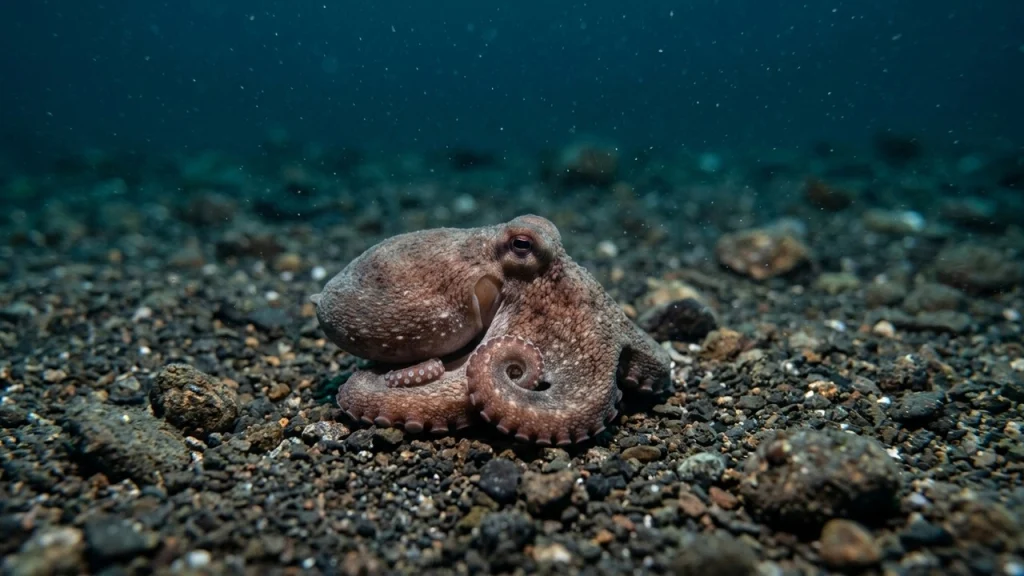
A paper in Wiley discusses how cephalopod circulatory anatomy supports convergent evolution, possessing two respiratory branchial pumps alongside a systemic organ analogous to a vertebrate left ventricle. Advanced cephalopods feature closed circulatory paths lined with endothelial tissue, a structure that probably evolved alongside vertebrate systems while other mollusks retained open vascular architecture. Wiley also points out that the systemic heart and two branchial pumps share neuroregulatory oversight.
According to BioMed Central, haemocyanin in Pareledone charcoti substantially buffers oxygen demand when temperatures rise and greatly lowers heart workload. In Enteroctopus dofleini, The Company of Biologists reports that the systemic heart can pause for up to 1 h without evident harm. The journal also notes that Nautilus heartbeats are much slower than octopus heartbeats, and both remain slower than those of squids.
Sources
- The Company of Biologists: Octopus insularis as a new marine model for evolutionary developmental biology
- BioMed Central: Positive selection in octopus haemocyanin indicates functional links to temperature adaptation
- BioMed Central: Blue blood on ice: modulated blood oxygen transport facilitates cold compensation and eurythermy in an Antarctic octopod
- Frontiers Media: Perfused Gills Reveal Fundamental Principles of pH Regulation and Ammonia Homeostasis in the Cephalopod Octopus vulgaris
- Wiley: Development and evolution of the metazoan heart
- MDPI: Cephalopods as Vectors of Harmful Algal Bloom Toxins in Marine Food Webs