
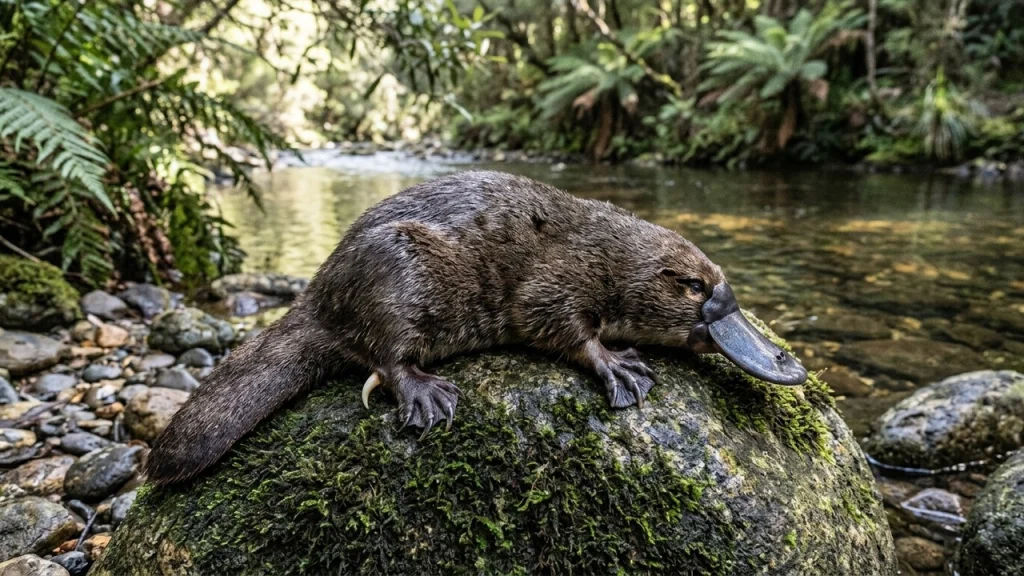
Platypuses are venomous rather than poisonous. The San Diego Zoo Wildlife Alliance reports that male platypuses carry spurs on their rear ankles, joined to a venom gland situated over their thighs. According to the Australian Museum, male platypuses feature a sharp, calcaneous spur estimated at roughly 12 millimetres in length on each ankle.
This venom system develops only in males. A study in Genome Biology notes that young females possess spurs as well, but these regress before reaching adulthood, leaving the functional venom apparatus exclusively to males. The wildlife alliance explains that adult male platypuses deploy these venomous spurs, an uncommon feature among mammals, to defend mates and territory from competing males.
Male defensive spurs and gland growth
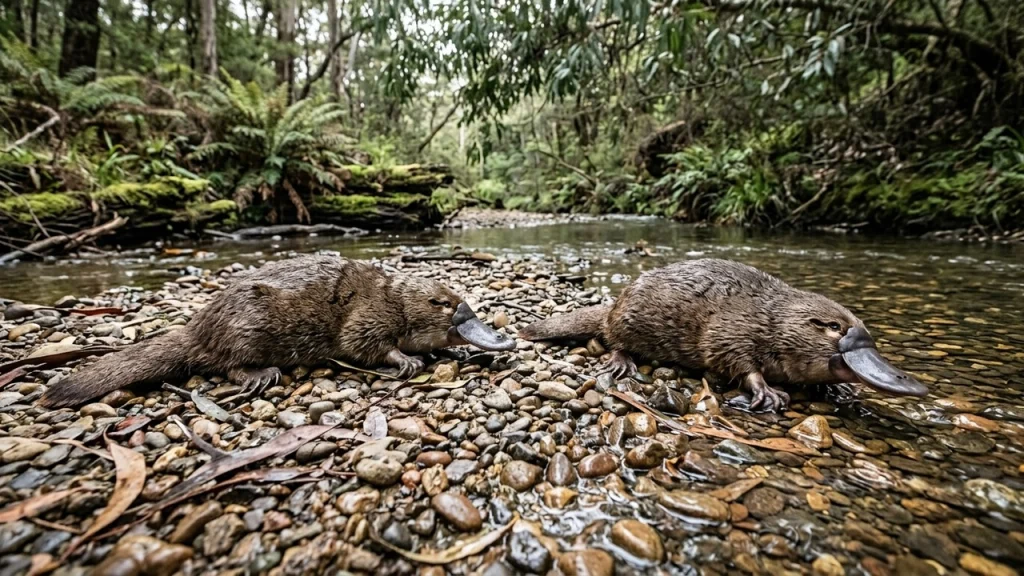
The physical structure of this apparatus is situated entirely in the hind limb. Animal Diversity Web records that males typically exceed females in body size and maintain two venom-producing glands connected directly to hind-leg spurs. A paper in Toxins explains that this anatomy is called the crural system, consisting of paired crural venom glands linked by venom ducts to an extratarsal spur located on each rear leg.
The same journal notes that these crural glands derive from modified apocrine sweat glands. As the animal develops, they shift from the inner area of each thigh into their ultimate position along the dorsocaudal surface of the pelvis. In adult males, a paper in Genome Biology reports that the venom glands enlarge during the spring breeding season, representing what the authors describe as the only known case of temporally differential venom production.
Effects of spurs and venom on humans and dogs
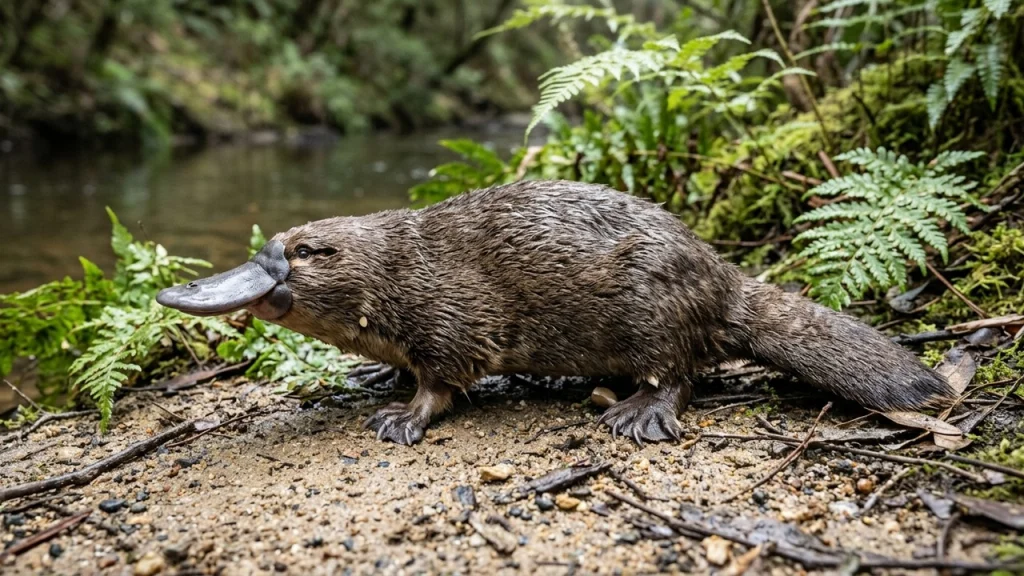
Interactions with humans typically happen when an animal is disturbed. Animal Diversity Web notes that platypuses can injure people with their venomous spurs when provoked. According to the San Diego Zoo Wildlife Alliance, a spur that punctures the skin can discharge sufficient venom to kill a dog of medium size.
For human victims, the consequences are painful rather than deadly. The zoo states that platypus venom does not cause death in humans, although it induces swelling and excruciating pain. In agreement, a paper in Toxins documents that there are no recorded human deaths resulting from platypus envenomation.
Symptoms of envenomation and medical limitations
Envenomation causes severe physical discomfort that spreads beyond the puncture site. A paper in Toxins explains that a strike generates swelling, cold sweats, nausea, lymph node enlargement, and an excruciating, long-lasting pain that standard analgesics like morphine cannot soothe. The Australian Museum observes that puffiness emerges quickly around the wound and steadily expands across the whole limb.
The museum notes that clinical accounts and anecdotal reports show the agony turns into hyperalgesia, an extended period of heightened pain sensitivity lasting for days or months. Blood analyses described in Genome Biology reveal low concentrations of serum albumin and total protein alongside high erythrocyte sedimentation rates. That same report indicates that localized pain and muscle wasting within the punctured limb continue for weeks after an envenomation event. Treatment options are also constrained, as the earlier paper notes that no antivenin exists for platypus envenomation.
Peptide structure and enzymes in platypus venom
Laboratory evaluations reveal a complex mixture of compounds within the fluid. A research paper in Genome Biology outlines that platypus venom contains 19 distinct peptide fractions alongside several non-protein constituents. The same authors point out that researchers have fully sequenced only three of these fractions: defensin-like peptides (OvDLPs), nerve growth factor (OvNGF), and C-type natriuretic peptides (OvCNPs).
Additional enzymes contribute to the biochemical makeup of the secretion. The study observes that scientists have identified hyaluronidase and a venom L-to-D-peptide isomerase in platypus venom. Furthermore, the secretion demonstrates protease activity.
Sources
- Animal Diversity Web: Ornithorhynchus anatinus (duck-billed platypus)
- San Diego Zoo Wildlife Alliance: Platypus | San Diego Zoo Animals & Plants
- Australian Museum: Platypus, Ornithorhynchus anatinus
- Toxins: Tracing Monotreme Venom Evolution in the Genomics Era
- Genome Biology: Novel venom gene discovery in the platypus