
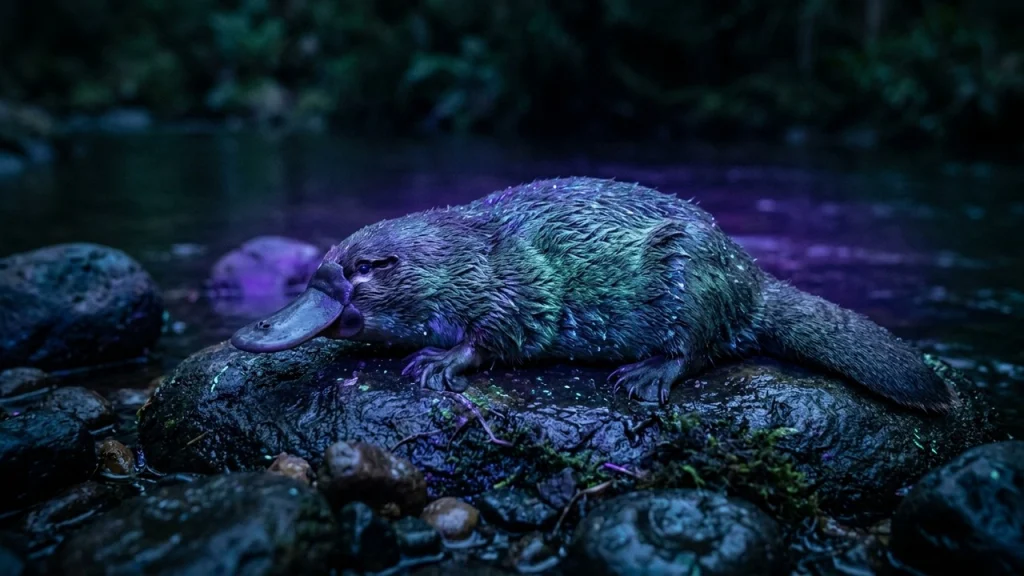
National Geographic describes the platypus as biofluorescent, with fur that takes on a blue green shine under ultraviolet light. A PLOS ONE study found the platypus gave off a dull shine set against the other species it looked at, in green and blue shades.
A report told of a platypus killed on an Australian road shining under a black light. Gilad Bino, a platypus specialist at the University of New South Wales in Sydney, said this case points to fluorescence in living animals, not only in animals long dead, as almost certain.
Daytime coat and close up pink traces
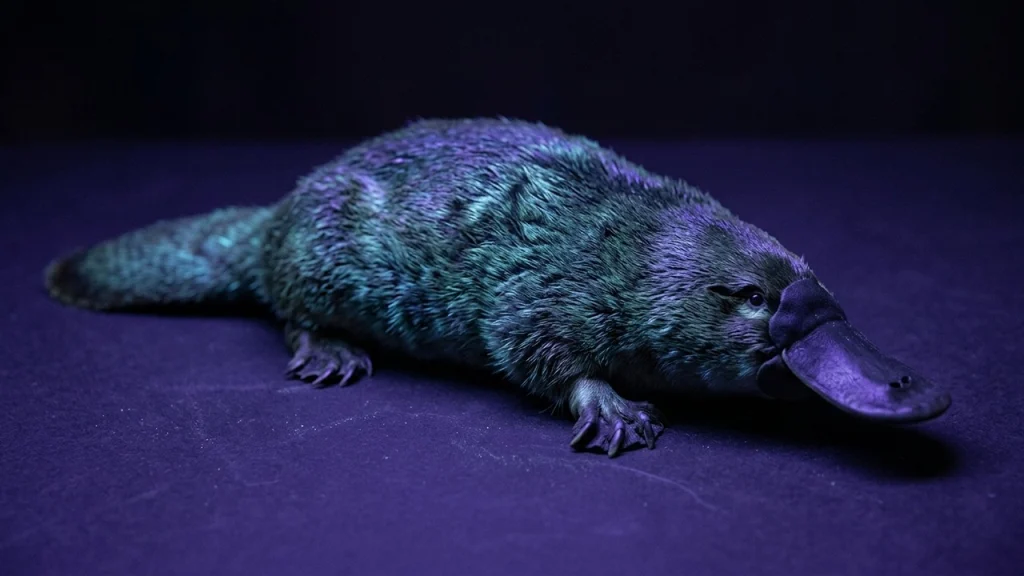
Animal Diversity Web describes upper fur in mid to deep brown tones and lower fur from brown toward silver gray. A PLOS ONE study notes pink shining in the platypus turned up only when clipped remnants were checked closely after pink light producing substances had been separated. Substances like melanin can dampen this shining in fur, the study adds.
Night activity and a camouflage proposal
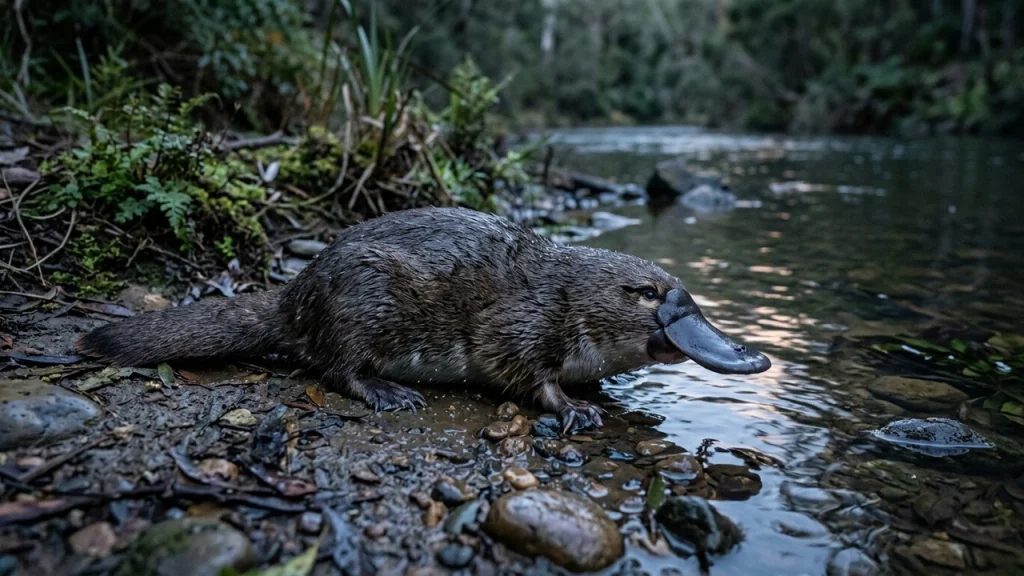
The San Diego Zoo Wildlife Alliance says platypuses stay busy at night and dusk, with some daytime movement. Owls, eagles and hawks may hunt them from the air, according to the alliance. National Geographic mentions camouflage toward hunters that perceive UV as a possible gain from the shine.
A Queensland University of Technology review suggests this kind of shining may help pale fur and skin look lighter and support visual cues, above all in night active mammals. This response turned out most frequent and strongest in night active kinds, the review found. Whether mammals gain any particular use from it stays unresolved, researchers behind that work add.
Museum and laboratory checks on mammal glow
A Queensland University of Technology survey listed this shine in 125 species covering all 27 living mammalian orders and 79 families. A slice of kept and unkept examples went through fluorescent spectroscopy at three excitation wavelengths to separate true fluorescence from scatter, the team said. How examples had been kept affected how strong the shine looked, the same team reported.
A PLOS ONE study recorded vivid pink light across the whole coats of both bandicoot kinds examined. Frozen material held at the James Cook University Nguma-bada campus and gathered earlier by separate workers included a female platypus, the study noted. Small amounts of protoporphyrin IX, a forerunner to haem, turn up in all living cells, the same paper added. That light reflects photons taken in and sent out again, usually at a longer wavelength than taken in, the paper explained.
Sources
- PLOS ONE: Luminophores in the fur of seven Australian Wet Tropics mammals
- National Geographic: We knew platypuses were incredible. Now we know they glow, too
- Animal Diversity Web: Ornithorhynchus anatinus (duck-billed platypus)
- San Diego Zoo Wildlife Alliance: Platypus
- San Diego Zoo Wildlife Alliance: Platypus: Freshwater Wonders
- Queensland University of Technology: All-a-glow: Spectral characteristics confirm widespread fluorescence for mammals