
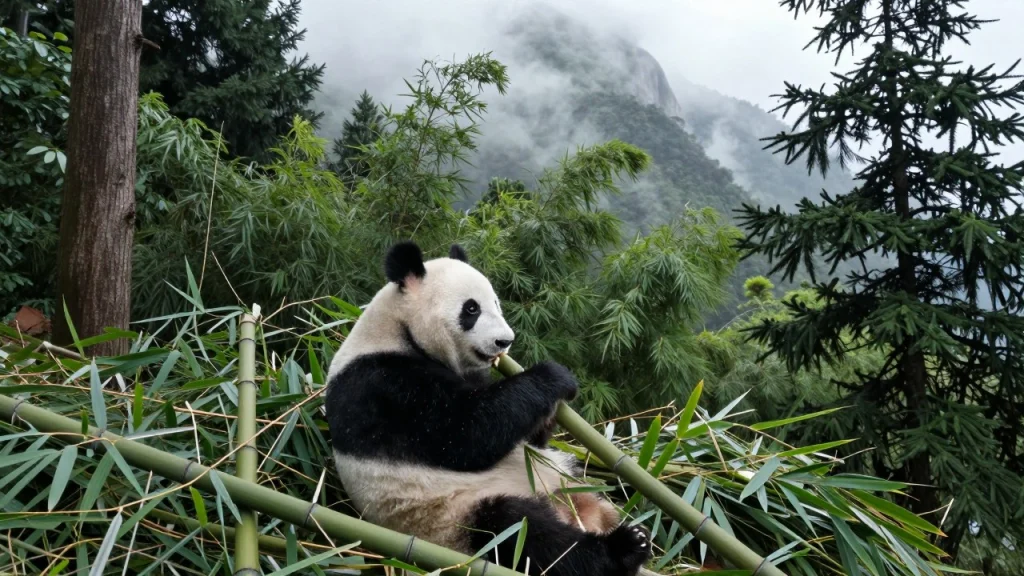
Wild giant pandas live in the bamboo forests of southwestern China’s mountains, and that is the whole of their wild range today. Every one of them is concentrated in six mountain ranges spread across three provinces, Sichuan, Shaanxi and Gansu, and most live in Sichuan. Because the animal eats almost nothing but bamboo, the useful way to answer where pandas live is to look at which mountain forests still carry enough of it.
That refuge is a fraction of what it once was. The species originally roamed the lowlands of southern and eastern China along with the northern reaches of Vietnam and Myanmar, but farming, forest clearing and roads have driven it upslope and fenced it in. Pandas once lived in lowland areas too, and development is what confines them to the mountains now, where they persist at altitude in separate groups that rarely meet.
The provinces that hold the wild population
The Minshan and Qinling mountains hold most of the wild pandas that remain, and it is there that WWF has focused its giant panda conservation work. The Minshan range runs along the northern edge of the great Sichuan plain and the eastern side of the Tibetan Plateau, forming part of one of China’s most important watersheds. Hundreds of animals make their home there, and WWF singles out PingWu county as holding the highest density of wild pandas anywhere.
The Qinling mountains, in Shaanxi province, split cold northern China from the milder south, and their slopes channel rain into the Yangtze and the Yellow, the country’s two great rivers. Warm rain on the southern side supports rich plant and animal communities alongside a few hundred pandas. Researchers report that the animals living in the Qinling range belong to a subspecies of their own, distinct from the rest of the species.
Farther west, the Qionglai mountains are where the animal was first described scientifically, and they hold about 30% of all wild pandas. Ranges like these explain why a sighting in the wild almost always means a trip to one of a short list of places.
The forest a panda needs
Wild pandas occupy damp, misty forests in the mountains, most of that habitat sitting between 4,000 and 11,500 feet, or 1,200 to 3,500 meters above sea level. The canopy mixes broadleaf and conifer trees over a thick understory of bamboo, and heavy rain or dense mist through the year is normal there. Pandas are animals of high altitude, and a thick, wooly coat keeps one warm in the cool, cloud-wrapped forest.
Not every bamboo patch qualifies as habitat. San Diego Zoo Wildlife Alliance scientists have found that a place only works if it has old-growth conifer forest, at least two bamboo species and dependable water access. Old trees also supply hollow logs and stumps roomy enough to serve as dens, so a panda needs a functioning old forest, not a young bamboo thicket.
The diet explains the whole habitat picture. Around 99% of what a panda eats is bamboo, and it devotes at least 12 hours a day to feeding on it. To handle the stalks, a panda grips them with five digits plus an enlarged wrist bone that works like a thumb. A little fruit, some bulbs, a few insects and the occasional rodent or piece of carrion turn up in the record, but they are sides rather than the meal.
A life sized by food
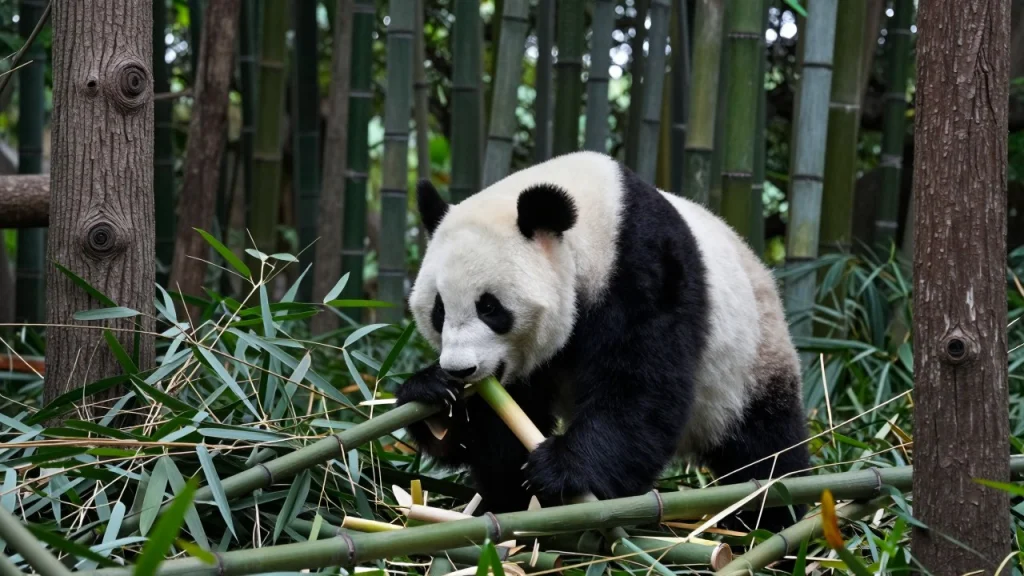
A wild panda organizes its life around a home range. A typical home range covers about 1.9 square miles (5 square kilometers), and males range more widely than females. Where bamboo is scarce, the home range grows larger. Pandas are naturally solitary animals for most of the year. Two adults meeting in the same patch usually end up snarling and lunging at one another.
Shelter is improvised as well. Pandas build no permanent den of their own, resting instead in trees and in caves. Unlike many bears, they do not hibernate, and they descend to lower elevations in the coldest months to follow the bamboo.
Why a broken map is the real danger
The threat is not only that panda forest is vanishing, but that what remains no longer fits together. China’s fourth national survey put the number of separate populations at about 33, cut apart by ridges, rivers, roads, cleared forest and human settlements. Fragmentation is a breeding problem as much as a food problem: field research shows that heavy fragmentation leaves pandas struggling to locate a mate, and small isolated groups are vulnerable to inbreeding and to shocks such as drought.
Protection covers a good part of the range, but not all of it. About 46% of panda habitat still sits outside the reserve network. China boasts 67 panda reserves, and together they cover more than 66% of the wild population and almost 54% of the habitat that remains. Reserves alone cannot heal a broken landscape, so the government and WWF have also built bamboo corridors stitching isolated pockets of forest together, giving pandas routes to fresh food and potential mates.
Population, and why the status improved
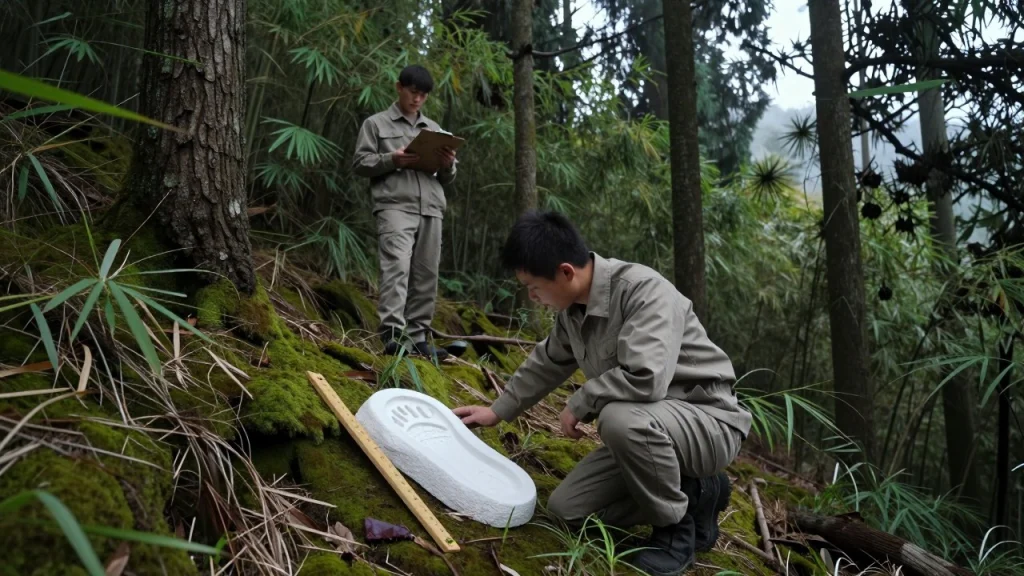
The figure most often quoted, 1,864 wild pandas, comes from China’s fourth national survey, fieldwork carried out between 2011 and 2014. Counting animals in thick bamboo forest is hard, so that total rests on survey methods rather than a simple head count. It marked a 16.8% gain over the previous national survey, and much of the credit goes to reserve expansion and habitat restoration.
The recovery is why the IUCN moved the species from the endangered category to vulnerable, a real gain for a bear that once ranked among the most threatened mammals on Earth. The margins are still narrow, though. Some 600 of the animals live in zoos and breeding programs worldwide, a captive population that conservationists treat as insurance against extinction.
Cubs, and why slow breeding raises the stakes
Pandas reproduce slowly, which is one reason an isolated group struggles. A female in the wild typically bears young only once every two or three years, and a typical female may raise about five litters in a lifetime, each cub on her own. A newborn is barely bigger than a stick of butter, pink and helpless, and stays dependent on its mother through the first few years of life. Lose a few adult females to habitat loss, and the loss stretches into the next generation.
The short version
Giant pandas live in the mountain forests of Sichuan, Shaanxi and Gansu in southwestern China, in and around ranges such as Minshan, Qinling and Qionglai, where misty conifer and broadleaf forest grows thick with bamboo. Since the animal depends on bamboo almost entirely, the map of panda range is really a map of mountain bamboo forest, and the species has become a symbol of what patient protection can restore.
Sources
- WWF: Habitat: the land of the panda
- Smithsonian’s National Zoo and Conservation Biology Institute: Giant panda
- Smithsonian’s National Zoo and Conservation Biology Institute: Giant Panda FAQs
- San Diego Zoo Wildlife Alliance: Giant Panda | San Diego Zoo Animals & Plants
- Animal Diversity Web, University of Michigan: Ailuropoda melanoleuca (giant panda)
- Ecology and Evolution (Wiley), via PubMed Central: Identifying core habitats and corridors for giant pandas by combining multiscale random forest and connectivity analysis