
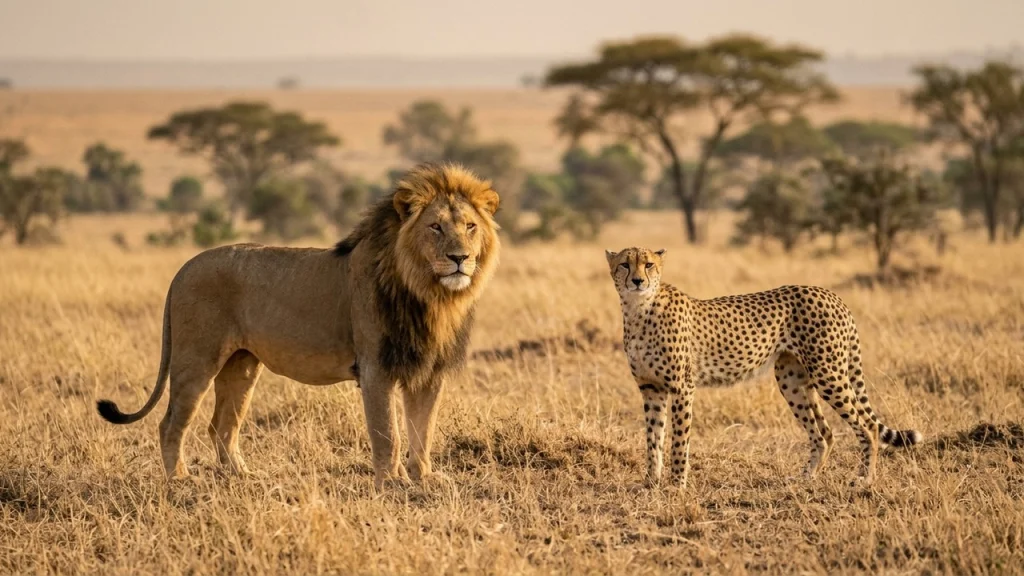
The question assumes lions leave cheetahs alone, but they do not. Animal Diversity Web says lions often kill and/or compete with other predators, including leopards and cheetahs. The San Diego Zoo Wildlife Alliance adds that cheetah cubs often become prey to lions, leopards and hyenas.
Whether lions eat the cheetahs they kill is a separate matter. None of the zoo, wildlife database or research sources behind this article describes what lions do with the bodies of the cheetahs they kill. A PLOS ONE study does report support for a hypothesis that carnivores avoid eating carnivore carcasses, but that hypothesis is about mammalian carnivores in general, not about lions in particular.
Cheetah cubs and lions
Scientists found that up to 70 percent of cheetah cubs succumb to lions and hyenas, according to the San Diego Zoo Wildlife Alliance. Cubs live with their mothers for about 18 months.
In Serengeti National Park in Tanzania, the Smithsonian’s National Zoo says about 90 percent of cheetah cubs die before they reach three months of age. PLOS ONE reports that larger predators can reduce cheetah population sizes by increasing cub mortality, and that 73 percent of cub mortality in Serengeti National Park was due to predation.
What lions eat, and what carnivores avoid eating
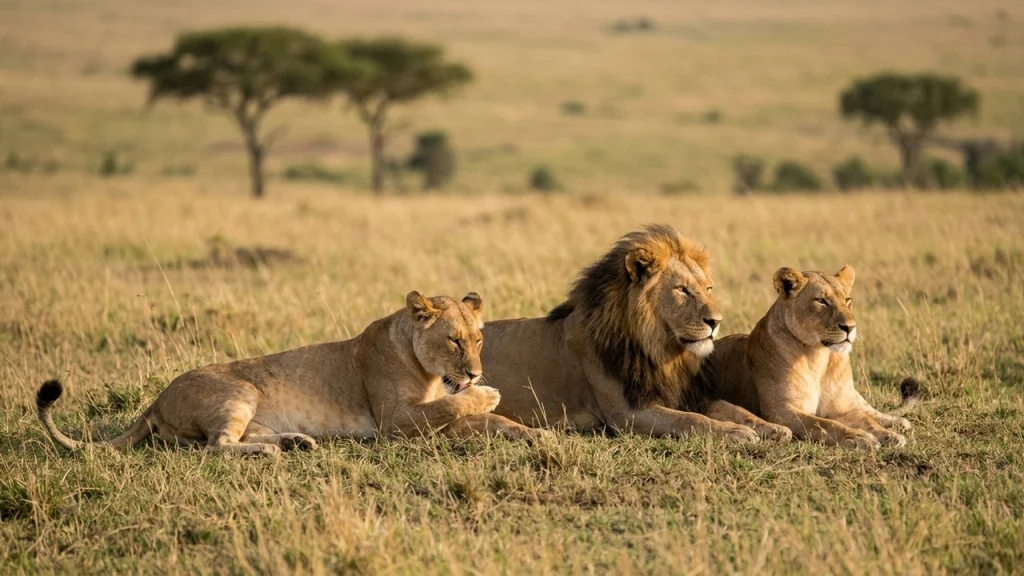
Animal Diversity Web says African lions eat the large ungulates that are most common in their area, such as Thompson’s gazelles, zebras, impalas and wildebeests. Lions scavenge actively too, and take their cues from hyenas and vultures.
The carnivore carrion avoidance hypothesis suggests that mammalian carnivores avoid eating carnivore carcasses, especially those of their own species. PLOS ONE says carnivores mostly steer clear of carrion from closely related species, above all their own, and that the behaviour likely evolved to reduce exposure to infectious pathogens.
Size and fighting ability
Animal Diversity Web lists lion mass as ranging from 126 to 272 kg. The Smithsonian’s National Zoo gives an adult cheetah’s weight as 75 to 140 pounds (34 to 64 kilograms) and its height as about 30 inches (77 centimeters) at the shoulder.
The zoo adds that without large teeth, cheetahs’ fighting abilities are limited, and that larger, stronger cats like lions easily overwhelm them. Cheetahs therefore tend to choose flight over a fight.
Food competition on the plains
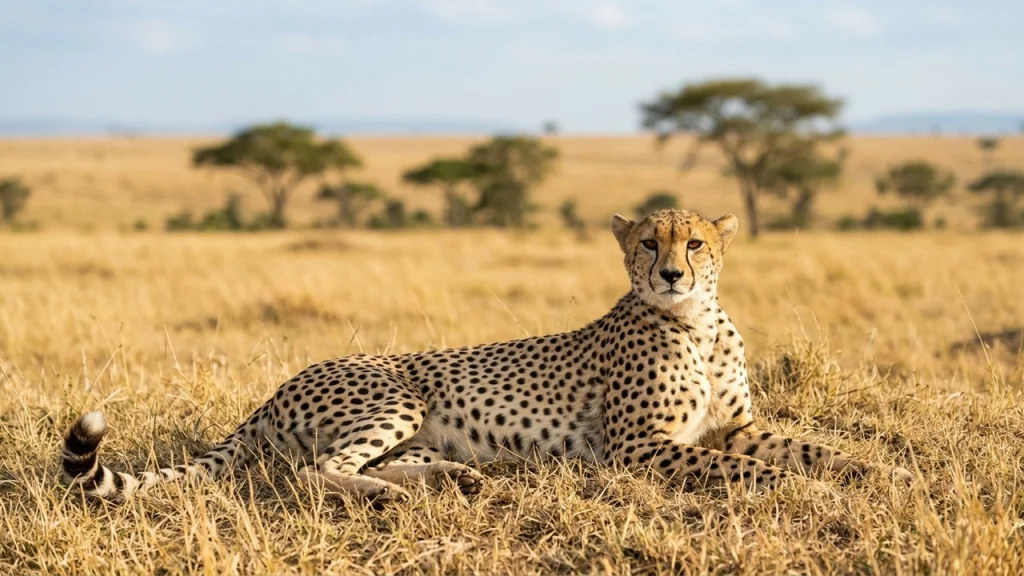
The San Diego Zoo Wildlife Alliance says a cheetah that has recovered from chasing down a meal must eat fast, because other animals can drive it off: leopards, lions, baboons, jackals, vultures and hyenas. PLOS ONE reports that cheetahs have suffered intraguild competition from lions, spotted hyenas and, occasionally, leopards.
PLOS ONE also says larger predators threaten the smaller-bodied cheetahs because they can reduce food intake by limiting access to high resource areas or by kleptoparasitism. In Serengeti National Park, for example, 10 to 12 percent of kills are kleptoparasitized.
How cheetahs avoid lions
PLOS ONE says cheetahs often steer clear of dominant carnivores, with spatial and temporal partitioning seen as the main behavioral mechanisms. Cheetahs are described as a refugial species, one that looks for refuges where lions and spotted hyenas are fewer. In one study, cheetah habitat choices were driven by a trade-off between gaining resources and avoiding lions.
Sources
- Smithsonian’s National Zoo: Cheetah | Smithsonian’s National Zoo and Conservation Biology Institute
- Animal Diversity Web: Panthera leo (lion) | INFORMATION | Animal Diversity Web
- PLOS ONE: To Kill, Stay or Flee: The Effects of Lions and Landscape Factors on Habitat and Kill Site Selection of Cheetahs in South Africa – PMC
- PLOS ONE: Avoidance of carnivore carcasses by vertebrate scavengers enables colonization by a diverse community of carrion insects – PMC
- San Diego Zoo Wildlife Alliance: Cheetah | San Diego Zoo Animals & Plants