
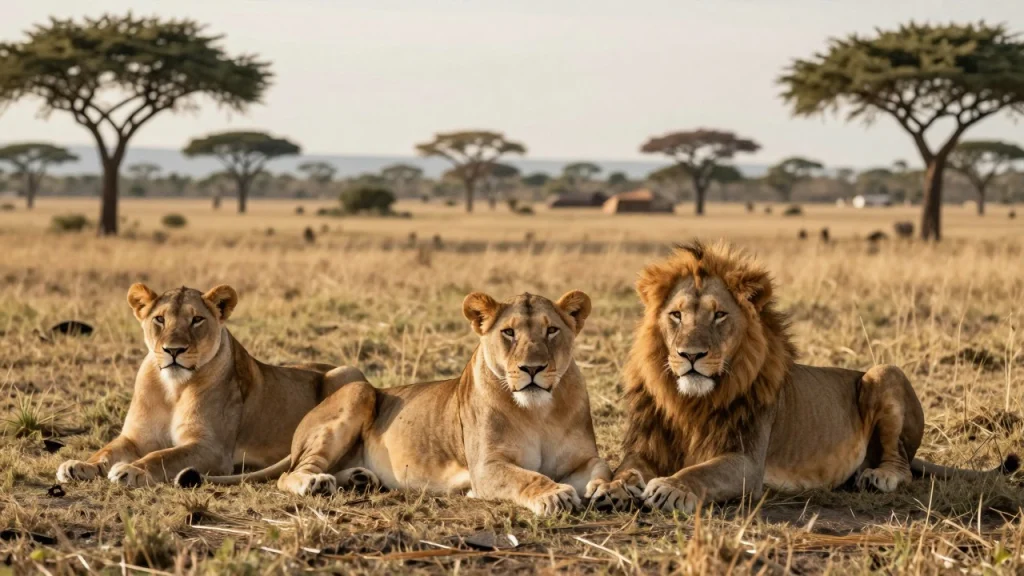
As apex predators of the African savanna, lions are hypercarnivores whose diet relies almost entirely on meat, but they occasionally consume plants such as tsamma melons for moisture. They occupy the top of the food chain, hunting a wide variety of large ungulates and medium-sized mammals to meet their massive energy requirements.
Understanding what lions eat involves examining their hunting strategies, preferred prey species, daily intake requirements, and their role as scavengers when opportunism strikes.
The primary diet of wild lions
Lions are hypercarnivores, meaning that meat constitutes over 70 percent of their total food intake. In the wild, their diet consists primarily of medium to large-sized hoofed mammals, also known as ungulates.
The specific animals a lion pride hunts depend largely on seasonal availability, geographic location, and pride size.
- Wildebeests and zebras: These animals form the core diet for most savanna-dwelling lions due to their abundance.
- Buffaloes: Cape buffaloes are large and challenging prey, sometimes targeted by lion prides.
- Antelopes and gazelles: Smaller ungulates like impalas and Thomson’s gazelles are hunted when larger game is scarce or by solitary lions.
- Warthogs: This medium-sized ungulate provides frequent meals for lions.
While lions prefer large prey that yield high caloric returns, they are opportunistic and will hunt smaller animals like hares or birds when necessity demands.
How much meat does a lion eat per day?
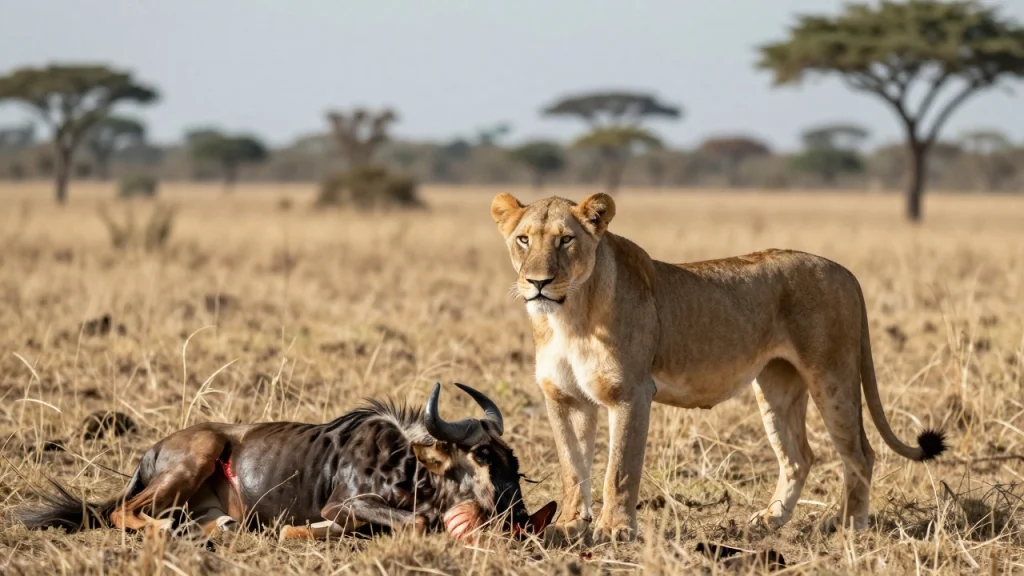
Lions do not feed on a strict daily schedule.
Because hunting success rates vary, lions operate on a gorge-and-fast feeding pattern. After making a successful kill, a single lion can consume up to 30 to 40 kilograms (66 to 88 pounds) of meat in a single feeding session.
Hunting strategies and pride roles
Lions are the only truly social cats, living in cooperative groups known as prides. This social structure directly influences their hunting success and prey selection.
Female lions, or lionesses, perform the majority of the hunting. Working in coordinated groups, they surround prey animals, using tall vegetation as cover before launching a short, explosive ambush.
Male lions occasionally join hunts for particularly large or dangerous prey, such as mature adult buffaloes or young giraffes, where their strength and weight provide a crucial advantage.
Scavenging and competition
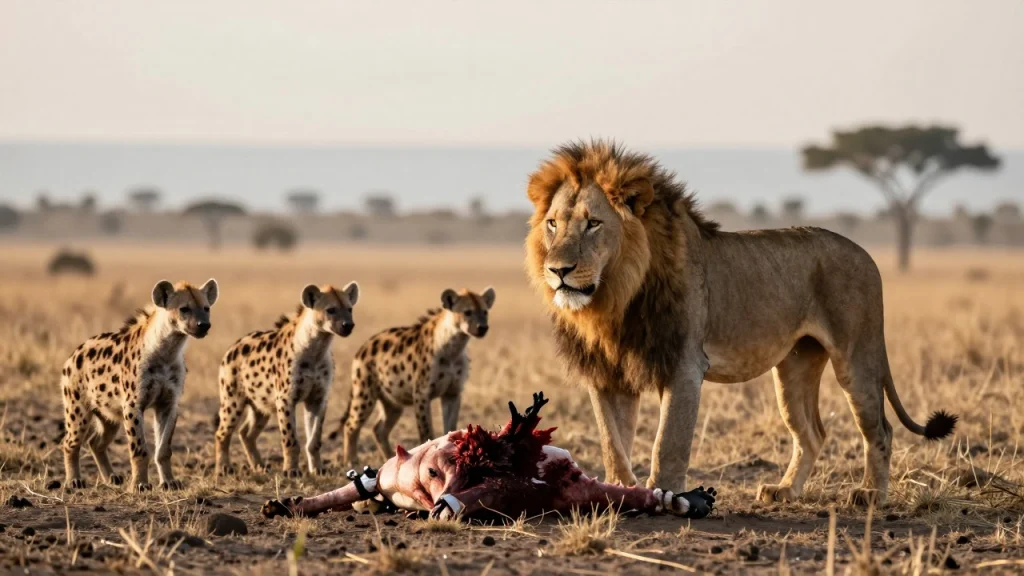
Although renowned as active hunters, lions derive a significant portion of their food from scavenging. They regularly steal kills from other predators or scavenge carcasses left by natural deaths.
- Hyenas: Lions frequently displace spotted hyenas from recent kills using their superior size.
- Leopards and cheetahs: Lions use their dominance to steal prey from solitary predators who cannot risk fighting back.
- Carrion: During dry seasons, carcasses of animals dying from drought or illness become critical food sources.
Scavenging allows lions to conserve energy while securing high-protein food sources essential for surviving harsh environmental conditions.
Seasonal variation in lion diets
A lion’s diet changes dynamically between rainy and dry seasons across African ecosystems.
During the dry season, prey animals gather around remaining water sources, making them easier to track and ambush. Conversely, during the rainy season, wide herd dispersal makes hunting more physically demanding.
Migratory patterns, such as the Great Migration in the Serengeti-Mara ecosystem, temporarily flood lion territories with millions of wildebeests and zebras, providing an abundance of seasonal food.
The lion’s ecological role as an apex predator
By preying on herbivores, lions help maintain healthy balances within grassland and savanna ecosystems. They cull weak, old, or sick individuals, preventing overgrazing and helping control herbivore populations.
Understanding what lions eat highlights their importance in sustaining biodiversity across sub-Saharan Africa’s wilderness areas.
Sources
- Smithsonian’s National Zoo and Conservation Biology Institute: Lion | Smithsonian’s National Zoo and Conservation Biology Institute
- San Diego Zoo Wildlife Alliance: Lion | San Diego Zoo Animals & Plants
- Animal Diversity Web: Panthera leo (lion)
- WWF-UK: Top 10 facts about Lions | WWF
- Nature Portfolio: Iterative evolution of large-bodied hypercarnivory in canids benefits species but not clades