
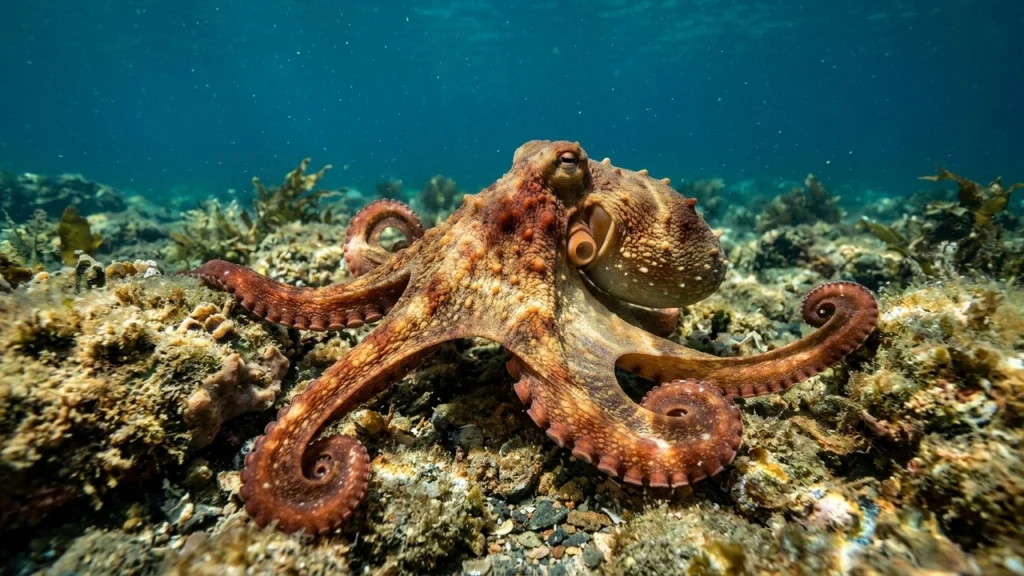
Octopuses use eight arms, while squid hold meals with eight sucker lined arms and seize prey with two long tentacles tipped with suckers, National Geographic reports. Squid also carry an inner shell called a gladius or pen, whereas octopuses have no skeleton, according to the same profile. Squid travel by jet propulsion, filling the mantle with water and forcing it through a tube called the siphon that controls direction, while common octopuses jet forward by expelling water through the mantle, the same profile notes.
Both belong to cephalopod invertebrates, a group that also includes cuttlefish, according to the same profile. Squid can shift skin color fast through special pigment filled cells called chromatophores to hide, discourage attackers or send signals to other squid while staying hidden from predators, while the common octopus employs skin pigment cells plus muscle to match nearby colors, patterns and textures almost at once, the same account observes.
Soft bodies built for squeezing and gripping
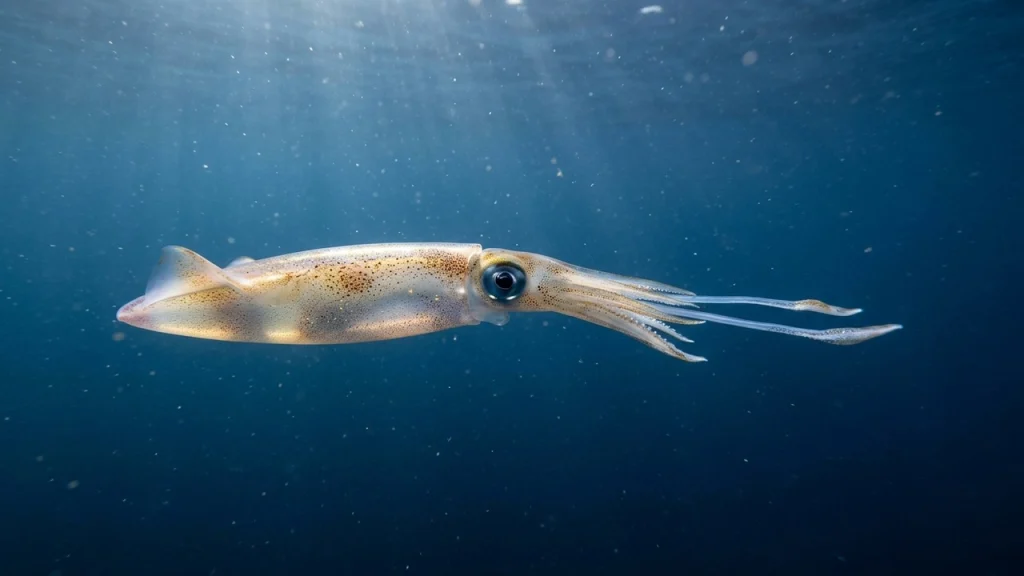
Behind the squid head sits a soft lengthened mantle that encloses organs, National Geographic reports. National Geographic reports an octopus can pass through any opening that is no smaller than its beak, its sole hard portion. Octopus arms carry hundreds of suckers that work separately through nerve bundles serving as a brain, so the animal can touch, smell and handle items, according to the same profile.
The same profile explains a squid mouth holds a tough parrot-like beak used to kill and eat fish, crustaceans and other squid. When spotted, an octopus produces a cloud of dark ink that hides it from an attacker and allows time to swim off, the same profile adds.
How large different kinds grow
Squid average 0.8 inches to 16 feet long, National Geographic lists. The same listing gives the common octopus at 12 to 36 inches and 6.6 to 22 pounds. Giant Pacific octopuses reach 9.75 to 16 feet and 22 to 110 pounds in the same listing. The same listing notes one specimen was 30 feet wide and weighed over 600 pounds, holding the size record.
Animal Diversity Web says Dosidicus gigas can weigh up to 50kg with a mantle length of up to 2m.
Where they live and how they gather
The common octopus lives in tropical and temperate seas around the world, National Geographic says. The same profile places giant Pacific octopuses in temperate Pacific waters from southern California to Alaska and west to the Aleutian Islands and Japan. Octopus vulgaris occurs in tropical, subtropical and temperate waters from the surface to 100 to 150 meters and stays out of polar and subpolar areas, Animal Diversity Web says.
Dosidicus gigas lives in the eastern Pacific from northern California to southern Chile, according to the same database. It spends the day at depths greater than 250m and rises near the surface at night, the same database notes. Octopus vulgaris is normally solitary and territorial, while more than 300 squid species occupy every ocean living alone or in schools, the same database and the same profile report.
Hunting and lifespan
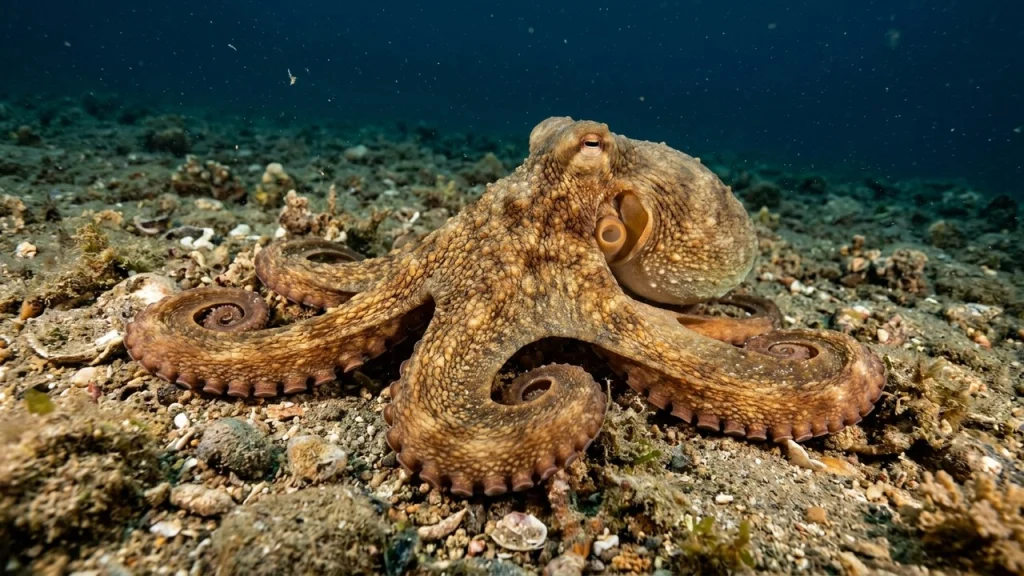
Common octopuses eat crabs, crayfish and mollusks and sometimes use ink to confuse victims before striking, National Geographic reports. The same profile says giant Pacific octopuses hunt at night and live mainly on shrimp, clams, lobsters and fish, but are known to attack and eat sharks and birds, puncturing and tearing flesh with sharp beaklike mouths. Adult Dosidicus gigas rise to surface waters at night to feed mostly on lanternfish plus other fish, squids and octopuses, Animal Diversity Web notes.
Sources
- National Geographic: Squid | National Geographic
- National Geographic: Octopuses, facts and information | National Geographic
- National Geographic: Common Octopus | National Geographic
- Animal Diversity Web: Octopus vulgaris | INFORMATION | Animal Diversity Web
- Animal Diversity Web: Dosidicus gigas | INFORMATION | Animal Diversity Web
- National Geographic: Giant Pacific Octopus | National Geographic