
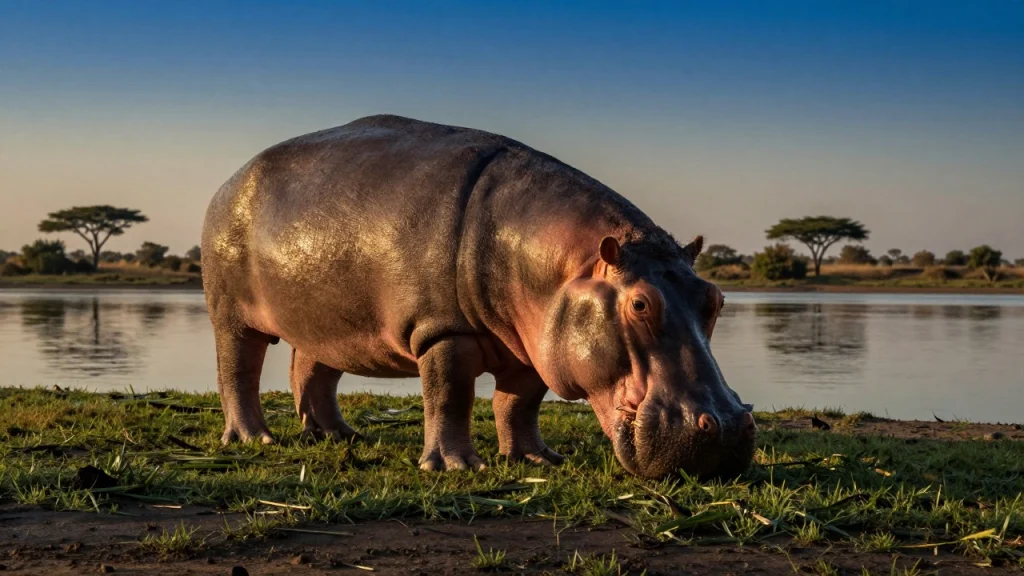
Despite their massive size, adult males can weigh up to about 4,550 pounds (2,065 kilograms) in the wild, hippopotamuses have surprisingly modest appetites compared to other megaherbivores. Hippos eat an average of 88 pounds (40 kilograms) of food a night, which accounts for only 1 to 1.5 percent of their total body weight. They feed on short grasses, called “hippo lawns,” close to water.
While giant land animals like elephants must consume vast quantities of food all day long, hippos rely on a low-energy lifestyle that dramatically reduces their caloric needs. Understanding how much food a hippopotamus eats per night reveals a fascinating evolutionary balance between physical size, digestive efficiency, and amphibious behavior.
The Nightly Feeding Habits of Hippos
Hippopotamuses are nocturnal grazers. During the intense heat of the African day, they remain submerged in rivers, lakes, and swamps to regulate their body temperature and protect their sensitive skin from sunburn. Once the sun sets, they emerge from the water to begin their nightly feeding routine.
Hippos often travel long distances across land to find suitable pastures, sometimes trekking several miles away from their aquatic territories. They spend approximately four to six hours grazing in the dark before returning to the safety of the water before dawn.
What Do Hippos Eat During Their Nightly Grazing?
Unlike many other large herbivores that strip leaves from trees or chew on bushes, hippopotamuses are specialized grazers that eat primarily short grasses.
- Short grasses: They prefer tender, low-growing grass species found on lawns near riverbanks, known as “hippo lawns.”
- Reeds and aquatic vegetation: Occasionally, hippos consume soft river plants, though grass forms the vast majority of their diet.
- Fallen fruit: When available along riverbanks, hippos will readily eat fallen wild fruits.
Hippos use their broad, muscular lips, about 50 cm (19.7 inches) wide, to crop grass close to the ground. Their long, sharp canine teeth and incisors are not used for chewing grass; instead, these formidable teeth serve strictly as weapons for defense and territory fights.
Why Hippos Eat Less Food Than Other Megaherbivores
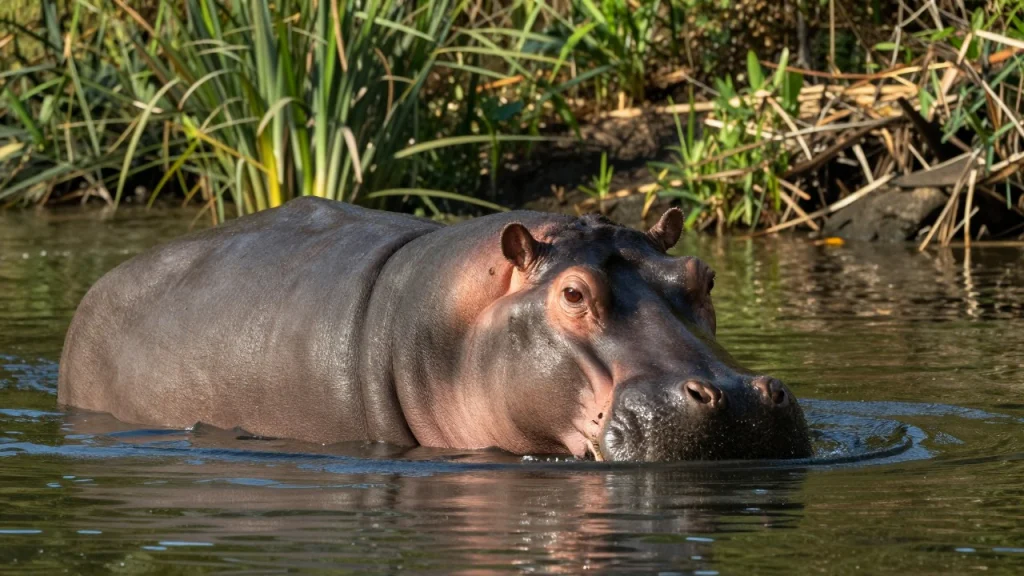
It might seem surprising that an animal as large as a hippopotamus consumes only 1 to 1.5 percent of its body weight daily. By comparison, elephants eat about 165 to 330 pounds (75 to 150 kilograms) of vegetation each day, about 4 to 6 percent of their body weight.
Several key physiological and behavioral adaptations explain why hippos require comparatively little food:
1. Low Metabolic Rate and Buoyant Environment
Hippos spend almost all daylight hours in shallow water, and may sleep on a mud bank. Because the water supports their immense weight, their muscles do not work hard to maintain posture or fight gravity during the day. This buoyant environment, combined with a naturally slow metabolic rate, allows hippos to conserve vast amounts of energy.
2. Specialized Digestive System
Hippopotamus amphibius is a non-ruminant ungulate. It has ciliate protozoa in its stomach, where fermentation breaks down tough plant matter.
Hippos can store two days’ worth of grass in their stomachs. This prolonged digestive process allows hippos to extract maximum nutritional value and energy from every blade of grass they consume.
The Ecological Impact of Hippo Feeding
Hippos play an important role in their ecosystems, and their daily activities create habitats for smaller organisms.
Furthermore, hippos transfer vast amounts of nutrients from terrestrial ecosystems into aquatic ones. After grazing, hippos return to the water before dawn. The large amount of waste hippos produce fertilizes the African ecosystem, and many fish eat the dung.
Sources
- San Diego Zoo Wildlife Alliance: Hippo | San Diego Zoo Animals & Plants
- Animal Diversity Web: Hippopotamus amphibius (hippopotamus) | INFORMATION | Animal Diversity Web
- San Diego Zoo Wildlife Alliance: Elephant | San Diego Zoo Animals & Plants
- Nature Communications: Organic matter loading by hippopotami causes subsidy overload resulting in downstream hypoxia and fish kills
- Nature: Plasma Spermine Oxidase in relation to Fermentation in Hippopotamus Stomach