
Short answer: quick care decides survival
Yes, a person can live through a Komodo dragon bite when bleeding is controlled fast, the wound is cleaned thoroughly and antibiotics begin promptly. A published hospital case describes a patient who left the ward without unusual bleeding, blood pressure drops or wound infection after careful cleaning and observation. That outcome is never guaranteed, because wildlife experts warn that such an assault may prove lethal for people.
Survival depends on rapid care, not on toughness or luck. The lizard tears deep tissue, drains blood and seeds germs, so time spent stopping blood loss and preventing infection shapes recovery. People who reach emergency treatment, receive wound surgery when needed and complete preventive drugs have the best chance of avoiding shock and sepsis.
Why this lizard hits so hard
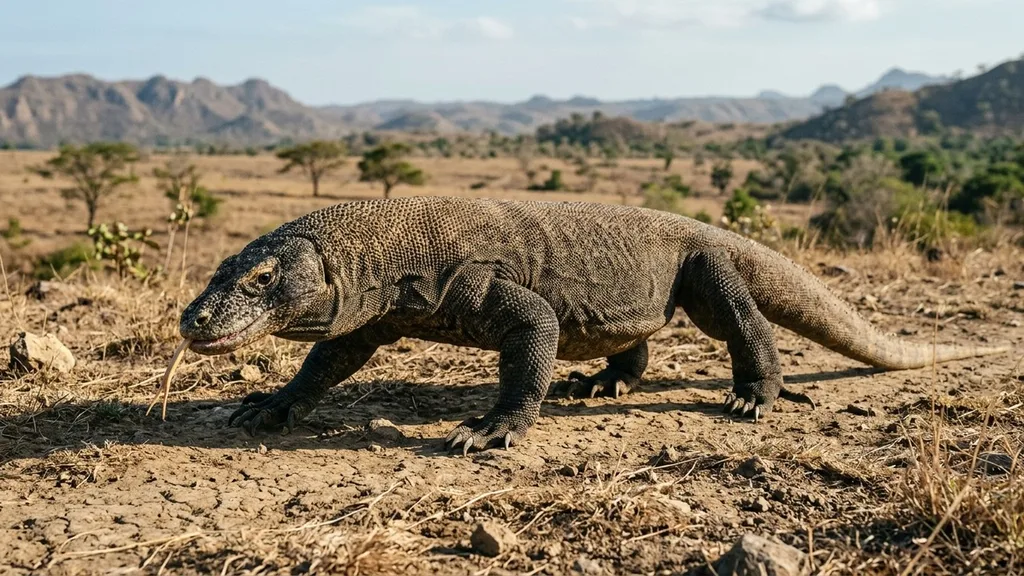
Komodo dragons rank as the biggest and bulkiest lizards on Earth, and they belong to a small set of lizards that produce a toxic bite. That combination explains why even a brief encounter can cause major injury. Size supplies force, teeth open tissue and saliva chemistry keeps blood flowing.
Wild adults commonly weigh near 154 pounds, while the biggest measured animal stretched 10.3 feet long and tipped the scales at 366 pounds. Such bulk lets a dragon knock down, grip and drag struggling animals. Males usually develop greater size and mass than females, so large males pose the greatest physical threat.
Teeth that slice rather than crush
Compared with crocodilians and other reptiles, Komodo dragons generate only modest crushing power. They compensate with curved, blade like teeth, strong claws and violent body action that cut and rip. After clamping on, the animal jerks its muscular neck from side to side, shredding skin and muscle and opening vessels that bleed heavily and trigger shock.
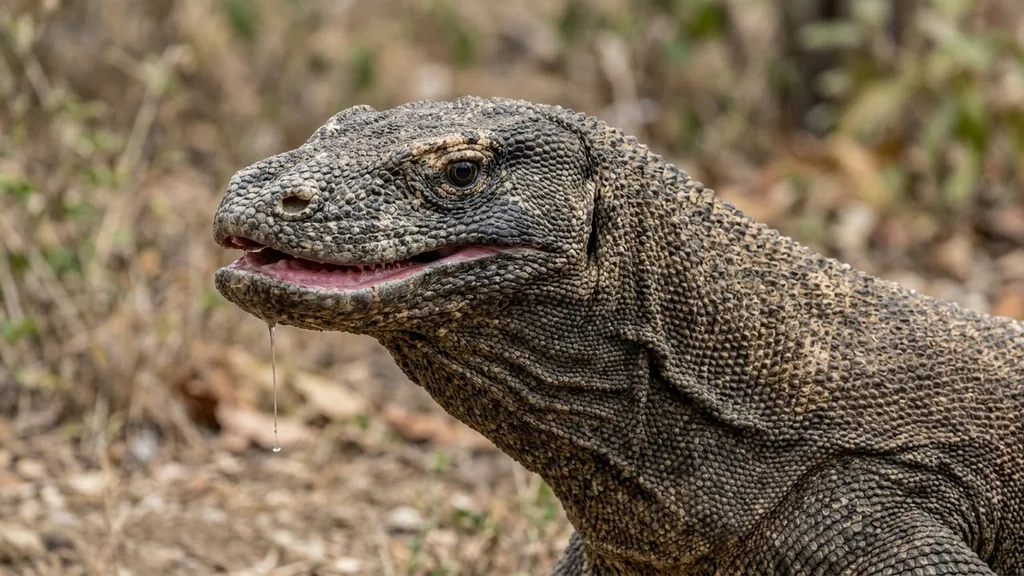
Specialists describe the oversized, bent and saw edged teeth as the prime tool for cutting meat cleanly. About 60 short, saw edged teeth line an adult mouth, and their shape recalls shark teeth. A dragon replaces its dentition repeatedly, cycling through four or five full sets across a lifetime, so broken or worn cutters are soon replaced by sharp new ones.
Feeding speed adds to the danger. Observers have watched dragons bolt 5.5 pounds of flesh within one minute, which shows how quickly tissue can disappear once the teeth gain purchase. For a bitten leg or arm, that efficiency means deep gaps, severed tendons and exposed vessels rather than a simple puncture.
Venom that keeps blood flowing
Researchers have confirmed a toxin producing gland seated in the lower jaw. Its products thin the blood, drop pressure and disturb normal clotting, so wounds keep oozing. In prey, specialists link this chemistry to heavy bleeding and circulatory collapse.
Unlike vipers, Komodo dragons lack hollow fangs for injection. Their toxin instead oozes into cuts opened by the teeth. That seeping action still works because the bite creates broad, ragged openings with a large surface for absorption.
Field and laboratory work points to torn flesh plus major blood loss and falling blood volume as the main killing pathway. Investigators describe a grip and rip routine in which serrated teeth anchor, neck and body pull, deep gashes form and toxin enters. Even buffalo sized mammals can fade over several days after breaking free, which shows how delayed collapse can follow an early escape.
Bacteria that punish delayed treatment
Mouth studies have cultured 50 distinct bacterial strains from dragon saliva, with at least seven types noted as strongly capable of causing severe infection. Food debris wedged between tooth edges feeds microbes, creating a rich habitat inside the mouth. Wounds left dirty can therefore turn septic, and sepsis can push a weakened victim toward death days later.
Biologists report that germs plus toxin in saliva can fell bitten prey within a few days. Death sometimes requires up to four days, during which the hunter tracks the weakening animal by scent until it finds the carcass. For people, the lesson is direct: an untreated bite may look survivable at first, then deteriorate as infection spreads.
Hunters use patience as a weapon. They often ambush larger animals, bite, then trail the victim until blood loss or infection leaves it too feeble to resist. Even when quarry slips away, shock and continued bleeding frequently prove fatal. That waiting strategy explains why walking away from the initial attack does not mean safety.
What a bite does to a human body
Deep tissue damage causes the immediate crisis. Torn muscle, cut vessels and crushed skin produce brisk bleeding, intense pain and sometimes faintness. Case notes urge clinicians to watch for faulty clotting and shock from combined injury and toxin effects, because both can develop after major bites.
Infection forms the next phase. Uncleaned wounds invite bacteria, while retained tooth fragments add foreign material. Doctors therefore check films for fractures and hidden fragments, assess breathing and circulation, confirm tetanus protection and plan antibiotics from the start.
Toxin effects in people remain uncertain. Reviews state that proof of major poisoning after monitor lizard bites is currently lacking, although such an effect stays possible. Short observation for low blood pressure or unstable circulation is sensible, even when the patient initially looks stable.
Care that gives victims the best chance
Thorough cleaning plus preventive drugs anchors treatment. Guidelines favor washing out minor wounds, leaving them loosely closed and starting preventive antibiotics. The commonly preferred preventive drug for animal bite wounds is amoxicillin-clavulanate.
Key steps after a Komodo dragon bite include:
- press firmly to slow bleeding and call emergency services without delay
- wash around the injury only if clean water is handy, then cover with a clean dressing
- keep the injured limb still and below heart level when practical
- tell responders exactly what animal caused the wound and how much blood was lost
- go to an emergency department for imaging, tetanus review and surgical assessment
Larger wounds often need staged hospital cleaning with removal of dead tissue, sometimes with suction dressings and tendon or vessel repair. Intravenous options for severe contamination include piperacillin-tazobactam or ceftriaxone paired with a drug active against anaerobic bacteria, followed by oral treatment in many protocols. One detailed report describes 48 hours of intravenous piperacillin-tazobactam, then 10 days of oral amoxicillin-clavulanate, alongside repeated washouts.
That same report shows why hope is realistic. Despite deep arm and leg cuts, the patient avoided abnormal bleeding, pressure drops and sepsis during the hospital stay.
Where encounters happen and how risk builds
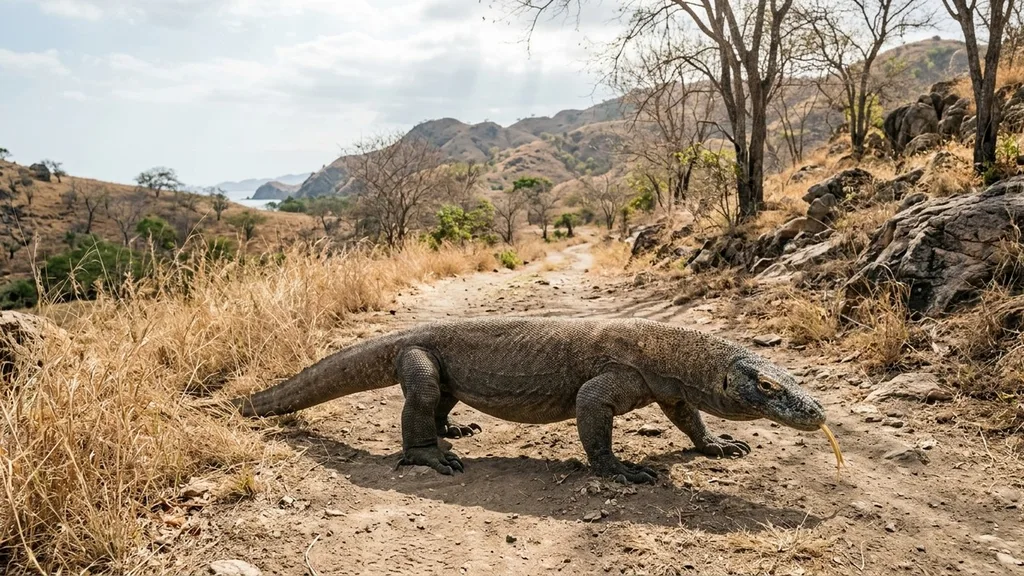
These giants occupy only a handful of Indonesian isles in the Lesser Sunda chain, including Rintja, Padar, Flores and Komodo itself. They favor hot savanna woodland but roam broadly across each island, from sandy shore to rocky crest. Such a tiny range means people, livestock and dragons often use the same trails and water points.
Dragons generally live about 30 years in nature, although researchers continue to refine that estimate. Long lives plus strong scent tracking let experienced adults learn ambush spots along game paths. They scavenge carcasses and stalk live animals from rodents to deer, pigs, goats and buffalo, so a human crouching, running or carrying meat can trigger investigation or defense.
Young dragons climb trees and eat insects, small lizards, eggs, birds and little mammals until size allows ground hunting. Adults shift to much larger quarry and defend kills aggressively. Cannibalism also occurs, which helps explain why juveniles stay hidden above ground for months.
Why the species needs space and protection
An endangered reptile survives on a fragile island range. Counts fell from 5,000 to 3,500 between 1981 and 2021, a 30% fall across 40 years, prompting a shift from vulnerable to endangered by the global authority that tracks extinction risk. Habitat loss, scarce prey, fire, tourism pressure, poaching and rising seas all squeeze island groups and isolate breeding pockets.
Protection therefore helps people as well as lizards. Parks, anti poaching patrols and prey management keep dragons fed on wild animals rather than livestock, which lowers contact around villages. Visitors who keep distance, never feed wildlife, store food securely and follow ranger guidance reduce the chance of a close encounter turning into a bite.
What survival really requires
Survival is possible, but it is earned through fast action and complete medical follow through. Control bleeding, keep the wound clean, seek surgery when tissue is deeply torn, take the full antibiotic course and return promptly if fever, swelling, renewed bleeding, dizziness or fainting appear. Respect for a large, venomous predator and for its island home gives both humans and dragons the best chance to share the landscape safely.
Sources
- Smithsonian’s National Zoo: Komodo dragon
- Smithsonian’s National Zoo: How Dangerous Are Komodo Dragons? And Other Komodo Dragon Facts
- San Diego Zoo Wildlife Alliance: Komodo Dragon
- Columbus Zoo and Aquarium: Komodo Dragon
- PMC / National Library of Medicine: Beware of the Dragon: A Case Report of a Komodo Dragon Attack