
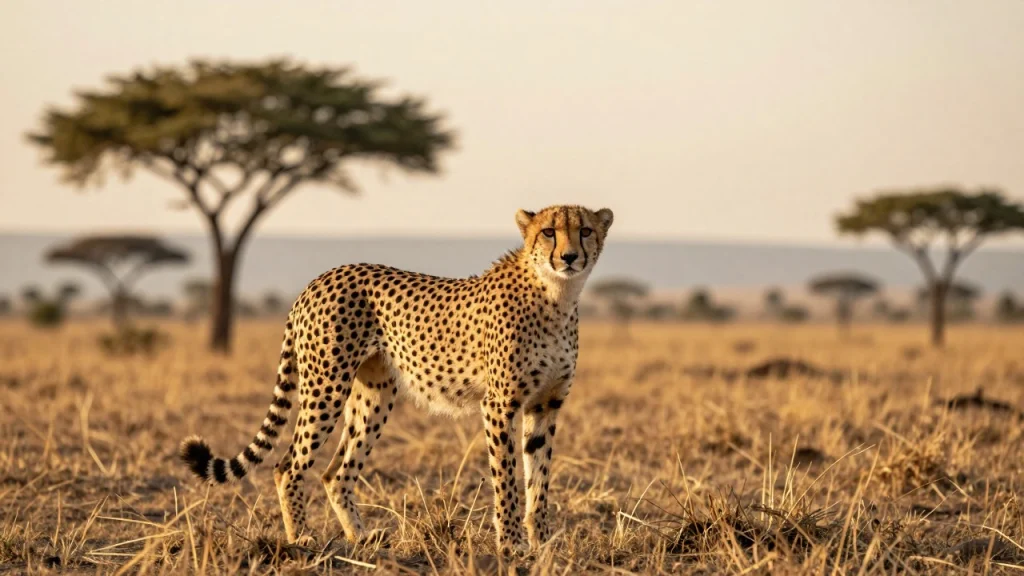
Many wildlife enthusiasts ask: how many hearts do cheetahs have? Like all members belonging to the taxonomic Class Mammalia, cheetahs possess exactly one heart. This solitary organ features four standard internal chambers designed to circulate oxygenated blood throughout the body. The widespread curiosity surrounding the animal’s circulatory setup stems from its astonishing physical capabilities, leading observers to speculate whether an auxiliary pump assists during extreme athletic performances.
Cheetahs rely on a streamlined body optimized for velocity as the fastest land mammal on Earth. That single heart is extraordinarily powerful and proportionately enlarged. An enlarged heart, expansive liver, and prominent adrenal glands trigger an instantaneous metabolic surge whenever the hunter pursues fleeing prey across open grasslands.
Cardiovascular and respiratory engine for explosive bursts
High-speed locomotion requires immense volumes of oxygen delivered rapidly to working muscle groups. Specialized internal structures including expanded nostrils, voluminous lungs, and a massive heart enable these predators to sustain fierce bursts of power. Rather than relying on multiple organs, the solitary feline heart works in close coordination with a hyper-specialized respiratory tract.
During an explosive charge, a sprinting cat can surge up to 45 miles per hour within 2.5 seconds. A pursuing predator easily outpaces most automobiles, climbing to 60 miles an hour within only three seconds.
Specialized airways and cranial adaptations
Inhaling massive volumes of air during a full sprint demands dramatic cranial modifications. Upper canine roots shrank over evolutionary time, creating anatomical room for wider nasal openings that optimize oxygen flow. This evolutionary trade-off reshaped the feline skull, prioritizing vital ventilation over heavy biting apparatus.
Spacious nasal apertures and deep pulmonary organs facilitate rapid oxygen consumption while pursuing quarry and clamping down on windpipes. Generous nasal spaces allow rapid inhalation, whereas specialized inner ear morphology stabilizes head positioning during high-velocity maneuvers.
However, cranial adaptations impose distinct ecological constraints on the predator:
- Expanded respiratory passages occupy significant facial volume, leaving minimal space for deep canine root structures.
- Reduced tooth roots limit jaw strength.
- Due to their reduced dental dimensions, these felids dispatch captured targets through suffocating neck grips.
Skeletal mechanics and stride dynamics
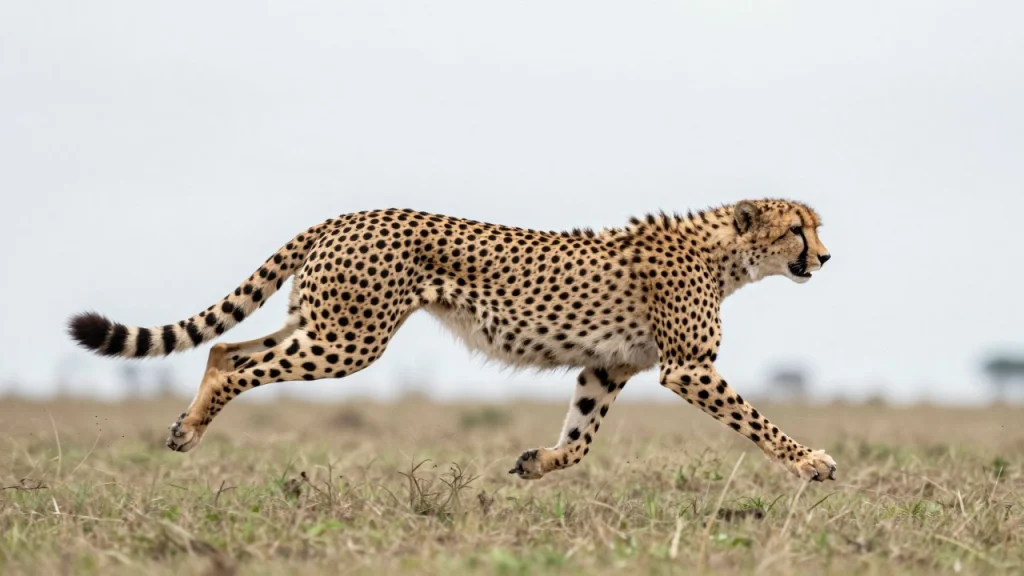
The physical structure housing this cardiovascular powerhouse maximizes every stride. A slender silhouette resembling a greyhound rests over an exceptionally lightweight skeletal framework.
The cat’s upper torso possesses unique flexibility that enhances leg reach. Reduced clavicles and detached, upright scapulae combine with mobile hips and an elastic vertebral column to broaden motion.
At maximum velocity, a running individual covers 23 feet in each bound while executing four complete strides per second. During standard charges, leaping bounds span 20 to 22 feet, rivaling the distance covered by thoroughbred horses. Elongated extremities, substantial leg musculature, and an arched spinal structure allow strides up to 7 m and velocity reaching 29 m/s.
When sprinting at peak effort, the hunter remains completely airborne for greater than half of its travel duration.
Traction, steering, and aerial agility
High acceleration requires extraordinary surface grip and directional control. Non-sheathed claws remain partially exposed to grip grassland soil firmly during sharp bends and rapid straight sprints. Firm claws function like athletic running spikes to maintain firm purchase, while a lightweight appendage directs body momentum.
Additional external features provide braking and balance at breakneck velocities:
- A conical patch of exposed dermal tissue situated behind each foreleg functions as a specialized stopping pad.
- The muscular tail swings dynamically to offset physical momentum, functioning like a rudder during violent steering shifts.
- These swift hunters represent the only felines capable of altering body trajectory mid-stride while suspended off the ground.
Thermal limits, hunting endurance, and recovery
Despite its remarkable cardiovascular power, the feline circulatory system operates under tight biological constraints. Peak velocities range between 60 to 70 miles per hour, but cats can sustain this pace for about 300 yards. Maximum physical exertion rarely persists beyond brief dashes lasting about 20 seconds.
Hunters creep toward targets before initiating high-velocity dashes that seldom exceed 300 m. Violent respiration accompanies soaring thermal readings, where internal body temperatures climb up to 105 degrees Fahrenheit.
After tripping a target, the carnivore secures a clamping hold around the throat to block respiration. Roughly 20 minutes of recovery are required for respiration rates and body heat to stabilize after a hard chase.
Stalking tactics and predatory ecology
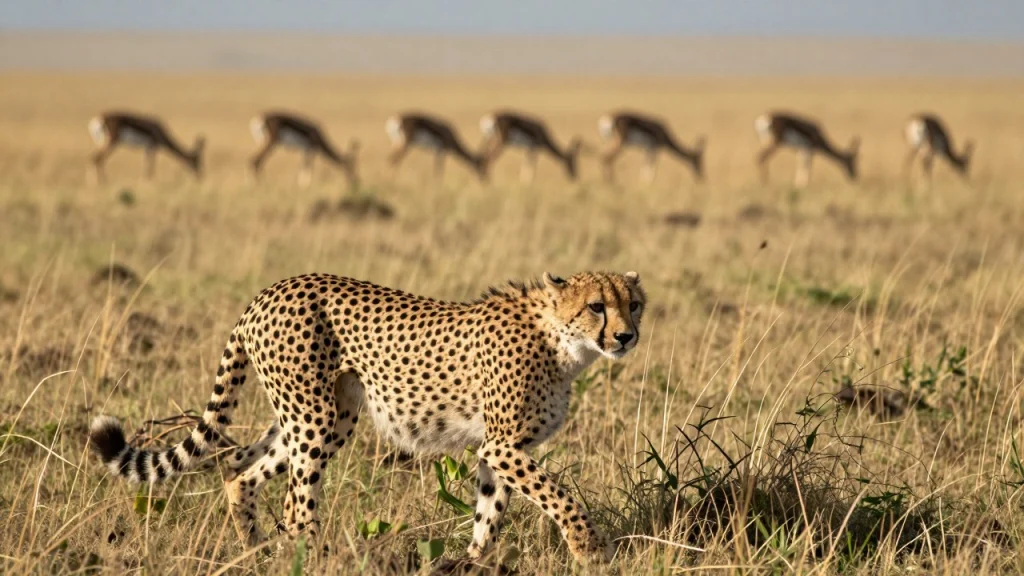
Cheetahs minimize total running distance by relying on stealthy approach tactics across open terrain. Stalking individuals slowly advance within 100 yards before launching their explosive burst. Predators also attempt to close the distance to about 165 feet before committing to a chase.
Despite astonishing velocity, hunting cats successfully secure a capture in only about half of their attempts. Wild individuals do not require open water sources, absorbing necessary bodily moisture directly from consumed tissues.
These fleet predators maintain quiet vocal habits. Lacking the anatomical structures required for roaring, these felines communicate through continuous purring.
Evolutionary lineage
Taxonomically designated as Acinonyx jubatus, the species occupies a distinct branch within the cat family. Genetic analyses indicate that Acinonyx jubatus shares close evolutionary ties with Puma concolor, commonly termed the cougar, alongside the wild Herpailurus yagouaroundi. Modern taxonomic research identifies four genetically distinct subspecies across wild geographic ranges.
In summary, cheetahs possess only a single heart, yet that organ operates as a masterpiece of mammalian engineering. Paired with expanded lungs, large nasal apertures, and an elastic skeleton, this solitary pump propels the predator through nature’s most intense sprints.