
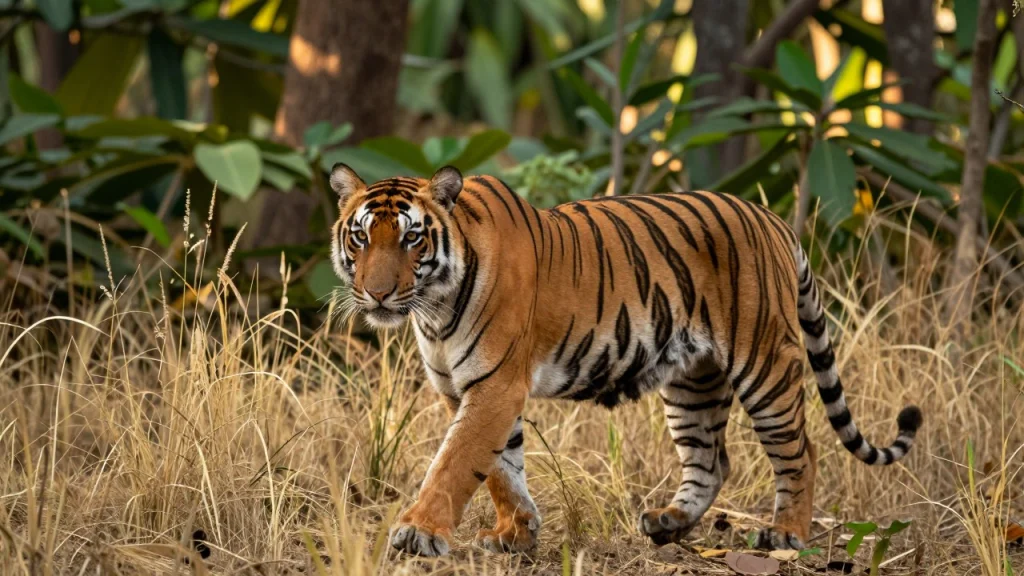
Tigers eat meat, chiefly large hoofed mammals such as deer and wild pigs rather than plants. Animal Diversity Web notes that smaller prey like porcupines and frogs are sometimes taken when large prey is unavailable, while the San Diego Zoo Wildlife Alliance reports they also eat birds and fish.
Tigers are apex predators and hypercarnivores, meaning their diet consists almost entirely of meat. In the wild, these solitary hunters rely on a wide variety of prey to sustain their large body mass and meet their high energy needs. Understanding what tigers eat provides valuable insight into their role as top predators in ecosystems across Asia.
As opportunistic hunters, tigers target medium- to large-sized ungulates, or hoofed mammals, which form the core of their diet. However, depending on prey availability, geographic location, and habitat conditions, a tiger’s menu can range from massive wild cattle to smaller animals like fish and birds.
The Primary Diet of Wild Tigers
Across all remaining tiger subspecies, large ungulates make up the vast majority of a tiger’s food intake. These sizable animals yield enough meat to sustain a tiger for several days after a successful hunt.
The most common prey species include:
- Wild deer: Species such as sambar deer, chital (spotted deer), sika deer, and swamp deer are staple food sources in forest habitats.
- Wild pigs and boars: Eurasian wild boars are frequently targeted throughout tropical and temperate forests.
- Wild cattle and bovids: Tigers regularly hunt gaur (the largest wild bovine), wild water buffalo, banteng, and nilgai.
When primary prey species are abundant, tigers focus their hunting efforts almost exclusively on these ungulates. A single adult deer or boar provides substantial nutrition, allowing the tiger to conserve energy between hunts.
Secondary Prey and Opportunistic Feeding
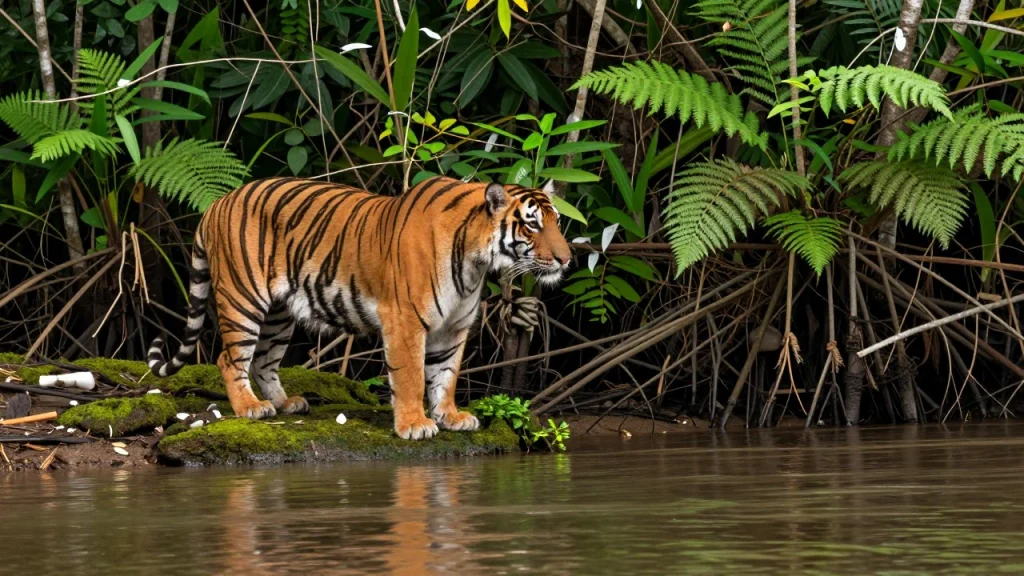
While preferred prey consists of medium and large hoofed mammals, tigers adapt their diets based on seasonal changes, prey scarcity, or geographic location. When large prey is difficult to locate, tigers readily hunt smaller animals.
Supplementary food sources include:
- Smaller mammals: Monkeys, porcupines, and hares.
- Reptiles and amphibians: Frogs, monitor lizards, and occasionally crocodiles or turtles are also eaten.
- Birds and aquatic prey: Birds, fish, and crabs.
How Tigers Hunt and Consume Their Prey
Tigers rely on stealth, camouflage, and short bursts of speed rather than long-distance endurance chases. Their striped coats blend seamlessly into tall grasses and dense undergrowth, allowing them to stalk prey within striking distance.
Once close enough, a tiger pounces on its prey, using its massive strength and powerful forelimbs to bring the animal down. It delivers a lethal bite to the throat or neck, suffocating or breaking the neck of the prey quickly.
Daily Food Consumption and Feeding Habits
After securing a kill, a tiger typically drags the carcass into cover, preferably near water, before beginning to eat.
- A female tiger requires on average about 5-6 kg (11-13 lb) of meat per day, while adults may consume 18-27 kg (40-60 lb) in one night.
- After a long period without food, a large male tiger can eat up to about 100 pounds (45 kg) of meat at once.
- Tigers stay near large carcasses for several days, feeding periodically until the animal is fully consumed.
Because many attempts fail (one study found only 1 successful kill in 12 attempts by Bengal tigers), tigers must make the most of every large kill they secure.
Variations in Diet Across Subspecies
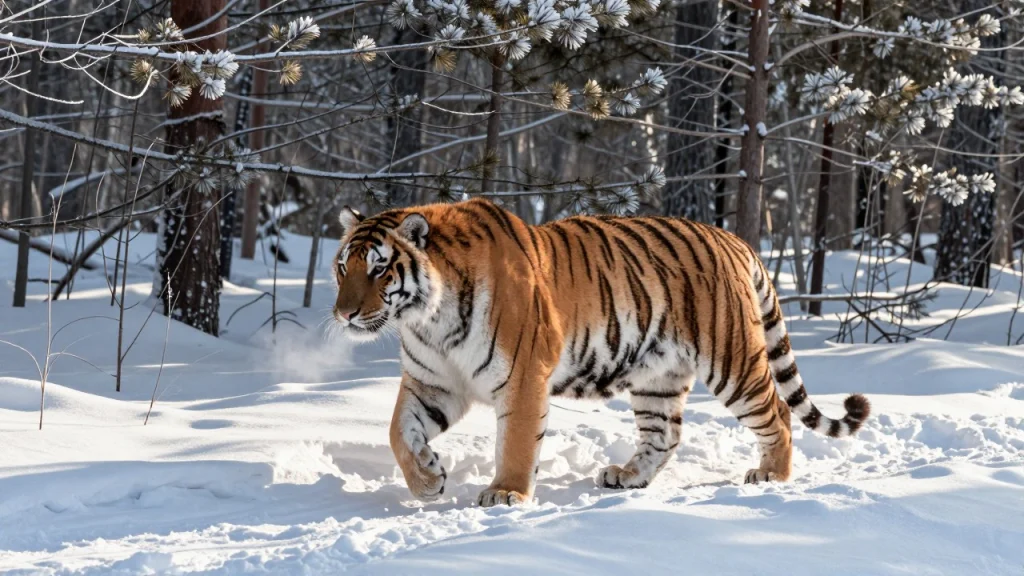
Dietary habits vary across different tiger subspecies due to the distinct ecosystems and wildlife present in their native ranges.
- Amur (Siberian) tigers: Inhabit the cold boreal forests of the Russian Far East. Their diet focuses heavily on red deer, sika deer, wild boars, and occasionally young brown or black bears.
- Bengal tigers: Live in the diverse forests, grasslands, and wetlands of South Asia. They feed mainly on sambar deer, chital, gaur, and wild boars.
- Sumatran tigers live only on Sumatra and eat deer, wild pigs, fish and other available animals.
The Ecological Importance of the Tiger’s Diet
As apex predators, tigers play an essential role in maintaining balance within their natural ecosystems. By preying on herbivores, tigers prevent overgrazing, which preserves forest vegetation and protects plant biodiversity.
However, habitat loss, prey depletion caused by illegal poaching, and human encroachment pose severe threats to wild tiger populations. When natural prey populations decline, tigers are sometimes forced to hunt domestic livestock, leading to human-wildlife conflict. Protecting native prey species and their habitats remains a vital step in wild tiger conservation efforts.
What is a tiger’s favorite food?
The San Diego Zoo Wildlife Alliance notes that ungulates form most of their dietary intake and that tigers prefer pigs and deer, though in some areas of Asia a tiger may bring down an elephant or rhino calf.
Do tigers eat fruit or plants?
The Smithsonian’s National Zoo explains that tigers, like all cats, are obligate carnivores that can only process meat efficiently. The San Diego Zoo Wildlife Alliance reports that plants do not make a meaningful contribution to caloric intake. Regarding the tigers in its collection, the Smithsonian’s National Zoo emphasizes that their menu is strictly meat at all times.
What do tigers eat in zoos?
According to the Smithsonian’s National Zoo, captive tigers eat ground beef with weekly enrichment items, while keepers provide a manufactured carnivore formula designed to meet nutritional needs. To support jaw movement and dental health, the facility offers these cats joint bones or cattle leg bones twice per week, alongside lagomorph prey once per week. At the San Diego Zoo system, captive tigers receive whole prey, assorted meats, and large bones for overall wellness.
Sources
- San Diego Zoo Wildlife Alliance: Tiger (Panthera tigris) Fact Sheet: Diet & Feeding
- Smithsonian’s National Zoo: Tiger
- Animal Diversity Web: Panthera tigris (tiger) | INFORMATION
- National Geographic: Sumatran tiger, facts and photos
- IUCN SSC Asian Wild Cattle Specialist Group: Gaur
- Smithsonian’s National Zoo: What Does Tiger Poop Look Like? And More Tiger Facts
- Oryx / Cambridge: Bengal tiger Panthera tigris tigris diet landscape
- San Diego Zoo Wildlife Alliance: Tiger | San Diego Zoo Animals & Plants
- Smithsonian’s National Zoo: Just How Big are Tigers? What Does Tiger Poop Look Like? And More Tiger Facts | Smithsonian’s National Zoo and Conservation Biology Institute