

Capybaras live in Central and South America, always near water: along rivers, beside ponds and in marshes. Their range covers most of Brazil, Uruguay and Venezuela and reaches south to the Argentinian pampas, and a small invasive population has been seen in Florida.
Capybaras live in Central and South America, and they almost never stray far from water. The species is strictly South American in its core range, and it thrives wherever rivers, ponds, marshes and flooded grassland give it a place to graze, cool off and hide.
The countries and regions where capybaras live
The range of the capybara covers most of Brazil, Uruguay, Venezuela and Colombia. It stretches south to the Argentinian pampas and reaches the Andes in the west. A zoo source places them east of the Andes, which matches that western limit.
National Geographic describes them as found across much of northern and central South America. Sightings of a small non-native group have also been recorded in Florida, so the animal is not limited to its home continent.
Habitats that capybaras prefer
Water decides everything for this animal. Capybaras occur only where water is easy to reach, and the classic setting is flooded grassland. Marsh edges and lowland forests with water all year are also favored, because they combine good grazing with a reliable supply.
Wetlands, forests and drier ground
Capybaras are flexible within that rule. Besides wet ground, they also occupy dry forest, scrub and grassland across South America. National Geographic lists forests, seasonally flooded savannas and wetlands as the kinds of places their bodies are built for.
The San Diego Zoo gives a simpler picture: swampy, grassy land bordering rivers, ponds, streams and lakes. In practice, that means almost any landscape works, as long as a pond or river is close.
Why capybaras need a swimming hole
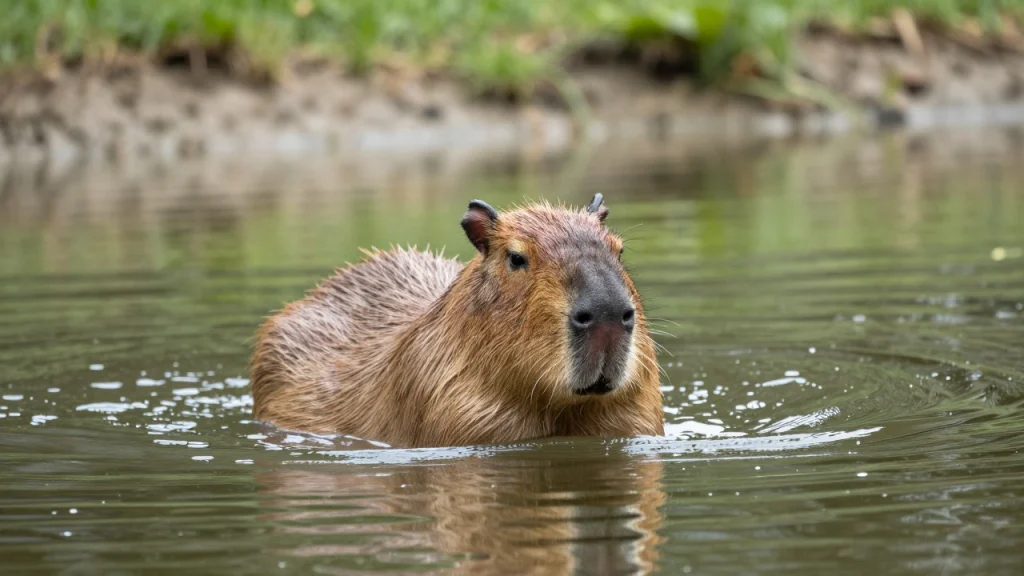
A capybara has dry skin, and the zoo notes that it needs a swimming hole to stay healthy. Water is also a hiding place: when predators are near, a capybara can remain submerged for as long as five minutes.
Its body suits this lifestyle. The eyes, ears and nostrils sit high on the head, so the animal can keep watch while the rest of its body stays hidden below the surface. Its feet are slightly webbed, which helps it paddle and walk.
Heat is another reason to stay wet. To keep cool through a hot day, capybaras wallow in shallow water and mud, and they head out to graze as evening arrives.
How groups use their home ground
Capybaras are social. Groups usually hold around 10 adults of both sexes, although group size can range from 3 to 30. Each group defends a territory that encompasses its feeding and wallowing sites.
Season changes the picture. In the dry season, larger gatherings form around water resources. During the wet season, as many as 40 capybaras may be found together, according to the San Diego Zoo.
Group living matters for survival. A capybara without a group is excluded from most grazing habitat and has little chance of finding a mate, so lone animals are seldom seen.
What capybaras find in their habitat
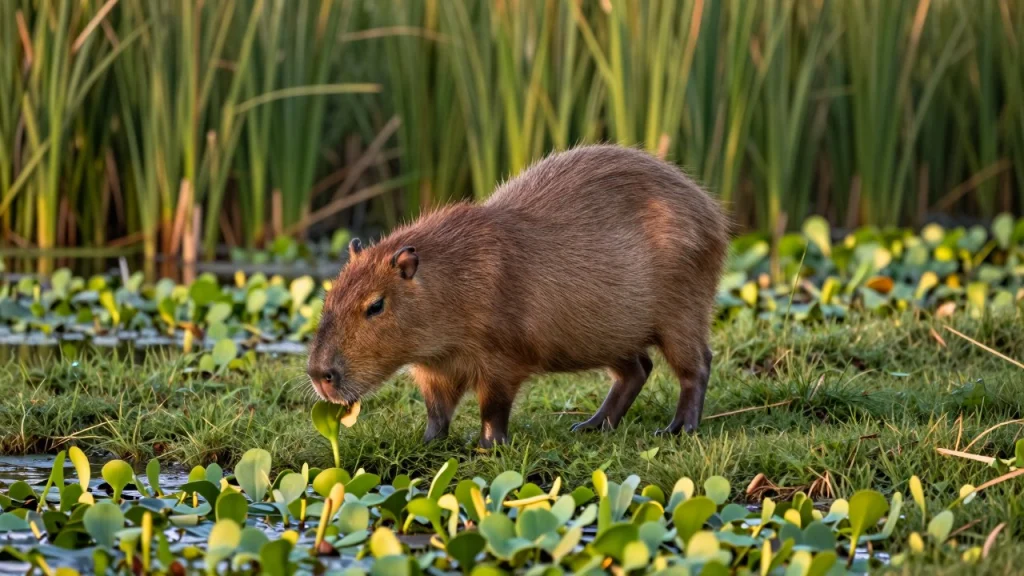
The habitat supplies food as well as water. Capybaras graze on grass and water plants, and an adult can eat 6 to 8 pounds of grass per day. When fresh plants dry up in the dry season, they turn to reeds, grains, melons and squashes.
The same wetlands hold danger. The jaguar is the adult capybara’s main natural predator, and in the water caimans also threaten them. Young capybaras face even more enemies, including anacondas, ocelots and harpy eagles.
Size and lifespan of these wetland rodents
Capybaras are the largest rodents, weighing from 35 to 66 kg. Females are slightly larger than males. In the wild they live about 6 years on average, and some reach as many as 10 years.
Are capybara habitats under threat?
National Geographic lists the capybara as Least Concern on the IUCN Red List, with a stable population trend. That status does not mean the animal is safe everywhere.
In some areas, hunting for their skin is a serious threat to local populations. The San Diego Zoo adds that deforestation, habitat destruction and illegal poaching are also pressures, and that hunting pushed the species into trouble not long ago.
Do capybaras live in the Amazon rainforest?
Strayer University’s guide to Amazon River animals includes the capybara among the mammals it describes and names the animal the world’s largest rodent.
Do capybaras live in the United States?
Capybaras do turn up in the United States, though not as a native population. Capybaras naturally occur in South America, yet individuals have been seen in Florida and could form populations there. The U.S. Geological Survey says capybaras are kept as pets in the United States, and the animals found outside captivity in Florida may descend from pets that escaped from a private home. It also reports that a population may have settled in the Santa Fe River drainage of north-central Florida, though none have turned up since 2011.
Do capybaras live in Japan?
Yes, in captivity: Izu Shaboten Zoo began breeding capybaras in 1966. The same zoo stages an annual capybara bath, held each year from November to the following April, and says watching the animals soak in the outdoor baths gives many visitors a sense of peace. Nagasaki Bio Park says cold Japanese winters are the reason its capybaras enjoy bathing there.
Sources
- Animal Diversity Web: Hydrochoerus hydrochaeris (capybara)
- San Diego Zoo Wildlife Alliance: Capybara
- National Geographic: Capybara
- Strayer University: Amazon River Animals
- University of Florida IFAS Extension (EDIS): Status of Capybaras (Hydrochoerus hydrochaeris Rodentia: Hydrochaeridae) and Potential for Establishment in Florida
- U.S. Geological Survey: capybara (Hydrochoerus hydrochaeris) – Species Profile
- Izu Shaboten Zoo: Capybara Outdoor Bath IZU SHABOTEN ZOO
- Nagasaki Bio Park: Capybara’s open-air bath Nagasaki Bio Park