
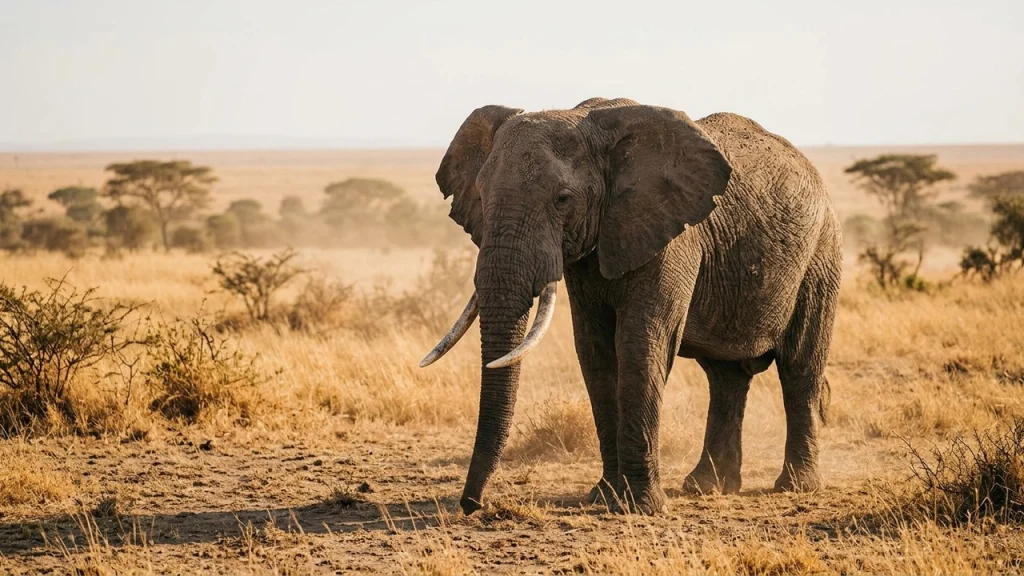
On the IUCN Red List, African forest elephants (Loxodonta cyclotis) appear as Critically Endangered while African savanna elephants (Loxodonta africana) appear as Endangered, and an article in PLOS ONE notes that Asian elephants are globally viewed as an endangered species. Heavy mortality struck both African species after 2008 due to a major surge in poaching that peaked in 2011 and continues to jeopardize herds. According to research in the Proceedings of the National Academy of Sciences, unlawful hunting at an intensively surveyed area jumped substantially past 2008, showing a strong correlation with black-market ivory values and rising confiscations of contraband headed to China.
Landscape transformation creates another severe hazard. The International Union for Conservation of Nature highlights the persistent transition of wild terrain into crop fields and alternative human uses as an additional major peril. Because these large mammals demand far wider home territories than numerous other land mammals, the Smithsonian’s National Zoo observes that they regularly experience the initial blow when natural landscapes fragment. Expanding settlements also restrict open ground: the San Diego Zoo Wildlife Alliance observes that agricultural growth and infrastructure projects frequently displace or disturb herds, compressing elephant environments as human communities multiply. In Asia, PLOS ONE reports that clearing ground for rubber estates directly results in territory deprivation for the animals.
Poaching and the illegal ivory market
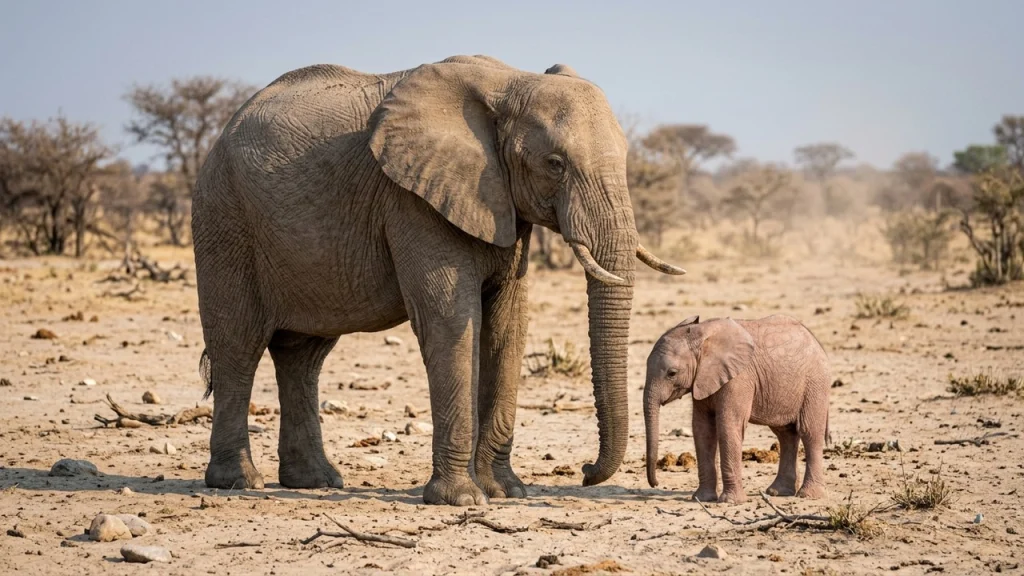
Unlawful hunting remains a driving peril across all herds. The San Diego Zoo Wildlife Alliance reports that illicit killing causes population reductions throughout all elephants, remarking that human beings constitute the sole true hazard for healthy adults. Although tusks consist of routine dentine comparable to people’s teeth, buyers keep buying them unlawfully, which prompts hunters to keep pursuing the animals illegally.
An investigation in the Proceedings of the National Academy of Sciences confirms that contemporary ivory intake cannot be sustained. Across the continent, unlawful mortality reached unsustainable marks between 2010 and 2012, hitting about 8% during 2011. That high point corresponded to about 40,000 elephants taken unlawfully alongside a probable species reduction of about 3% that year. A study in the Proceedings of the National Academy of Sciences reports that the species contracted over the preceding 4 years, a timeframe wherein tens of thousands of elephants were killed each year throughout the continent.
Agricultural expansion and habitat fragmentation
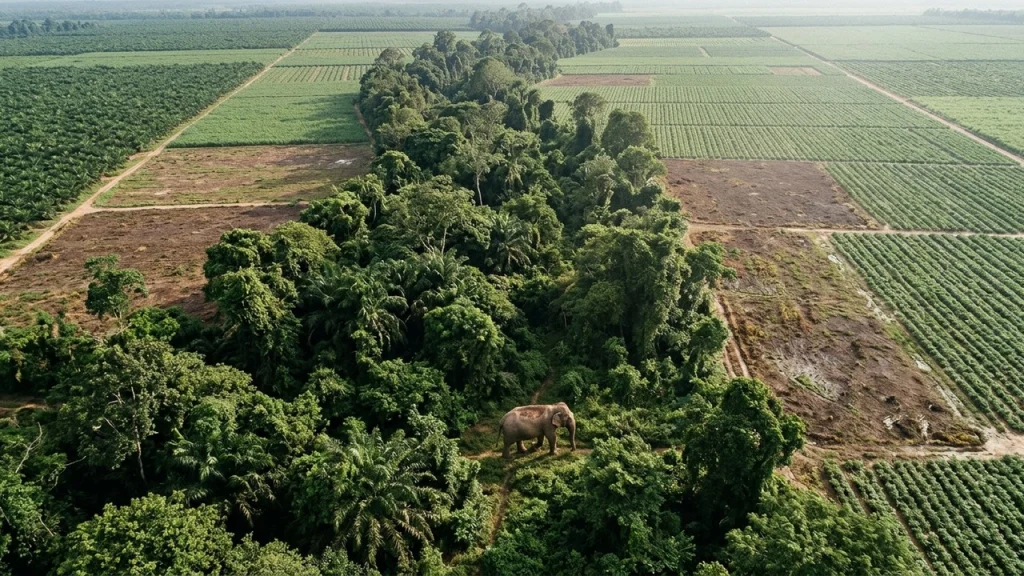
The Smithsonian’s National Zoo explains that oil palm estates, mainly across Malaysia and Indonesia, drive rapid tree clearing. The Smithsonian’s National Zoo notes that crop raiding happens frequently and can create situations that can lead to the deaths of elephants and humans alike.
By 2010, rubber trees occupied 6,000 km 2 encompassing 95% of settlements throughout Xishuangbanna, supplying 50% of Chinese rubber output. A PLOS ONE study notes that staple crops including paddy, corn, banana and sugarcane offer a nutritious, palatable and readily accessible food supply for wild elephants in Xishuangbanna, which seemingly incorporate them into their foraging strategy.
Population trajectories across Africa and Asia
Data from the International Union for Conservation of Nature show that forest elephant counts dropped by more than 86% over 31 years, whereas savanna elephant tallies dropped by at least 60% over 50 years. Forest elephants are believed to inhabit merely a fourth of their historical territory, retaining their largest groups within Gabon and the Republic of the Congo. Across both African kinds combined, an IUCN evaluation from 2016 offered a reliable total of around 415,000 animals. The IUCN says that savanna elephant totals have remained stable or increased across decades, particularly within the Kavango-Zambezi Transfrontier Conservation Area, which shelters Africa’s largest subpopulation of this species.
The Smithsonian’s National Zoo states that the Asian elephant is regarded as an umbrella or flagship species, whose survival would assist in preserving ecological integrity alongside biological diversity across broad ranges. India retains by far the biggest national share, harboring nearly half of the world’s Asian elephants. The Smithsonian’s National Zoo says Thailand’s Western Forest Complex is Southeast Asia’s largest surviving tract of protected woodland and shelters more than one-third of all wild elephants in Thailand. In China, where the animal holds First Class National Protected Wildlife status, Asian elephants retreated quickly toward the south as human communities expanded, leaving them confined today to three jurisdictions in southwestern Yunnan Province: Linchang, Simao and Xishuangbanna. A PLOS ONE study reports that among those three southwestern Yunnan states, Xishuangbanna holds the greatest expanse of tropical forest and 85% of all elephants in China across three sub-reserves (Mengyang, Mengla and Shangyong), with the population growing from an estimated 146 in 1976 to 165 to 213 in 2006 and around 250 to 280 at present, with the final number from unpublished data.
Sources
- International Union for Conservation of Nature: African elephant species now Endangered and Critically Endangered – IUCN Red List
- Smithsonian’s National Zoo and Conservation Biology Institute: Asian elephant
- San Diego Zoo Wildlife Alliance: Elephant
- Proceedings of the National Academy of Sciences: Illegal killing for ivory drives global decline in African elephants
- PLOS ONE: Predicting Hotspots of Human-Elephant Conflict to Inform Mitigation Strategies in Xishuangbanna, Southwest China