
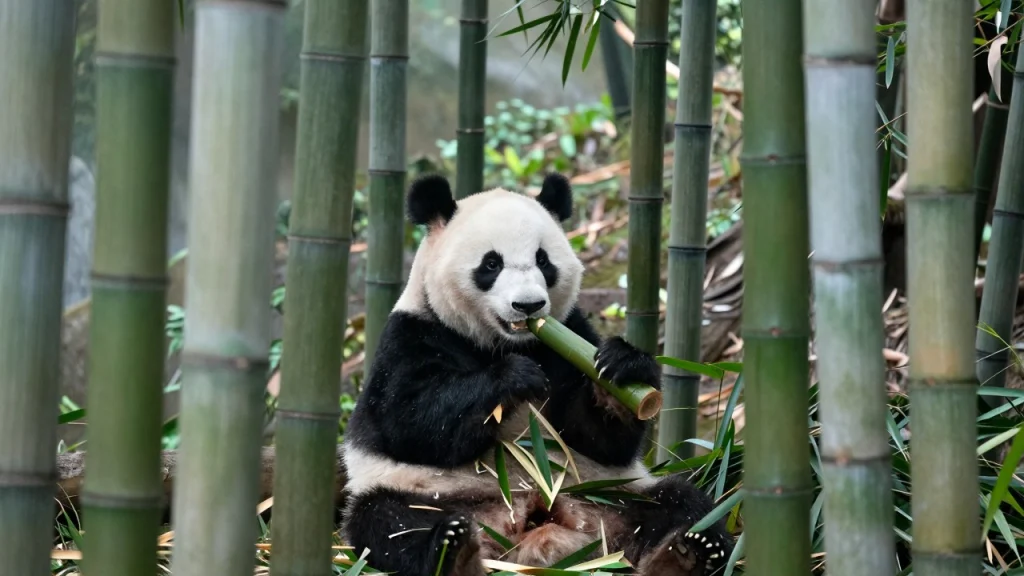
Yes. Giant pandas already eat meat on rare occasions, and researchers report that they retain that capacity both in natural settings and under human care. Bamboo still dominates intake, supplying almost the entire diet each day. A durable return to meat eating looks unlikely because feeding anatomy, daily scheduling and flavor biology all reinforce bamboo use.
This distinction explains why biologists describe pandas as carnivores by ancestry that function as bamboo specialists. Their digestive tract processes plants with flesh eater style tools, so survival depends on eating large volumes rather than selecting rich prey. Occasional animal matter therefore supplements rather than replaces bamboo, and future diets will probably follow the same pattern.
A bamboo specialist with carnivore roots
Pandas belong to a meat eating mammalian order yet run a digestive tract typical of its flesh eating members. That heritage shapes everything about how they handle bamboo, from rapid transit to limited fiber breakdown. The result is an animal that looks like a plant eater at the food level while remaining carnivore like inside.
Modern bamboo dependence evolved to exploit an abundant plant that stays available through seasons. Daily meals focus on leaves, stems and shoots drawn from multiple bamboo kinds, which lets pandas shift parts as quality changes. This flexible use of that plant group reduces search costs and supports a low energy lifestyle.
Genetic work suggests the bamboo commitment reaches back a very long time, with survival on this menu probably extending for more than 2 million years. Such duration allowed time for distinctive chewing and handling traits to emerge even while internal digestion changed little. The panda thus combines new food gathering tools with old nutrient processing.
Why bulk feeding matters more than prey

Volume strategy defines panda nutrition. Because much consumed material leaves the body as waste, individuals need substantial daily rations to meet requirements. Keepers measure intake at 70 to 100 pounds of bamboo daily, a figure that shows why feeding occupies most of the active period.
Time budget follows directly from that volume. Searching plus feeding can occupy 10 to 16 hours a day, leaving limited scope for stalking, chasing or scavenging. Rest fills most remaining hours, which further lowers energy expenditure and fits a fibrous diet.
Extraction efficiency explains the pressure to keep eating. Only about 17% of nutrients in leaves and stalks become available to the animal, so throughput must stay high. Bulk intake compensates for poor breakdown and keeps protein and energy flowing despite low quality forage.
Chemical makeup clarifies why bamboo can sustain them at all. Analyses describe it as low nutrition food with 70 to 80% fiber like components such as cellulose, hemicellulose and lignin. The remaining energy fraction includes 20 to 30% protein, soluble carbohydrate and fat. Pandas target the more nutritious fractions and pass fiber quickly, preserving a surprisingly protein rich intake from a plant source.
Jaws, thumbs and stomachs built for stalks
Handling tools start with the forepaw. Pandas grasp culms with five fingers plus an enlarged wrist bone that functions as a false thumb, and that projection grips and turns stems with near human dexterity. An added digit increases tearing strength and control while stripping leaves.
Sitting posture improves that control. Animals often feed upright in a human like seated pose, which frees both forepaws for manipulation. The stance looks relaxed but serves a mechanical purpose by stabilizing the body while the paws rotate and peel.
Chewing power comes next. Heavy jawbones and cheek musculature grind dense culms between wide rear teeth, crushing fibers that would defeat smaller mouths. The lower jaw shows particular strengthening for bamboo chewing, while teeth peel away hard outer rind to expose softer interior tissue.
Internal protection completes the system. Muscular stomach walls churn woody fragments, while dense mucus coats the gut and shields tissues from sharp splinters. Together these traits let pandas swallow coarse material that would injure many other mammals of similar size.
A wrist projection formed by an elongated bone with a fleshy covering underlies much of this dexterity. Rather than evolving a true extra finger, pandas repurposed wrist structure for gripping. That solution works well enough to process many stems per day without sacrificing walking ability.
Which animal foods actually enter the diet
Occasional meat represents only a small share. About 1% of intake involves other plants plus flesh, which keeps bamboo near total dominance. Such rarity indicates opportunism rather than preference, with animal matter taken when encountered rather than sought.
Documented wild cases include active hunting of pikas and other tiny rodents, showing that pandas recognize and capture live prey at times. These events remain infrequent and do not alter the overall plant based pattern. They demonstrate ability, not dependence.
Zoo and field records broaden the list of rare extras beyond rodents. Observers report varied minor items that supplement bamboo:
- grasses that grow between bamboo stands
- bulbs dug from forest soil
- fruits that provide sugar and moisture
- insects gleaned from stalks or ground
- rodents caught near feeding sites
- carrion found during travel
Each category appears sporadically and contributes little energy over a year. The breadth matters because it proves digestive tolerance for animal protein and fat, even though pandas rarely use that tolerance.
Additional diet surveys list bamboo stems and shoots alongside kiwi like fruits, small mammals, fish and insects. That combination underscores dietary flexibility at the margins while confirming leaves and shoots as staples. Fish intake especially shows that pandas can handle aquatic animal protein when available.
Why flavor biology points away from meat
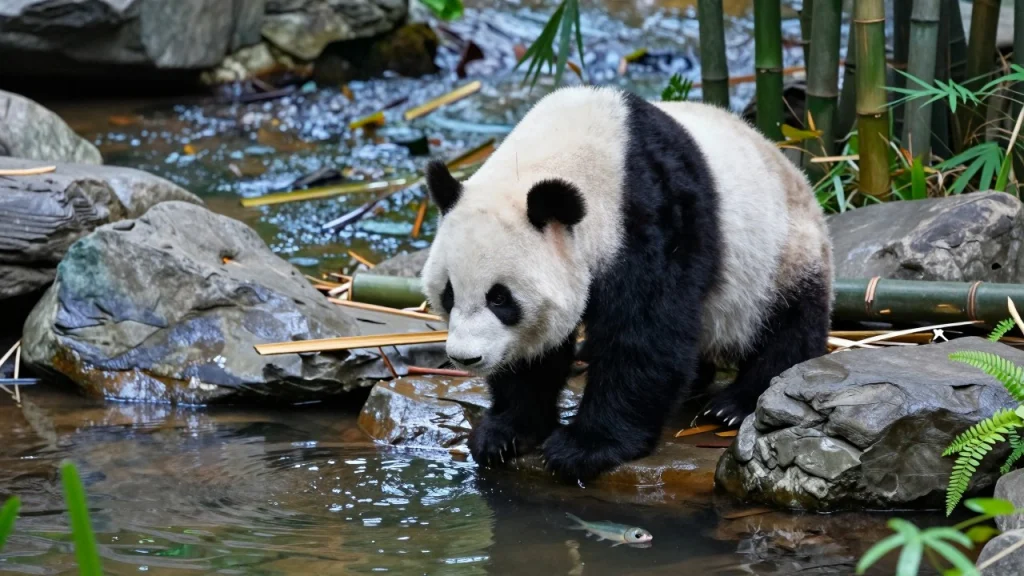
Taste loss reduces motivation to hunt. The umami detector normally responds to components of meat and other protein rich foods, giving carnivores a strong reward signal. Pandas carry a disrupted version of that system, so flesh likely tastes less compelling to them than to true predators.
Genetic detail pinpoints the change. Studies show the TAS1R1 receptor gene became inactive after a 2 bp insertion in one coding segment and a 6 bp deletion in another. Those small mutations removed normal function and probably helped cement the dietary shift toward plants.
Researchers link that loss directly to menu evolution, proposing that disabled umami sensing contributed to reduced meat interest. Behavior follows chemistry as much as opportunity.
Captive observations align with this view. Pandas possess flesh eater digestion yet evolved to rely almost entirely on bamboo, indicating that ecology and taste overcame internal anatomy. They can digest meat but seldom choose it when bamboo stands remain productive.
Could pandas become meat eaters again
Short term opportunism will continue. Individuals will likely keep taking insects, rodents, fish or carrion during bamboo shortages or chance encounters because their guts already handle such foods. That flexibility aids survival without requiring new adaptations.
A population wide return to carnivory faces steep barriers. Daily time already commits to bamboo harvest, chewing structures specialize in grinding fiber, and flavor receptors no longer reward meat strongly. Reversing those traits would demand sustained selection pressure over many generations, not a lifetime decision.
Habitat quality therefore matters more than hunting skill. As long as varied bamboo parts remain accessible, the most efficient strategy stays with bulk plant feeding rather than costly prey pursuit. Protection that maintains productive bamboo understories keeps pandas on their current successful path.
In short, pandas may nibble meat tomorrow, next month or next year, but they will probably remain bamboo feeders that tolerate flesh. Their story shows how evolution can repurpose a carnivore body for plants while leaving a narrow door open to the past.
Sources
- San Diego Zoo Wildlife Alliance: Giant Panda | San Diego Zoo Animals & Plants
- Smithsonian’s National Zoo: Giant panda
- WWF: What do pandas eat?
- Animal Diversity Web: Ailuropoda melanoleuca (giant panda) | INFORMATION
- PMC (peer-reviewed article): Comparative genomics reveals bamboo feeding adaptability in the giant panda (Ailuropoda melanoleuca)