
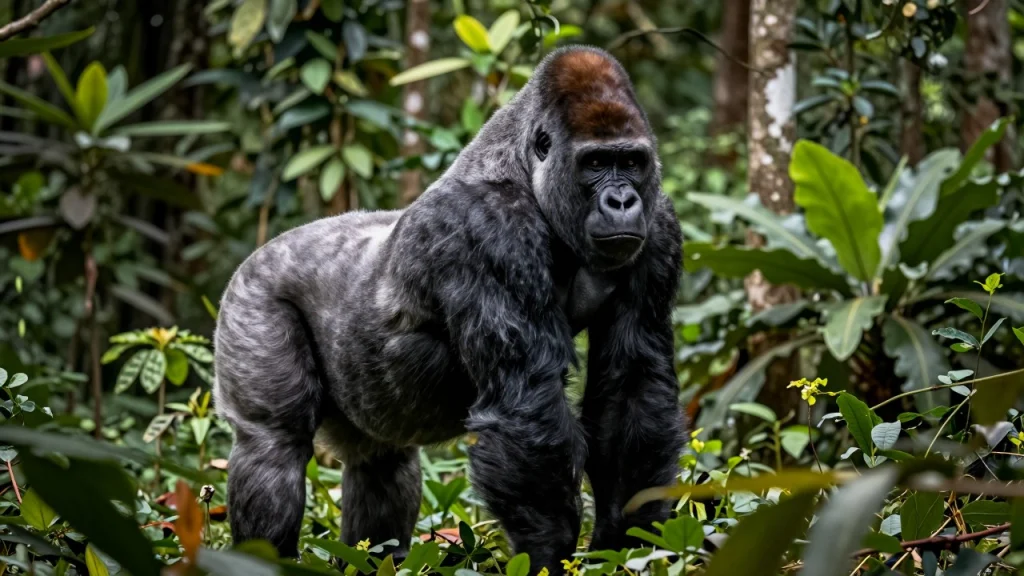
A grown male that leads the family
A silverback is a grown male that heads his group. Older males earned that name from the grey coloring that spreads with age. That pale back works as a visible sign of maturity, so other gorillas can recognize the leader quickly and give him space during tense moments.
Gorillas stand as the largest great apes, while the western lowland form is the smallest subspecies. Animals from the Congo Basin live quiet and peaceful lives without aggression, although disease and poaching threaten them. Their calm nature helps explain why a troop can stay close together even around such a powerful male.
How the silver saddle develops
A fully grown male develops a pale saddle across his lower back. The patch contrasts with darker fur on the shoulders and limbs, which makes the adult easy to spot when the group moves through thick plants.
In the western lowland form the pale area can spread toward the rump and thighs. Dark hair shifts toward silvery gray as the male matures. The change happens slowly over several years, so the back looks darker in young adults and lighter in older leaders.
The change commonly finishes between 11 and 13 years old. Males rank as fully grown at around 13 years old or more. Full adulthood brings full social duties, including defense, mediation and guidance for young.
From blackback to troop leader
Males aged eight to 12 years carry the name blackback, with sexual maturity but without full adult bulk.
A dominant male often keeps his role until a rival displaces him. A displaced male typically lives alone without a family. That solitary period shows how much status matters, because only a group holder mates regularly and directs daily life.
Size that supports protection
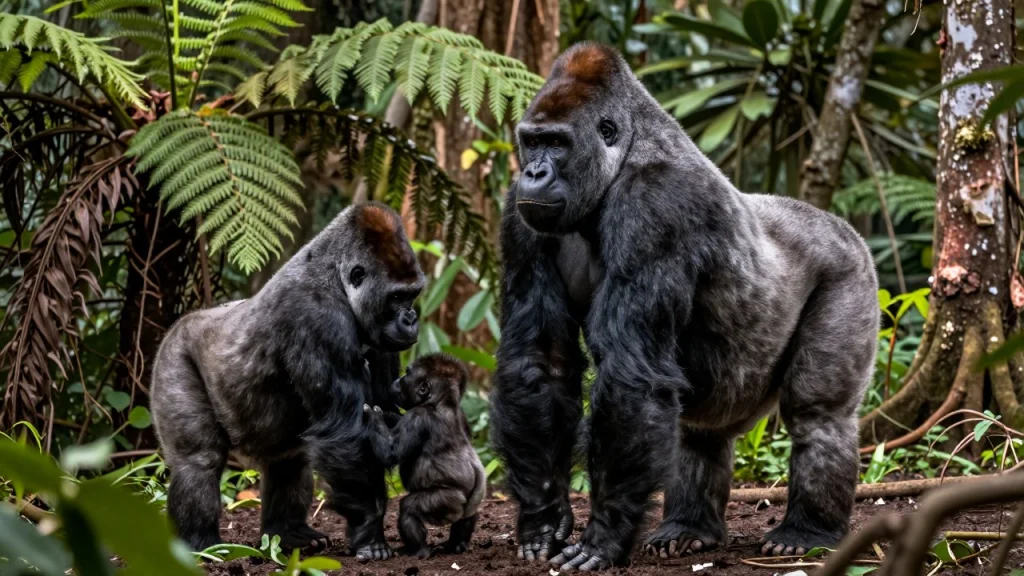
Adult males average about 300 pounds and can reach up to 500 pounds. They can stand up to 6 feet tall. Bulk serves protection, not bullying, because the leader uses weight and height to block threats, push rivals aside and stand guard while others feed.
How a silverback runs his troop
A troop can include 5 to 30 gorillas under a strong and experienced male called a silverback. Western lowland groups often stay smaller, averaging about five individuals. Small troops can coordinate feeding with less competition at each food patch.
A typical family includes a silverback, younger blackbacks, adult females and young offspring. He shoulders duty for keeping every member safe and healthy. That duty means watching for danger, choosing paths and stepping between quarreling animals before harm occurs.
He makes every daily choice about travel for food, pauses to eat or rest, and sleeping sites. He settles quarrels and fixes the home range used by the group. He sets the rhythm for when members wake, eat and sleep. A steady routine keeps infants fed, limits wasted travel and helps adults save energy.
Breeding role inside the family
He holds sole breeding access to females, although at times he may let younger males mate. This arrangement lowers tension inside the troop while keeping reproduction centered on the male that has already proved his ability to defend young.
What silverbacks eat and how groups move
Wild gorillas feed as herbivores that rely mainly on juicy stemmed plants. Succulent stems provide water, fiber and steady energy for large bodies that digest big volumes of vegetation.
The wider menu varies by season and forest:
- leaves
- stems
- fruits
- seeds
- roots
- ants
- termites
An adult male consumes about 45 pounds of food per day.
A mountain home range can cover up to 15 square miles. Rotation across that range lets plants regrow and gives the leader fresh feeding grounds to choose each morning.
Nests, rest and daily rhythm
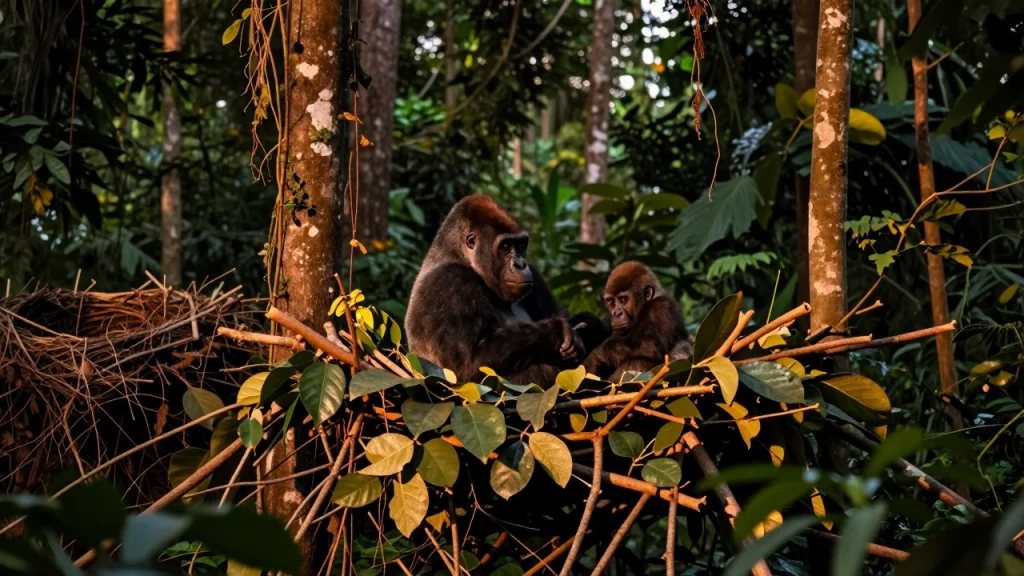
Gorillas construct day and night shelters from branches and leaves that cushion the body on the ground or in trees. Each adult builds a day platform for midday rest while youngsters play nearby, then builds a fresh night platform for sleep.
They never reuse the same nest twice.
Gentle giant with a loud warning
These apes live calm and friendly group lives centered on plants. Even stern silverbacks behave gently with small youngsters while they practice new skills. Tolerance lets infants imitate adults, wrestle with peers and learn climbing and feeding without fear.
When a rival approaches, the leader pounds his chest using cupped hands to produce a sharp racket, shrieks, flashes his teeth and then rushes ahead. The display advertises strength and usually ends the contest without contact, which protects both sides from injury.
Gorillas face no natural enemies, yet people create critical risks for these peaceful primates. Hunting, habitat loss and disease shape survival far more than any wild predator.
Growth, birth and lifespan
Pregnancy in western lowland gorillas continues for about eight and a half months. Newborns average 4 pounds in weight. A small infant can cling to its mother while she walks and feeds, which keeps the baby safe during travel.
Wild individuals live between 35 and 40 years, while some captive animals live almost 50 years. A long life lets a successful male guard several cohorts of infants and give his troop years of stable leadership.
Why guarding leaders helps conservation
Western gorillas belong to a critically endangered species. The silverback is the troop’s protector and organizer, handling defense, mediating disputes and guiding the young. Protection that keeps adult males alive therefore keeps whole families intact and gives young gorillas a better chance to reach adulthood.