
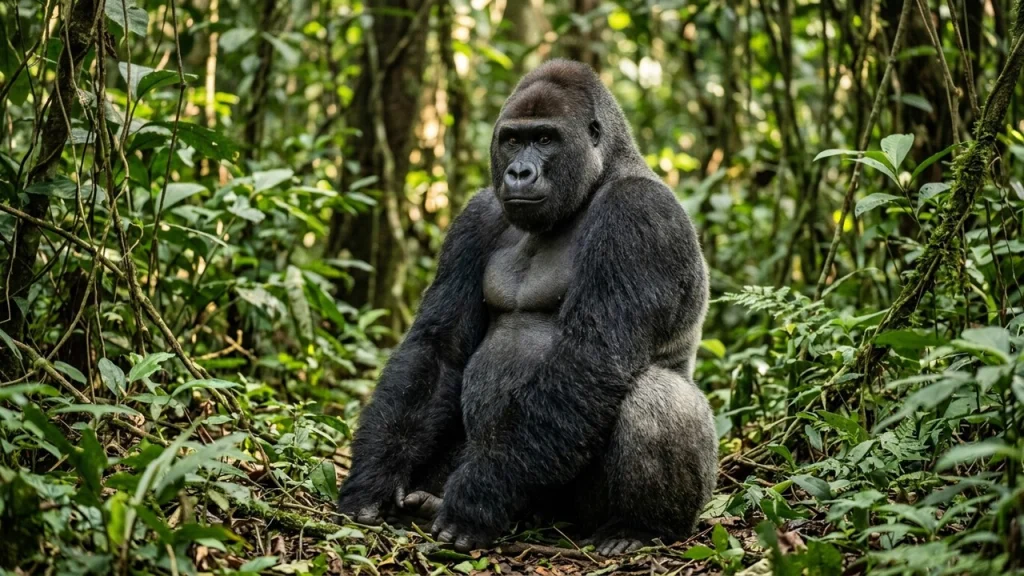
The Smithsonian’s National Zoo says western lowland gorillas live 30 or 40 years in the wild. Animal Diversity Web’s account of the western gorilla puts wild gorillas at 35 to 40 years, and National Geographic lists an average of 35 years in the wild for mountain gorillas.
The zoo adds that in human care, western lowland gorillas may live into their 50s. Animal Diversity Web mentions some captive gorillas that lived almost 50 years.
Averages by sex and upper ranges
San Diego Zoo Wildlife Alliance gives an average life span of 33 years for males and 39 years for females. Animal Diversity Web’s account of the eastern gorilla says gorillas can reach 40 to 50 years.
Mothers, infants and the years of growing up
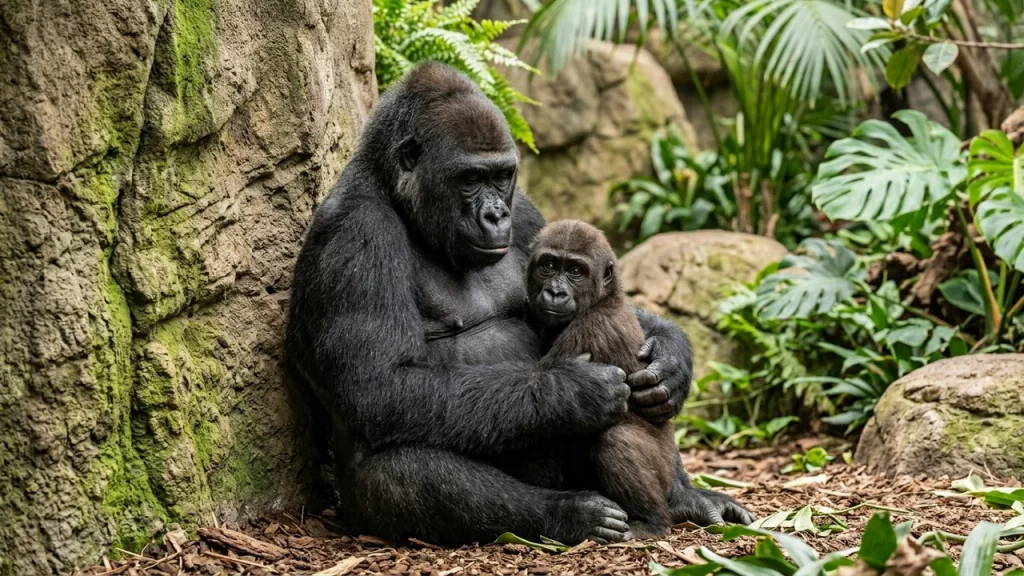
The National Zoo says a western lowland gorilla newborn averages 4 pounds (2 kilograms), and infants grow twice as fast as a human baby during their first couple of years. Infants may ride on their mother’s back, chest or legs until they are 3.5 to 4 years old. San Diego Zoo Wildlife Alliance says a young gorilla shares its mother’s nest until it is four to six years old.
Female western lowland gorillas mature sexually between 6 and 9 years of age and usually have their first baby at ten or eleven, the zoo says. The usual interval between births is four and a half years, and a female may have three to six offspring over her lifetime. Animal Diversity Web says high mortality means a female produces surviving young only once every 6 to 8 years.
Males take longer. The National Zoo says a silverback male reaches full adulthood at about 13 years of age or older, and Animal Diversity Web says males only rarely breed before age 15 because of physical competition for mates.
Life after reproduction in wild females
Researchers in Bwindi Impenetrable National Park, Uganda, drew on over three decades of data from four wild mountain gorilla groups to calculate the postreproductive lifespan of 25 adult females. Some females lived more than a decade beyond the age at which they last reproduced, at least a fourth of their adult lifespan. By a standardized population measure, females spend 10% of their adult lives postreproductive.
The authors note that female gorillas rarely reach 50 years of age in the wild. The National Zoo’s account of the western lowland gorilla, on the other hand, says a female remains reproductive throughout her lifetime and has no menopause. The Bwindi authors caution that neither method they used can tell menopause apart from other causes of sterility, including a higher chance of fetal loss in old females.
Diet, nests and troops
On its western lowland gorilla page, the National Zoo says gorillas spend most of their time on the ground because of their large size. Animal Diversity Web says wild gorillas are herbivores that live mainly on juicy-stemmed plants, and that they also eat leaves, berries, ferns and fibrous bark. The National Zoo reports that an adult male eats about 45 pounds (32 kilograms) of food a day, and a female about two-thirds of that.
Animal Diversity Web says gorillas never completely strip vegetation from one area, and the rapid regrowth of what they eat allows them to stay in a fairly small home range for long periods.
Mature silverbacks carry a saddle of white hair across the small of the back. Every gorilla older than three makes day nests for resting and night nests for sleeping. Troops range from two to more than 30 members, though the zoo’s data seem to indicate that western lowland groups are smaller, averaging about five individuals.
Gorilla species and mountain gorillas
San Diego Zoo Wildlife Alliance lists four kinds of gorilla: the western lowland gorilla (Gorilla gorilla gorilla), the mountain gorilla (Gorilla beringei beringei), Grauer’s gorilla (Gorilla beringei graueri) and the Cross River gorilla (Gorilla gorilla diehli). On its western lowland gorilla page, the National Zoo gives an average weight of 300 pounds (136.1 kilograms) for adult males, up to 500 pounds (226.8 kilograms), and 150 to 200 pounds for adult females.
Animal Diversity Web’s account of the eastern gorilla describes the species as highly sexually dimorphic: males average 160 kg, while females weigh 70 to 114 kg. In the Virunga range, mountain gorillas inhabit the montane cloud forest, and they sometimes go into afro-alpine meadows (4,000 m), where temperatures drop below freezing at night. National Geographic puts their range at elevations of 8,000 to 13,000 feet in the mountains.
Compared with other gorillas, mountain gorillas have longer hair, larger jaws and teeth, a smaller nose and shorter arms.
Threats to wild gorillas
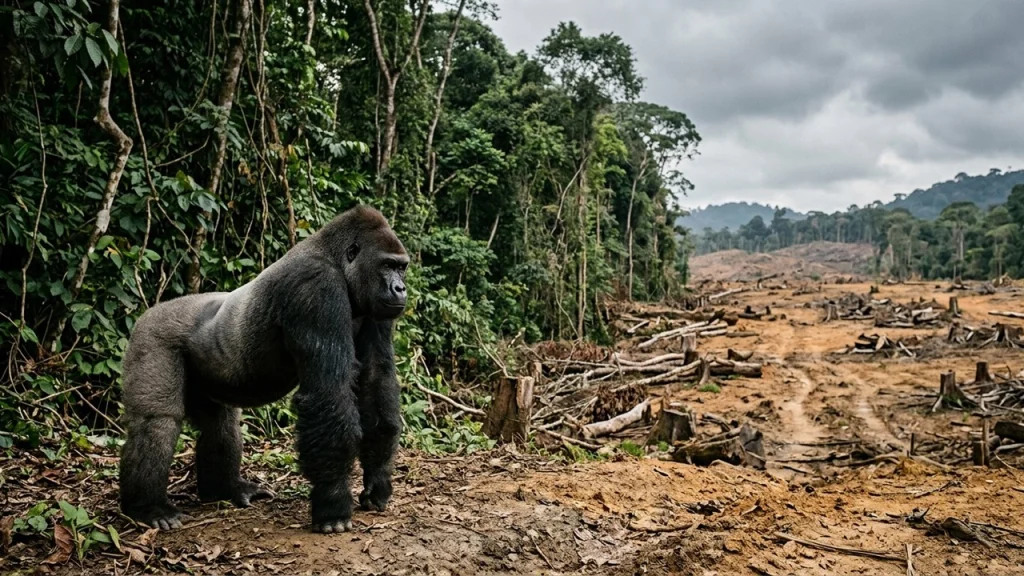
Animal Diversity Web says predation on gorillas is probably not common because of their imposing size. On its western lowland gorilla page, the National Zoo says the population had been devastated by Ebola, the commercial bushmeat trade and the spread of logging, which changes the structure of the forest and makes poaching easier. That has resulted in a decline of over 60 percent in the past 20 to 25 years.
According to the same page, a 2018 study put the number of gorillas still living in the forests of Western Equatorial Africa at more than 360,000, though 80 percent of those animals live outside protected habitat.
About a thousand mountain gorillas remain on Earth, National Geographic says, and about half of them are in the Virunga mountains of central Africa. It lists their population trend as increasing. Forests have been degraded by agriculture, illegal mining and forest destruction for charcoal production, and National Geographic calls habitat loss a major threat. Mountain gorillas also often get caught in snares set to trap other animals for bushmeat.
Sources
- Smithsonian’s National Zoo: Western lowland gorilla
- Animal Diversity Web, University of Michigan: Gorilla gorilla (western gorilla)
- Animal Diversity Web, University of Michigan: Gorilla beringei (eastern gorilla)
- San Diego Zoo Wildlife Alliance: Gorilla
- National Geographic: Mountain gorilla
- Proceedings of the National Academy of Sciences (via PubMed Central): Post-reproductive lifespan in wild mountain gorillas