
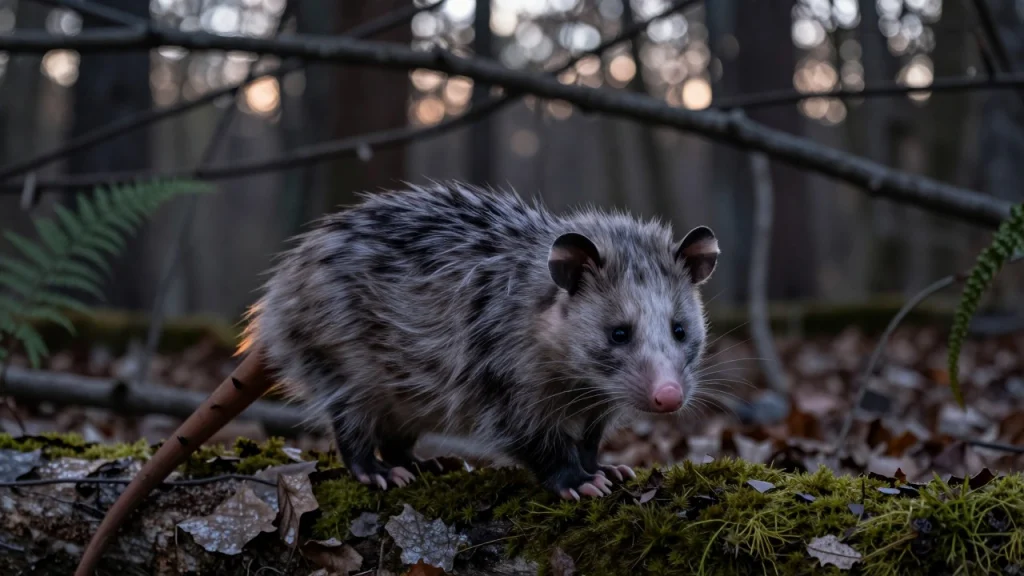
Yes, opossums can get rabies, but confirmed cases in them are rare. A case report in Emerging Infectious Diseases shows that opossums can contract the virus and may pick it up from bats.
Opossums can be infected with rabies, but confirmed cases in them are rare, so a possum that looks healthy is very unlikely to be a rabies threat. The Centers for Disease Control and Prevention names opossums among the animals people tend to overestimate, and the National Park Service notes they are not completely protected yet seldom carry the virus.
The reason sits in marsupial physiology, in the way opossums live alongside people, and in which animals really keep rabies alive.
Susceptible, not immune
Resistance and immunity are different things, and the difference decides this question. Inoculation work in the 1960s led researchers to suggest that Didelphis opossums resist infection, and the genus is still widely described as resistant. Resistance is not immunity, though. A study in the CDC journal Emerging Infectious Diseases concluded that opossums are susceptible and can pick up the virus from bats.
Confirmed reports stay scarce, and in North America the natural reservoirs are wild carnivorous mammals.
Why the odds stack against a possum
Two factors explain most of that. Temperature comes first: as marsupials, opossums run cooler than most mammals, with body temperatures of 34.4 to 36.1 °C, leaving them a poor host for a virus that needs a warm body in which to multiply. Survival comes second, because an opossum is unlikely to live through an attack by a rabid animal, which leaves a narrow window for passing the virus on.
Neither factor is protection. Together they explain why the disease is so seldom detected in opossums in North America.
The animals that really drive rabies
Bats, raccoons, skunks and foxes dominate rabies reports in the United States, and opossums are nowhere in that group. Roughly 7 in 10 people who die of rabies in the United States were infected with bats, even though bats make up only a fraction of the 5,000 animals reported rabid each year. Rabid dogs picked up while travelling abroad rank as the second leading cause of rabies in Americans.
The catch is that you cannot judge an animal as healthy by looking at it, which is why a bite or a scratch matters more than an animal’s appearance.
When opossums do test positive
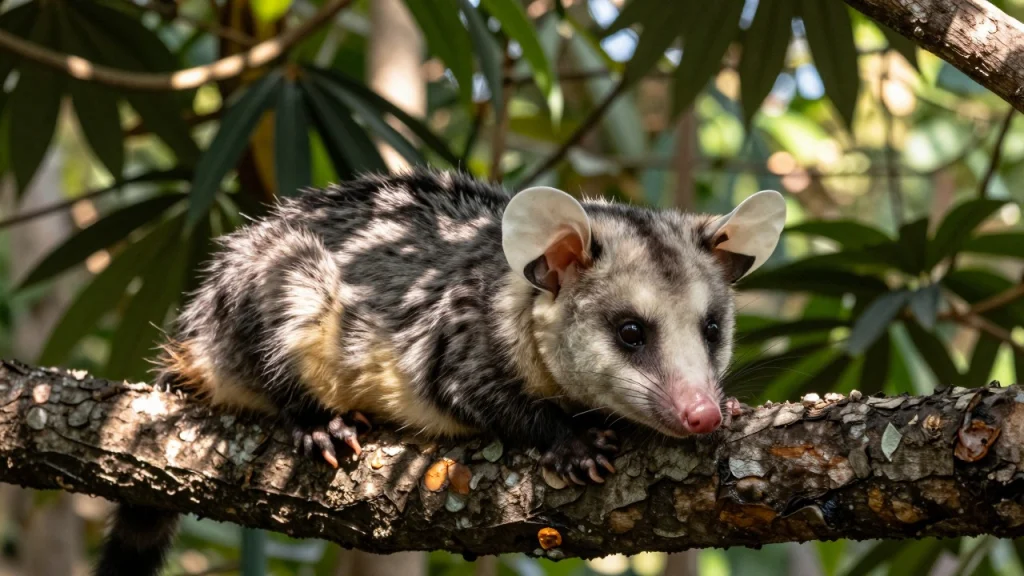
Surveillance in Campinas, São Paulo state, tested 22 opossums and found 1 (4.5%) positive, an adult female white-eared opossum recovered from a zoo inside a park in the city centre. She showed the paralytic form of the infection, and genetic analysis traced her virus to a lineage carried by fruit-eating bats in the genus Artibeus. Most opossum deaths in that study were traumatic, including attacks by dogs, which points to a bigger everyday danger than rabies.
Contact without illness
Blood tests separate exposure from disease. In São Paulo state, researchers screening Didelphis opossums found a rabies virus prevalence of 1.6% (5 of 312), so the animals clearly meet the virus without necessarily falling sick. Antibodies record contact; clinical rabies is the rarer outcome.
What to do after a bite or a scratch
Opossums are not the reason most people worry about rabies, but any wild mammal that breaks the skin deserves attention. Post-exposure prophylaxis, a rabies vaccine given with rabies immune globulin, can prevent infection when it is started before symptoms appear, and rabies is nearly always fatal without it. About 55,000 people in the United States seek prophylaxis after a possible exposure each year, so a scratch from an animal behaving strangely is a reason to call a healthcare provider and let public health officials decide whether the animal should be tested.
Loud, slow and armed with teeth
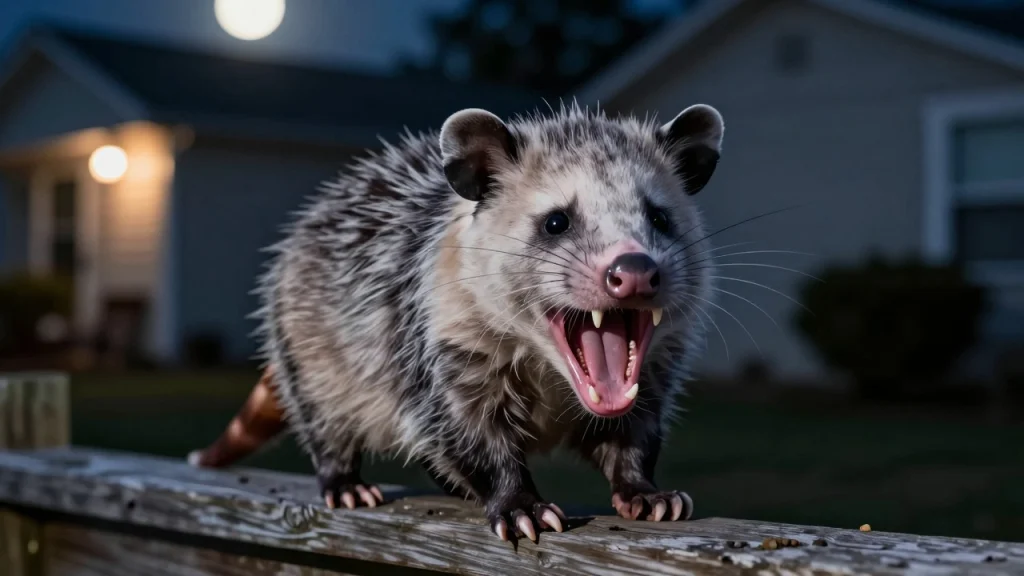
Opossums rarely signal illness, so behaviour is a poor rabies test. A threatened grown animal shows its teeth, hisses, screeches or bolts, while a frightened youngster may go rigid and motionless in a defensive state that can start in about a minute and last as long as 6 hours.
A pouch, a very short pregnancy and a large litter
Opossums are the only marsupial to live north of the Mexican border, and the pouch is central to how they raise young. Pregnancy lasts only 12 to 13 days, after which a female delivers 4 to 25 young no bigger than a honey bee, even though she generally has only 13 mammae to feed them. The young climb into the pouch almost immediately, stay there for roughly two months, and are weaned at about 105 days. A mother usually raises two litters a year on average, though this varies by location, which is how the species bounces back from predators and traffic.
Range, diet and a clean reputation
Opossums reach from Costa Rica to Mexico, and in the United States they sit east of the Rocky Mountains, extending north into Ontario.
Opossums also play host to no fewer than 24 internal parasites and 13 external species, yet they groom constantly with tongue and paw. That habit helps explain why more than 90 percent of their tick encounters end in a meal, and it earns them a reputation for cleanliness that surprises most people.
Widely successful and not at risk
The IUCN Red List places the Virginia opossum at Least Concern, because adapting to habitats people have altered has made it extremely widespread. An adult male tips the scales at 4.6 to 6.2 pounds, and wild individuals seldom pass 1.5 to 2 years, which is short for a mammal of that size.
So the answer holds. Opossums can carry rabies, they simply rarely do, and the reason is a cool body and an unlikely survival when they meet a rabid animal, not real immunity. Bats, raccoons, skunks and foxes are the species worth worrying about, and any wild mammal that draws blood is worth a phone call.
What other diseases do opossums carry?
The University of California Statewide IPM Program reports that opossums carry illnesses such as Chagas disease, tuberculosis, relapsing fever, spotted fever and trichomoniasis. According to Cornell’s College of Veterinary Medicine, they are carriers of equine protozoal myeloencephalitis (EPM), an illness horses contract when ingesting opossum feces. The veterinary college notes that more serious conditions like flea-borne typhus and tularemia can develop when an opossum is infested with lice, mites, ticks and fleas. The Alabama Cooperative Extension System adds that opossums may also carry roundworms, fleas, ticks and other common parasites.
What happens if an opossum bites you?
Penn State Extension recommends cleaning the wound right away and thoroughly with plenty of soap and water. The same university guidance directs contacting a doctor immediately after completing that first aid step.
Can opossums give diseases to dogs and cats?
Yes, opossums can spread illnesses to domestic animals through contact with their urine or feces, including toxoplasmosis, coccidiosis, salmonella and leptospirosis. Cornell’s College of Veterinary Medicine notes that opossums host cat and dog fleas, especially in urban environments, and opossums can pass murine typhus to humans and companion animals. Physical encounters with household pets are fairly common and regularly leave the pet wounded. However, opossums seldom catch several common mammalian viruses, including rabies, parvovirus, distemper and feline hepatitis.
Sources
- Centers for Disease Control and Prevention: Bats Lead in U.S. Rabies Risk
- CDC, Emerging Infectious Diseases: Naturally Acquired Rabies in White-Eared Opossum, Brazil
- U.S. National Park Service: Opossums
- Smithsonian’s National Zoo and Conservation Biology Institute: Virginia opossum
- Animal Diversity Web: Didelphis virginiana (Virginia opossum)
- Cornell University College of Veterinary Medicine: Weird & Wonderful Wildlife – The Opossum
- University of California Statewide IPM Program: Opossum / Home and Landscape / UC Statewide IPM Program (UC IPM)
- Penn State Extension: Rabies
- Texas A&M AgriLife Extension Service: Managing Opossum Damage – Texas A&M AgriLife Extension
- Alabama Cooperative Extension System: Virginia Opossum: Our Only Native Marsupial – Alabama Cooperative Extension System