
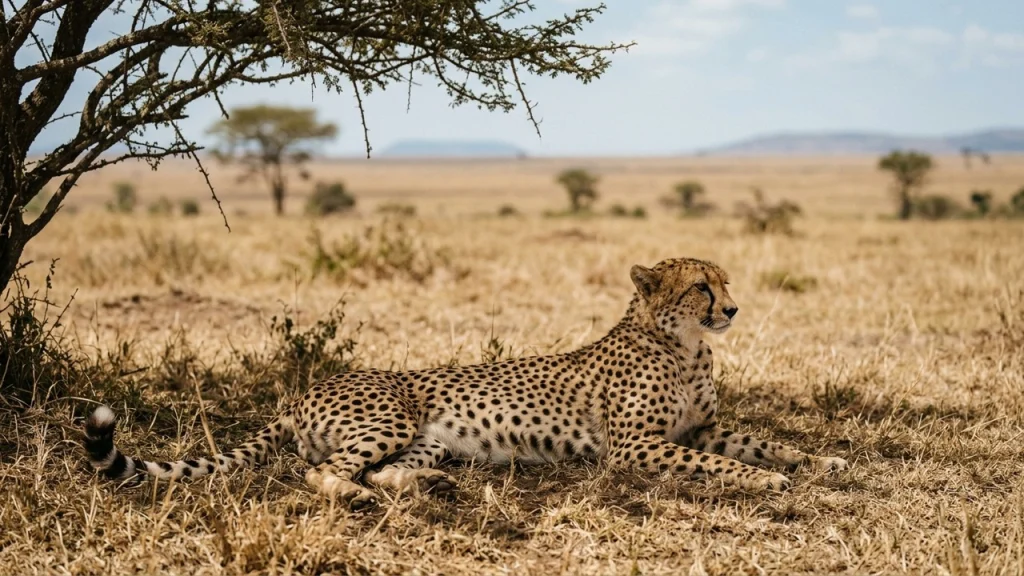
Wild cheetahs live an average of 8 to 10 years, according to Smithsonian’s National Zoo, while cheetahs in human care average 12 to 15 years. National Geographic gives different figures: an average life span of up to 14 years in the wild and up to 20 years in captivity.
Many cubs die young. In human care, 30 percent of cubs die during their first month, on average. In Tanzania’s Serengeti National Park, about 90 percent of cubs die before they reach three months of age, Smithsonian’s National Zoo says.
Males, females and life in a group
According to Animal Diversity Web, females live longer than males once they reach independence. It gives an estimated minimum age at death of 6 to 8 years for the males that were observed.
Adult females live alone, but adult males do not. Young males stay together for life as a coalition.
Range, threats and conservation status
Cheetahs inhabit a broad part of Africa, including North Africa, the Sahel, and eastern and southern Africa. The Asiatic cheetah, which is critically endangered, is known to survive in Iran.
The IUCN database lists cheetahs as a vulnerable species, according to Animal Diversity Web, and National Geographic says fewer than 7,000 adult cheetahs remain in the wild. Cheetahs also have very low genetic variation compared with other mammals, making them susceptible to disease.
Growing up
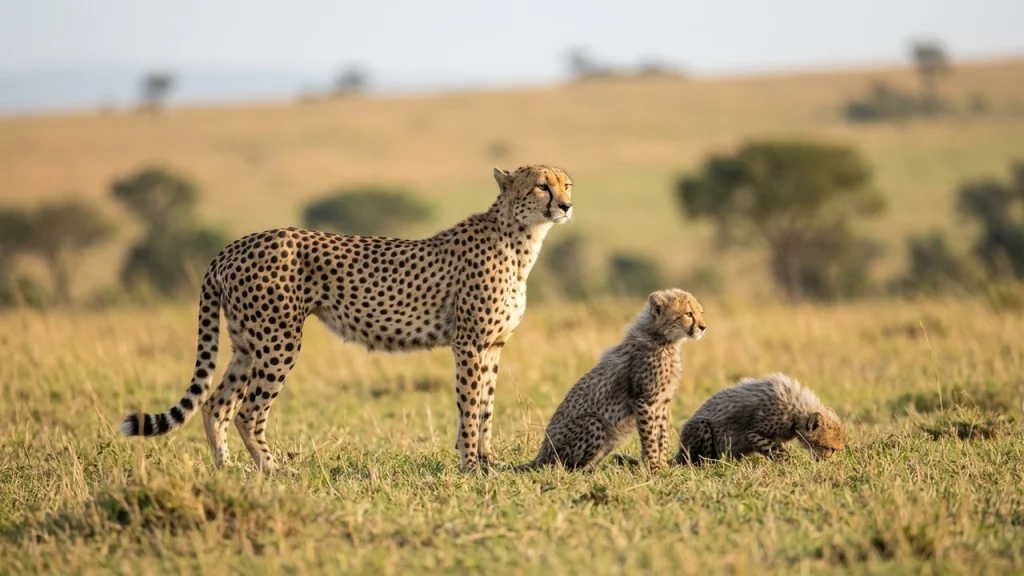
Cheetah pregnancy lasts about three months, and the average litter is three to six cubs. At birth, cheetahs weigh nine to 12 ounces (400 grams) on average and measure about 12 inches (30 centimeters) long.
By six weeks, cubs are strong enough to follow the hunt. When they are about six months old, the mother captures live prey for them to practice killing. At 18 months the mother leaves, and the siblings stay together as a group for six more months. Cheetahs reach sexual maturity at 18 to 23 months.
Size and speed
The cheetah’s scientific name is Acinonyx jubatus. An adult weighs 75 to 140 pounds (34 to 64 kilograms). San Diego Zoo Wildlife Alliance lists the body at 1 to 1.4 meters (3.6 to 4.4 feet) long and the tail at 66 to 84 centimeters (26 to 33 inches).
The cheetah is the fastest land mammal in the world. National Geographic says reaching 60 miles an hour from a standing start takes a cheetah only three seconds.
Hunting and food
About half of a cheetah’s chases end in a successful hunt, according to Smithsonian’s National Zoo. Cheetahs lose about 50 percent of their food to lions, hyenas and sometimes groups of vultures.
Cheetahs do not roar. Instead they purr, bark, growl, hiss and chirp, and these sounds are unlike those of any other cat.