
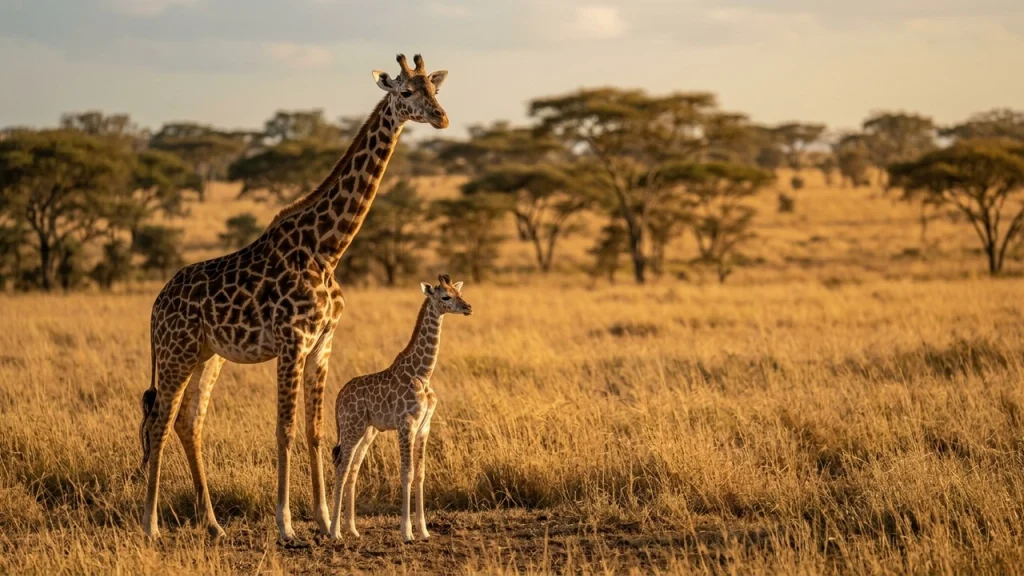
Published figures for giraffe lifespans differ, so the wild and zoo numbers are best read separately. In the wild, National Geographic gives an average of 25 years, while Animal Diversity Web says giraffes live 10 to 15 years. In zoos, Animal Diversity Web gives a life expectancy of 20 to 27 years.
Two other organizations list a life span without a setting attached. San Diego Zoo Wildlife Alliance gives 15 to 20 years, and the North Carolina Zoo gives 23 years.
Predators and conservation status
Lions are the main predators of giraffes, according to Animal Diversity Web, and leopards and hyenas have also been known to prey on them. Giraffes stay alert, can run quickly and can deliver deadly blows with their front hooves. Most predators target young, sick or elderly giraffes.
Giraffes live in savannas, grasslands and open woodlands, and a group of them is called a tower. National Geographic lists giraffes as Vulnerable on the IUCN Red List and gives their population trend as decreasing.
Birth and growing up
Female giraffes give birth standing up, and the newborn falls more than 5 feet to the ground. Calves can stand within half an hour and run alongside their mothers ten hours after birth, National Geographic reports. Animal Diversity Web says most births produce a single calf, and twins are uncommon but do occur.
Pregnancy lasts 14 months, according to San Diego Zoo Wildlife Alliance, and Animal Diversity Web says females can give birth every 20 to 30 months. Giraffes reach maturity at 3 to 5 years.
Size and speed
Giraffes are the tallest mammals in the world, thanks to their long legs and necks, according to National Geographic. San Diego Zoo Wildlife Alliance says females grow up to 14 feet (4.3 meters) tall and males up to 18 feet (5.5 meters). Females weigh up to 1,500 pounds (680 kilograms) and males up to 3,000 pounds (1,360 kilograms).
Their long legs let a giraffe reach a top speed of 35 miles an hour over short distances, while a comfortable cruising speed over longer distances is 10 miles an hour. A giraffe’s heart weighs 20 pounds, and its blood pressure is about double a human’s, San Diego Zoo Wildlife Alliance says.
What giraffes eat and drink
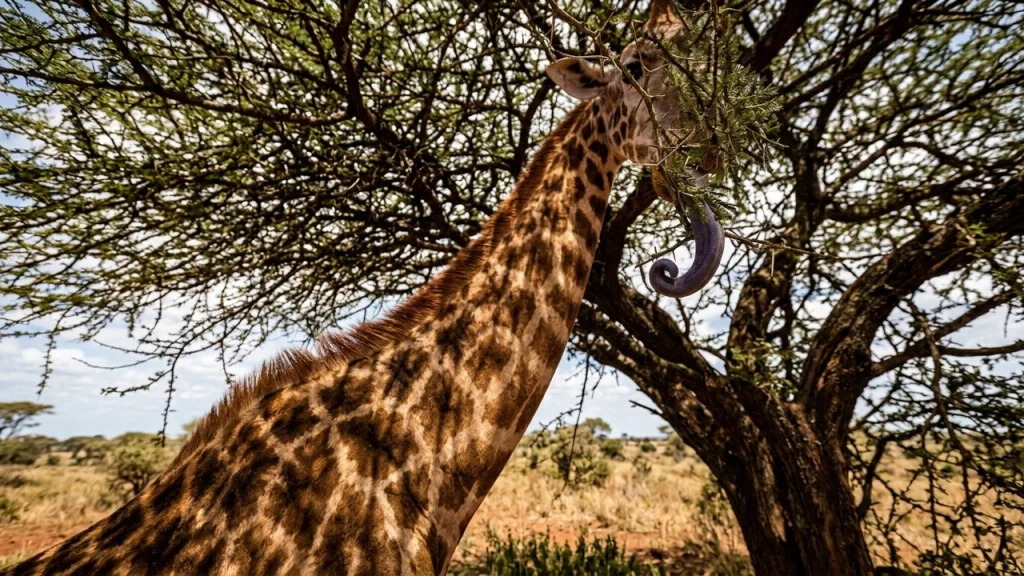
Giraffes feed on leaves and buds high in the trees, out of reach of most other animals, and acacias are a favorite. A 21-inch tongue helps a giraffe pick choice bits off branches.
Over a week, a giraffe eats hundreds of pounds of leaves, and it must travel miles to find enough food, National Geographic says. San Diego Zoo Wildlife Alliance says a giraffe can eat up to 75 pounds (34 kilograms) of food a day.
Giraffes need to drink only once every several days, and they get most of their water from the plants they eat. Where water is easy to find, a giraffe can drink 10 gallons (38 liters) in a day.
How giraffes rest
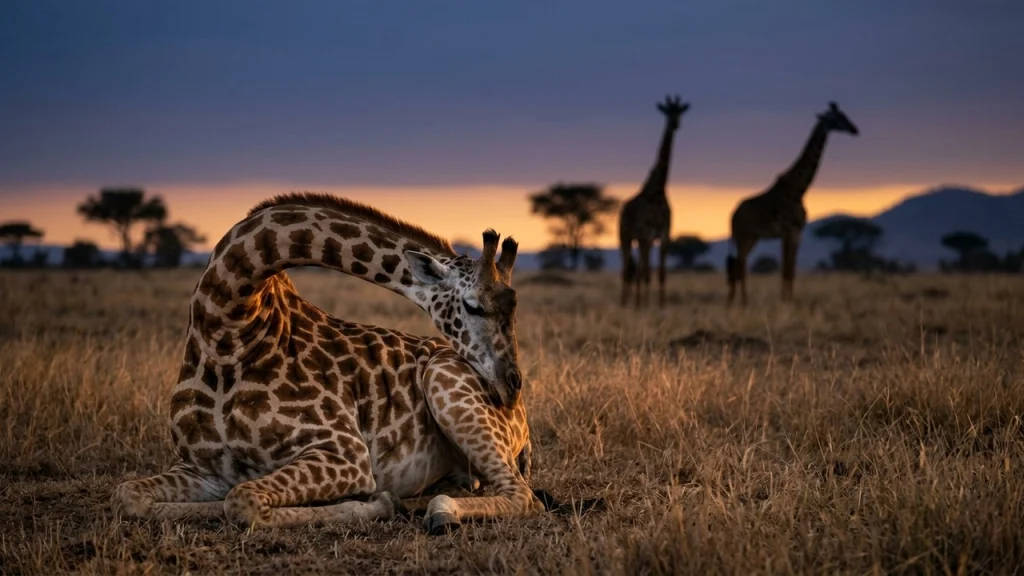
Over 24 hours, giraffes need only 5 to 30 minutes of sleep. Giraffes can rest standing up, though they sometimes lie down and rest their head on their rump.
Sources
- National Geographic: Giraffe | National Geographic
- Animal Diversity Web: Giraffa camelopardalis (giraffe) | INFORMATION | Animal Diversity Web
- San Diego Zoo Wildlife Alliance: Giraffe | San Diego Zoo Animals & Plants
- North Carolina Zoo: Giraffe | North Carolina Zoo
- San Diego Zoo Wildlife Alliance: Celebrating Long Necks | San Diego Zoo Wildlife Alliance