
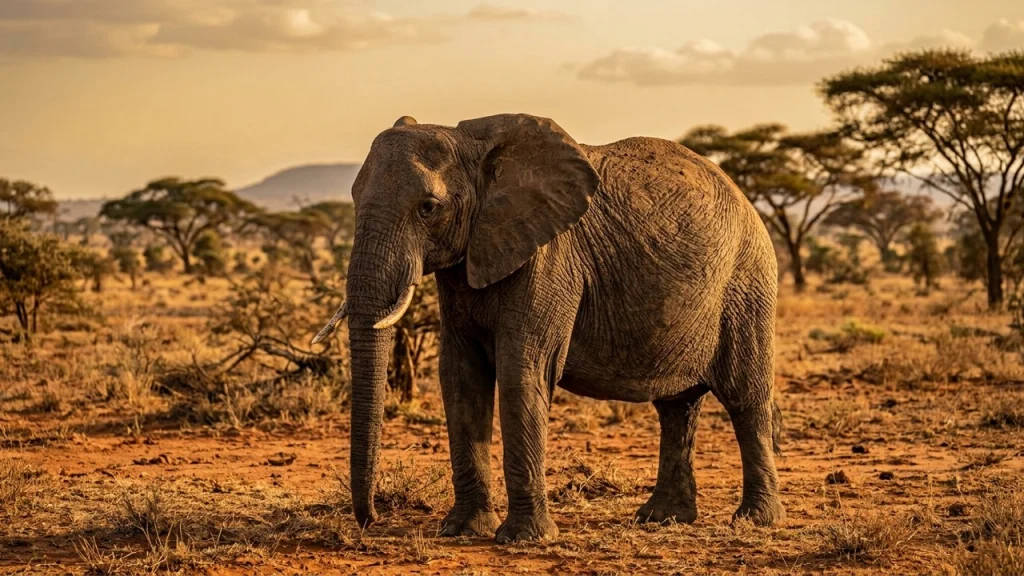
Asian elephants are pregnant for 18 to 22 months, about 659 days on average, and African bush elephants for about 22 months. The Smithsonian’s National Zoo calls this the longest gestation period of any animal. National Geographic says the African elephant has the longest pregnancy.
Other sources give different figures for the Asian elephant. Animal Diversity Web lists 18 to 23 months, with an average of 21 months, and the San Diego Zoo Wildlife Alliance fact sheet gives an average of approximately 20 to 23 months, drawn from a review of the published literature. For African elephants, a veterinary study in Veterinary Medicine and Science says the gestation period ranges from about 20 to 22 months and gives the reported figure as 645.2 ± 3.0 days.
How the figures compare
The figures cover two species, and some are ranges while others are averages. Animal Diversity Web notes that the African bush elephant’s gestation is strongly influenced by environmental factors. The veterinary study also mentions one pregnancy lasting 684 days, longer than the 645.2 days reported for African elephants.
National Geographic puts the average pregnancy across the five rhinoceros species at 16 months, against 22 months for the African elephant. It adds that species that are both intelligent and long-lived often have long pregnancies, giving the fetus ample time to develop.
Signs of pregnancy and the approach of birth
The San Diego Zoo Wildlife Alliance fact sheet on Asian elephants says a pregnancy is not visually noticeable until the end of the gestation period. It also lists mammary glands and nipples that are more pronounced and may produce a watery liquid.
The National Zoo describes monitoring blood samples for changes in estrogen and progesterone levels. Certain hormones are elevated in pregnant elephants, and birth is imminent once those levels begin to fall back to their normal baseline. The zoo adds that labor can start as soon as a few hours or as late as several days.
Labor and the moments before birth
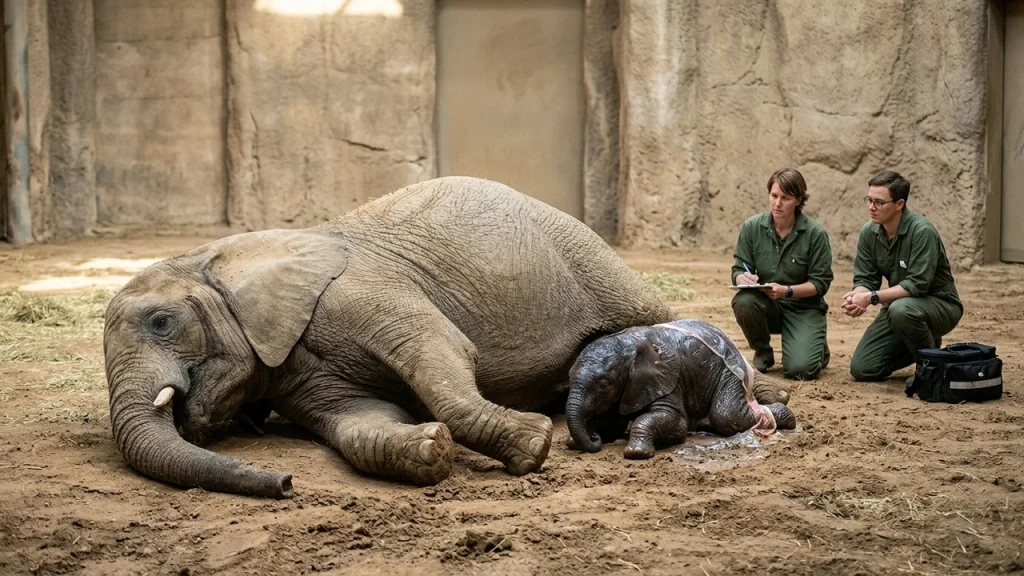
The National Zoo says elephants in labor become restless and move around more than usual. Early signs can include leaning against walls, rocking from side to side, flapping the ears or putting the trunk in the mouth. Right before birth, the fetus causes a bulge in the mother’s abdomen. The zoo also describes a case where, moments before delivery, the calf could be seen moving up the birth canal toward the mother’s tail.
The calf at birth
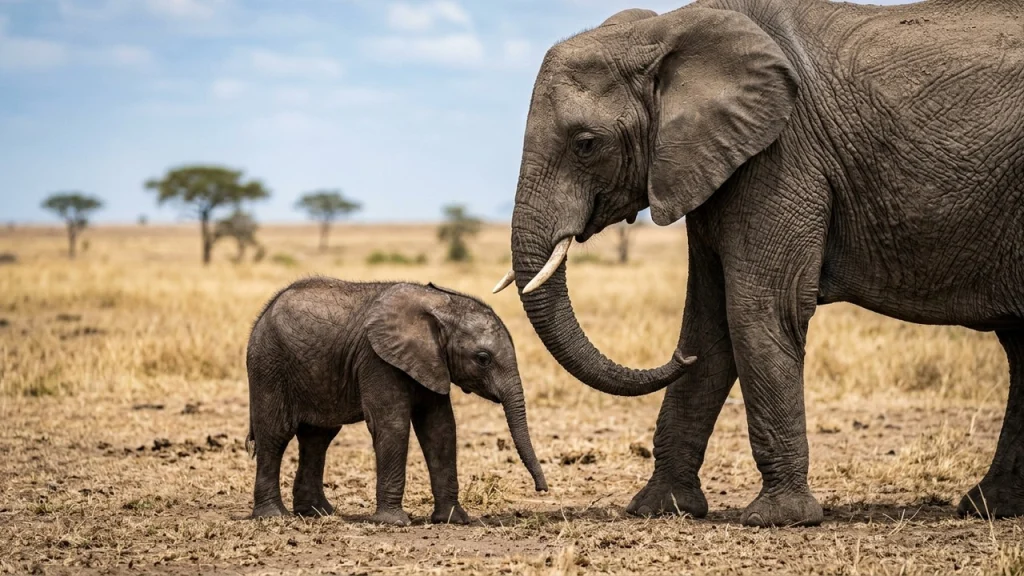
The National Zoo gives a newborn Asian calf a weight of 150 to 350 pounds (68 to 158 kilograms). The San Diego Zoo Wildlife Alliance fact sheet gives an average birth weight of about 110 kg (240 lb) for Asian calves and a height at birth of about 90 cm (75 to 100 cm). Animal Diversity Web puts newborn African elephants at 90 to 120 kg, with 100 kg as the average.
National Geographic quotes a description of the baby elephant as “born very complete”, able to walk long distances. The veterinary study reports that African elephant calves usually stand between 0.5 and 90 minutes after birth, walk within the first hour and nurse within 4.5 hours.
One calf took far longer. In the study, it needed 27 hours to stand independently, and the study notes that calves unable to stand within 24 hours of birth typically face a bleak prognosis.
How often elephants have calves
For African bush elephants, Animal Diversity Web says a birth is usually limited to one calf, though twins may be born in rare cases. It gives once every 3 to 9 years as the breeding interval for African elephants, with an average of four calves in their lifetime, and says Asian elephants breed every 4 to 5 years.
The San Diego Zoo Wildlife Alliance fact sheet gives an interbirth interval of 4 to 5 years on average for the Asian elephant, with a range of 3 to 6.5 years. For Asian elephants, Animal Diversity Web says nursing a calf holds back the start of estrus for about 2 years after a birth. Elephants reach puberty at 8 to 12 years, according to the veterinary study, which puts the average age at first reproduction for wild female African elephants at 13.8 years.
Asian elephant numbers
Asian elephants number fewer than 50,000 worldwide, according to the Smithsonian’s National Zoo. The zoo says their numbers are falling because of poaching, habitat loss and conflict with people.
Sources
- Animal Diversity Web: Loxodonta africana (African bush elephant) | Animal Diversity Web
- Animal Diversity Web: Elephas maximus (Asiatic elephant) | Animal Diversity Web
- Smithsonian’s National Zoo: Elephant FAQs | Smithsonian’s National Zoo and Conservation Biology Institute
- San Diego Zoo Wildlife Alliance Library: Reproduction & Development – Asian Elephant (Elephas maximus) Fact Sheet
- National Geographic: Elephants carry their babies for two years, and more astonishing animal pregnancies
- Veterinary Medicine and Science (Wiley), via PubMed Central: An adolescent female African elephant (Loxodonta africana) gave birth to an abnormal calf