
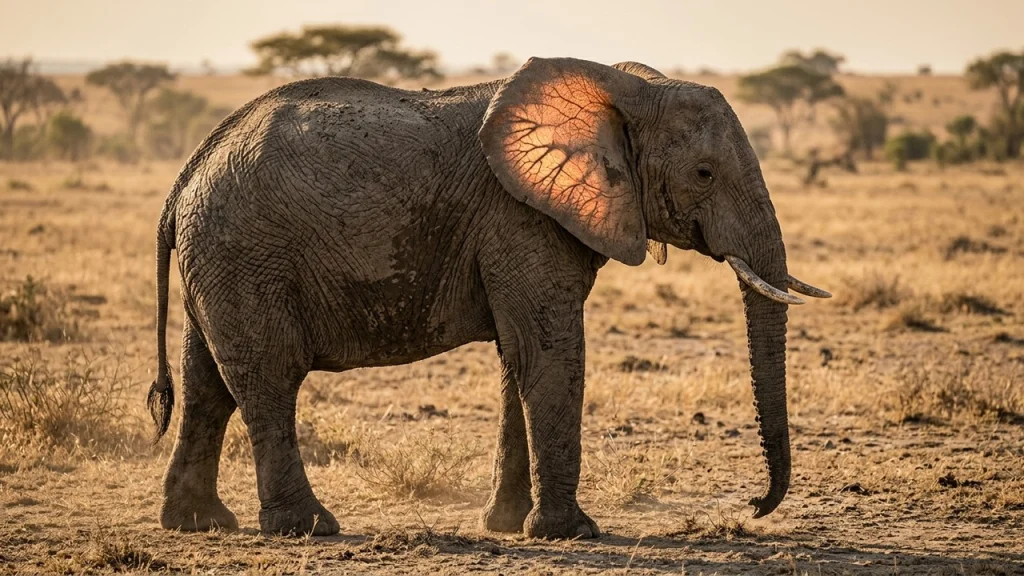
The Smithsonian’s National Zoo and Conservation Biology Institute describes the big ears of an elephant as cooling devices, and Animal Diversity Web credits the broad surface of those ears with letting heat escape quickly. The San Diego Zoo Wildlife Alliance notes that elephants do not have many sweat glands, and that the ears help them cool down.
None of the zoo, wildlife agency or research sources behind this article records why elephant ears became so large in the first place.
What flapping does
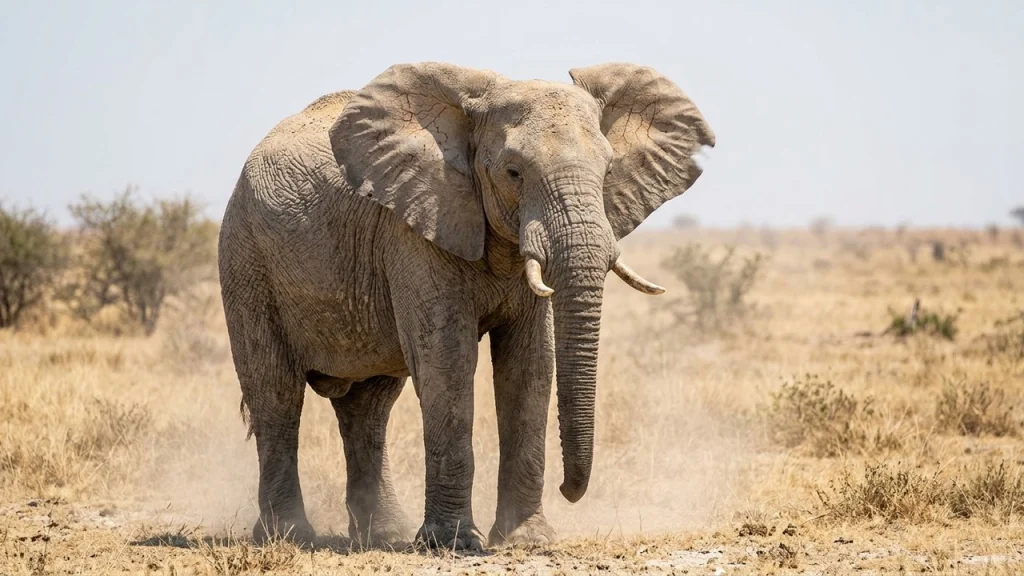
Flapping turns each ear into a fan. Animal Diversity Web reports a positive correlation between how often an elephant flaps its ears and the temperature of the environment.
The cooling happens in the blood. Blood in the veins cools as ears flap on hot days, and that cooled blood cools the brain and travels back through the body; the Smithsonian’s National Zoo and Conservation Biology Institute says this lowers body temperature by several degrees. The same institute reports that an elephant’s brain is large, weighing between 9 to 13 pounds.
Thin skin and blood near the surface
Skin on the inside of the ears is as thin as paper, while skin around the back reaches 1 inch (2.54 centimeters).
Skin elsewhere on the body works along the same lines. The San Diego Zoo Wildlife Alliance says it stays thin with blood vessels close to the surface, radiating extra body heat outward and helping to control temperature.
How much heat has to go
These animals live in hot places, and bodies that size take on heat quickly. Research on elephant heat transfer puts the heat a grown animal sheds at several kilowatts averaged over a day, even in a 30°C environment, and a study in PLOS ONE puts the dumping requirement of a large adult elephant at about 4500 W.
Airflow matters as well. One PLOS ONE study indicates that flapping by an elephant would push air past its body past 0.2 m/s. The same journal names ear flapping and vasodilation as suggested major contributors to thermoregulation, while some estimates give them just 8% of the standard metabolic rate (SMR). That paper also notes that none of these mechanisms, taken singly, seem plausibly enough to cover an elephant’s heat transfer needs.
Cooling that skips the ears
Plenty of other tactics appear in the research. A study in PLOS ONE lists ear flapping, dust bathing, moving to cooler shady areas, water-spraying, mud-spraying and bathing, along with blood circulation through the ears and breathing and evaporation through the skin.
Hair earns a mention of its own. The same journal reports that elephant hair improves their thermoregulation ability, raising it by over 5% under all scenarios considered and reaching up to 23% when the wind is light. Asian elephants, meanwhile, carry noticeably more hair than African ones.
Skin care comes up too. The Smithsonian’s National Zoo and Conservation Biology Institute notes that elephants shield their skin from sun and bugs by dusting themselves with dirt, sand and mud on a regular basis, and that they tend to rest and nap through the hottest hours of the day. Animal Diversity Web adds that Elephas maximus sprays water or saliva over itself with its trunk, and works mud or soil into its skin to keep it cool.
Ears that vary by species, and ears that signal
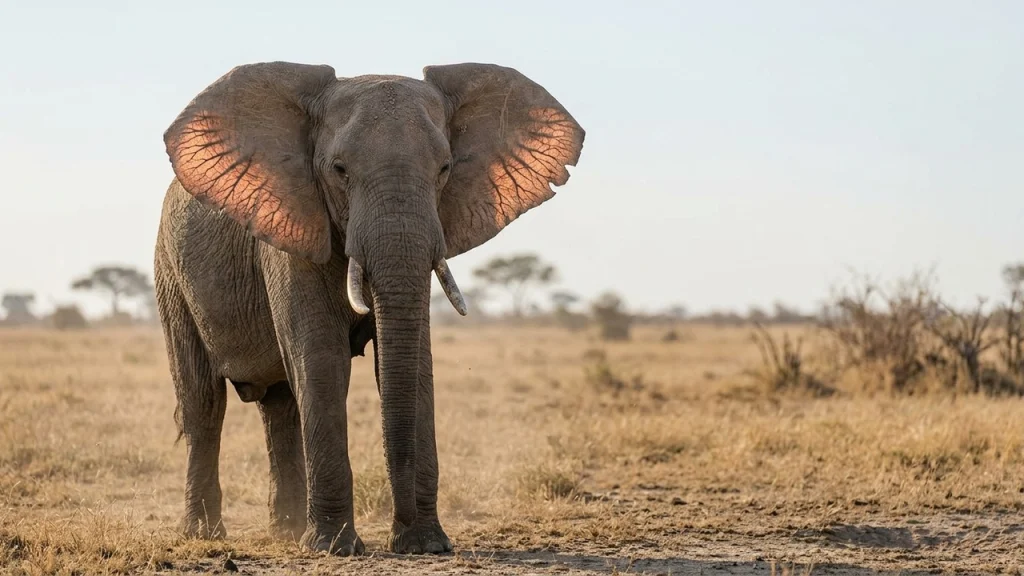
Size and shape differ between the species. The San Diego Zoo Wildlife Alliance puts African savanna elephants at the top of the three elephant species for ear size, and African ears are triangular. By contrast, Animal Diversity Web describes the ears of Elephas maximus as large and flat, though smaller than those of Loxodonta.
The same appendages carry other messages too. African elephants pass signals to herd members with their trunks and ears, and lifting the ears high and wide is part of how an elephant makes itself look threatening. The same zoo suggests that flapping ears may mean an elephant is feeling excited or playful.
Sources
- Smithsonian’s National Zoo and Conservation Biology Institute: Asian elephant
- Animal Diversity Web: Loxodonta africana (African bush elephant)
- Animal Diversity Web: Elephas maximus (Asiatic elephant)
- San Diego Zoo Wildlife Alliance: Eyes on Elephants
- PLOS ONE via PubMed Central: What Is the Use of Elephant Hair?
- University of Cincinnati: University of Cincinnati students and researchers travel to Africa to study elephant hearing