
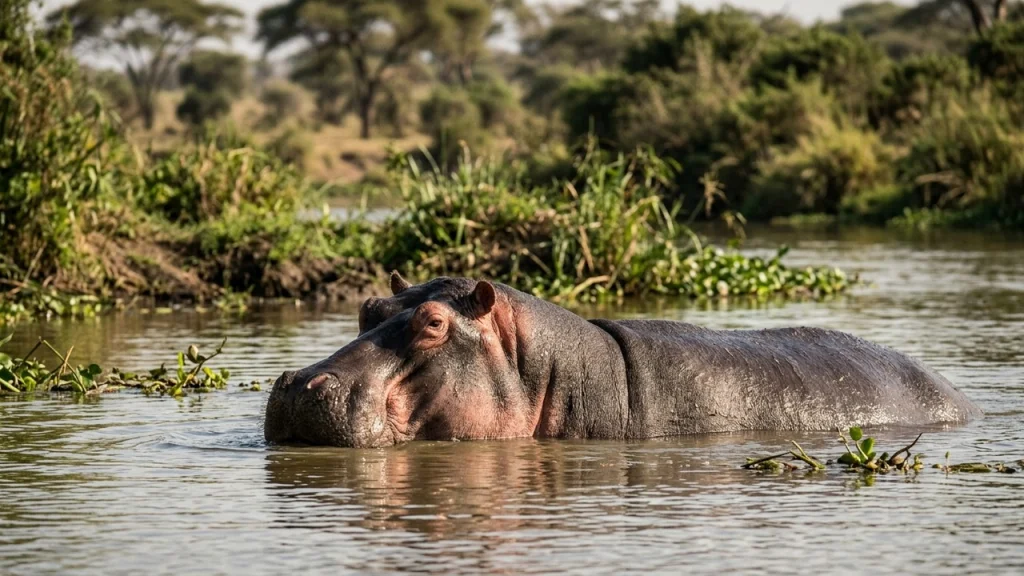
People do eat hippopotamus, so the idea that nobody does is simply wrong. Animal Diversity Web describes the species as extremely valuable to native hunters, who take a substantial amount of meat from it along with tusks and hide.
Meat from hippos found dead was suspected of causing an anthrax outbreak in people who ate it. According to Emerging Infectious Diseases, a game management area in the district of Chama in Zambia reported 511 cases of anthrax infection in people and 5 deaths in September 2011, close to where 85 hippopotamuses had recently died of suspected anthrax. Residents near the river reportedly butchered, cooked and ate meat from those dead animals, and that was thought to explain the human outbreak.
The idea has also crossed the Atlantic. University of Florida IFAS Extension recounts an American plan to bring hippopotamuses in from Africa during a nationwide meat shortage.
What a hunter takes from a hippo
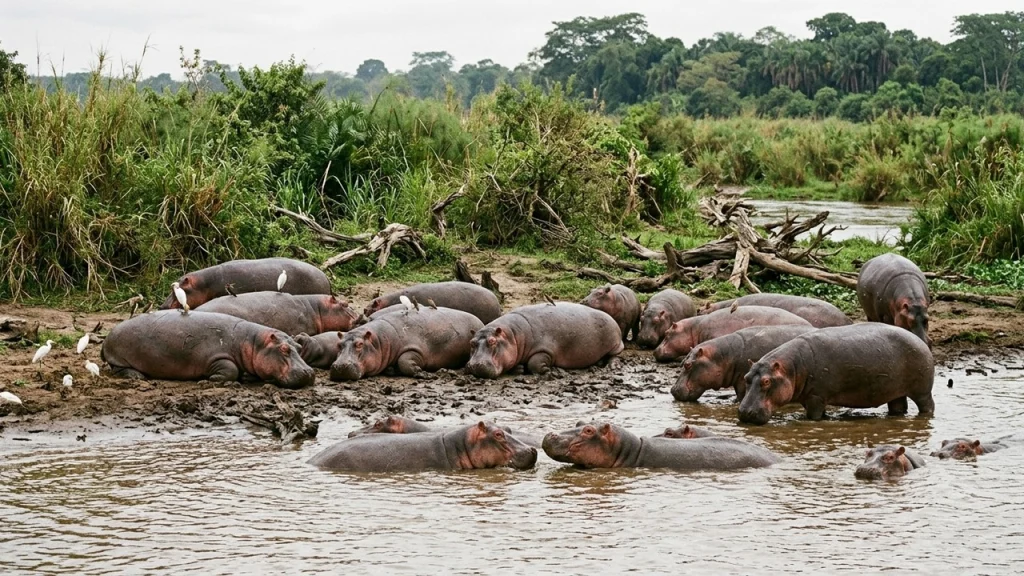
Animal Diversity Web notes that ivory from the canine tusks ends up on the black market, where selling it is illegal.
The animals themselves are protected. The same site says that even so, hunting and exploitation remain the main reason their populations are declining.
Citing the IUCN Red List, it records a drop of 7% to 20% in hippopotamus numbers over the past 10 years, and estimates that only 125,000 to 148,000 individuals remain across the 29 countries of the animal’s range.
Danger on the bank and in the water
A boater who slips into hippo territory without expecting it risks an aggressive reaction, the San Diego Zoo Wildlife Alliance warns. Females, mothers with calves above all, can be equally dangerous and unpredictable, the same source adds.
Speed adds to that picture. Its fact sheet puts an agitated hippo’s charge on land at up to 14 miles per hour, or 30 kilometers per hour.
Animal Diversity Web says accidental encounters with hunters, boaters and developers happen because a population’s presence goes unnoticed, and that such an encounter can be fatal for a person.
Meat from dead hippos and anthrax
The Zambia case is not the only warning. Emerging Infectious Diseases reports that anthrax outbreaks tied to hippopotamuses had been seen before in Zambia, Uganda, Zimbabwe and South Africa.
The same journal reports that the greatest risk of being diagnosed with anthrax came from carrying, skinning or butchering hippopotamuses. Investigators spread the word at the outset not to eat meat from any animal found dead.
PLOS ONE describes anthrax as an ancient zoonotic disease, mainly of herbivores. It is caused by Bacillus anthracis, a bacterium described as rod-shaped, gram-positive, endospore forming and capsulated. Wild herbivores are highly susceptible to it, and mortality among wild hippos reaches 21% to 55.5%. In 2004/2005 more than 300 hippos died, and 137 died in another outbreak in 2010.
The American plan to put hippo on the table
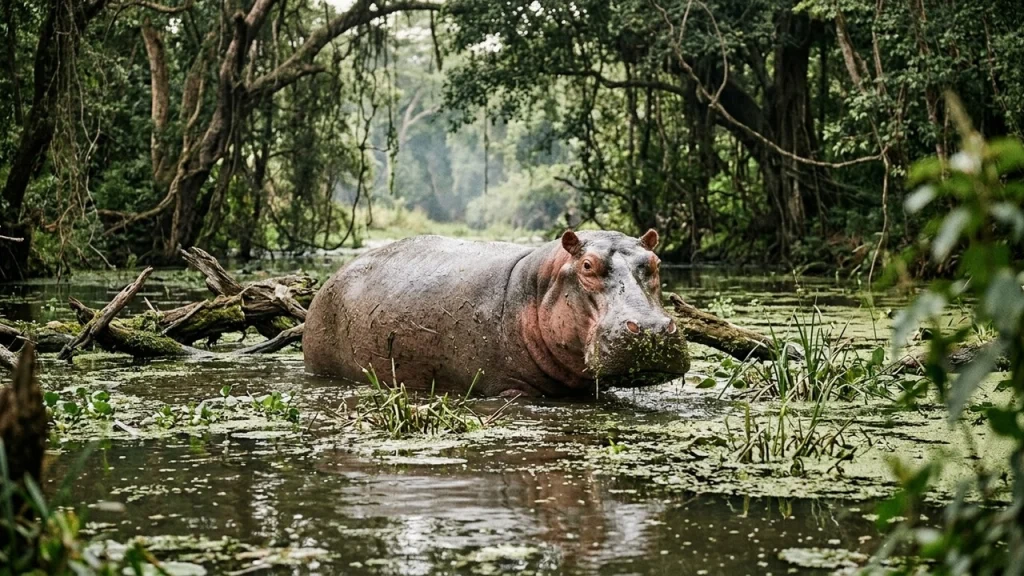
Broussard was up against two calamities at once, the extension service explains. They were an invasion of water hyacinth and a nationwide shortage of meat.
According to the extension service, African hippopotamuses were to be imported for two purposes. One was biological control of the water hyacinth, the other a supply of meat for the shortage.
The new product was named ‘Lake Cow Bacon’. Bill H.R. 23261 was drawn up to pitch the idea to congress, and it later became known as The American Hippo Bill.
The same source records that congressmen were not convinced Americans would want to eat hippo meat, nor that hippos would clear the weeds without causing other problems. The extension service adds that World War I started in Europe in the meantime, that new cattle feeding techniques solved the shortage, and that Senator Broussard passed away.
Sources
- Animal Diversity Web: Hippopotamus amphibius (common hippopotamus)
- San Diego Zoo Wildlife Alliance: Hippo
- University of Florida IFAS Extension: Hippos and Hyacinth: How Hippos Almost Made a Home in Florida
- Emerging Infectious Diseases: Role of Food Insecurity in Outbreak of Anthrax Infections among Humans and Hippopotamuses Living in a Game Reserve Area, Rural Zambia
- PLOS ONE: Spatio-temporal epidemiology of anthrax in Hippopotamus amphibious in Queen Elizabeth Protected Area, Uganda