
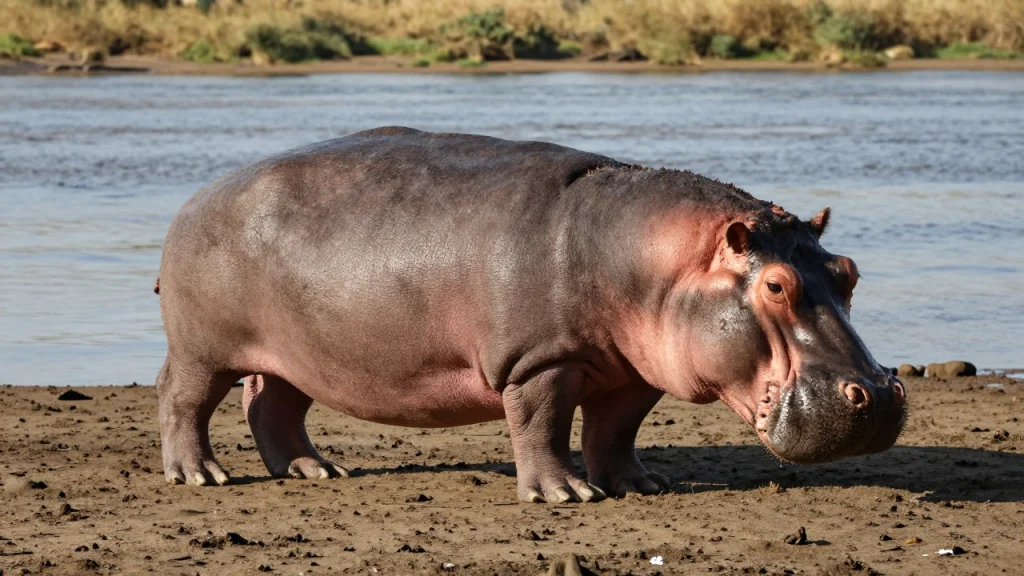
The hippopotamus is one of the largest land mammals on Earth, surpassed in mass only by elephants and certain white rhinoceroses. When asking how heavy can a hippopotamus get, the answer depends on the species, gender, and living conditions. An adult male common hippopotamus (Hippopotamus amphibius) typically weighs between 955 kg and 2,000 kg (2,100 to 4,400 lbs), averaging around 1,546 kg, while females generally weigh between 995 kg and 1,850 kg (2,200 to 4,100 lbs), averaging around 1,385 kg.
The heaviest wild bull hippo on record weighed about 2,065 kg (4,550 lbs), in Uganda, though rare individuals in captivity have been recorded at over 4,000 kg (8,800 lbs). Conversely, the smaller pygmy hippopotamus (Choeropsis liberiensis) weighs significantly less, ranging between 160 kg and 275 kg (350 to 600 lbs). Understanding these weight dynamics reveals how these impressive semi-aquatic giants adapt to their habitats and maintain their position in river ecosystems.
Average Weight Ranges for Male and Female Hippos
Weight distribution in hippopotamuses shows clear sexual dimorphism, particularly as individuals mature. Unlike many mammals that stop growing shortly after reaching sexual maturity, hippos continue gaining weight throughout much of their lifespan.
Males continue to put on body mass for several decades, which gives mature bulls a significantly bulkier appearance than females. Female hippos reach their peak body size around age twenty-five and typically maintain a steady weight thereafter unless pregnant or nursing.
Weight Differences Between Males and Females
- Adult male common hippo: Typically ranges from 955 kg to 2,000 kg (2,100 to 4,400 lbs).
- Adult female common hippo: Typically ranges from 995 kg to 1,850 kg (2,200 to 4,100 lbs).
- Newborn hippopotamus: Weighs between 25 kg and 50 kg (55 to 110 lbs) at birth.
Because male hippos engage in aggressive territorial battles for control of river stretches, extra mass provides a major competitive advantage during physical dominance displays and fights.
Maximum Recorded Weights of Hippopotamuses
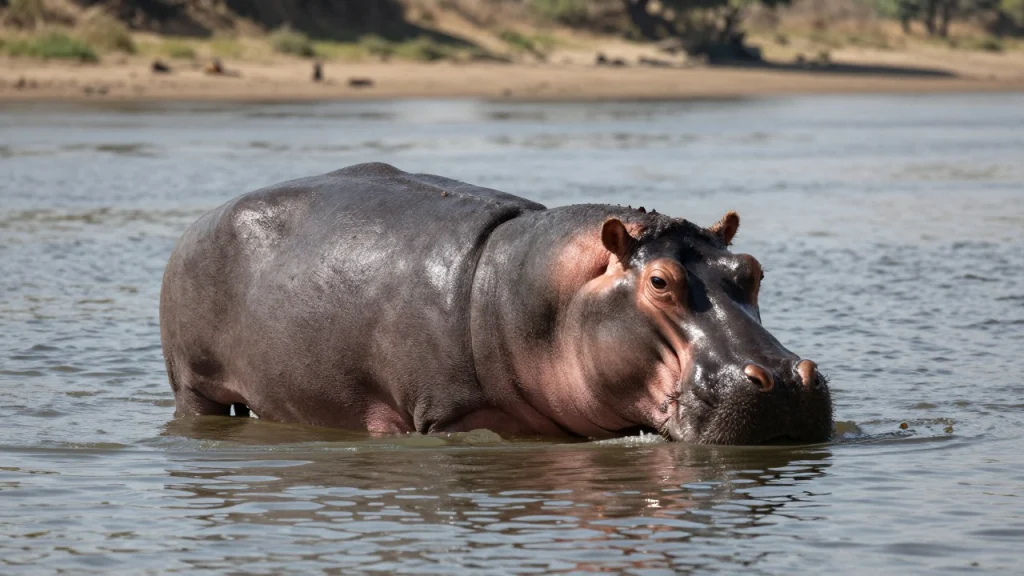
Determining the absolute upper limit of a hippo’s weight requires looking at both wild records and captive individuals. In natural ecosystems, constant movement and seasonal changes in food availability naturally moderate body mass.
The heaviest wild male common hippo on record weighed about 2,065 kg (4,550 lbs), in Uganda. However, historical records from zoological parks, where food is abundant year-round and physical exertion is limited, have documented extraordinary individuals weighing up to 4,500 kg (9,900 lbs).
Despite their massive bulk, hippos carry very little subcutaneous fat compared to marine mammals. Most of their immense body weight consists of dense muscle mass, heavy bone structure, and thick skin, which alone can weigh up to several hundred kilograms.
Common Hippopotamus vs. Pygmy Hippopotamus
When evaluating weight, it is important to distinguish between the two existing species within the family Hippopotamidae: the common hippopotamus and the pygmy hippopotamus.
| Species Characteristic | Common Hippopotamus (H. amphibius) | Pygmy Hippopotamus (C. liberiensis) |
|---|---|---|
| Average Adult Weight | 955 kg – 2,000 kg (2,100 – 4,400 lbs) | 160 kg – 275 kg (350 – 600 lbs) |
| Maximum Record Weight | Up to 4,500 kg (9,900 lbs) | Around 275 kg (600 lbs) |
| Primary Habitat | Rivers, lakes, and swamps of Sub-Saharan Africa | Dense forests and swamps of West Africa |
| Social Behavior | Highly social, forming large river pods | Solitary and secretive |
The pygmy hippo is a fraction of the size of its giant relative, standing only about waist-high to an adult human while weighing roughly one-tenth as much as a common hippo.
Factors That Influence a Hippo’s Weight
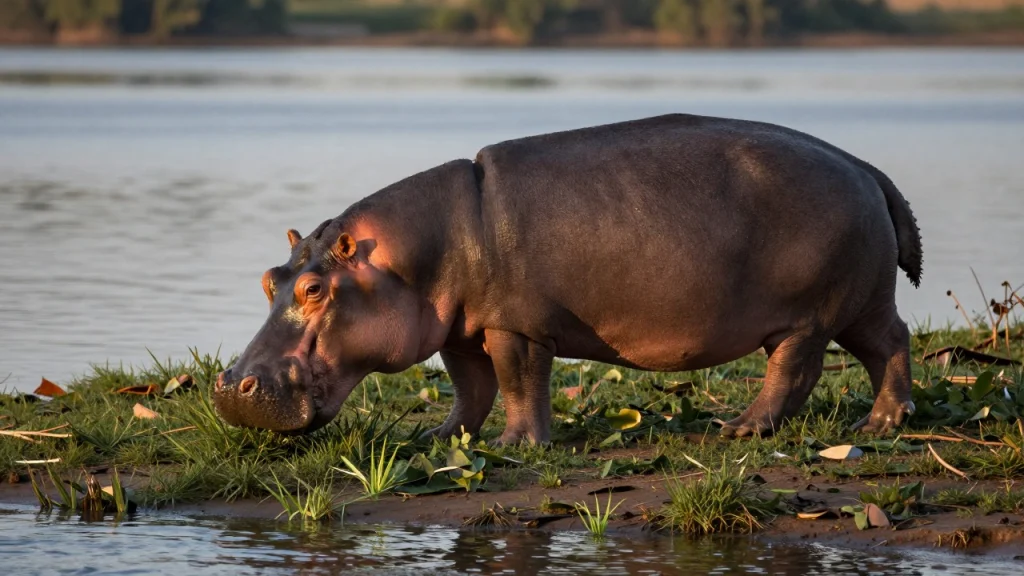
A hippopotamus’s final body weight is shaped by several environmental and biological factors. Diet quality, age progression, seasonal climate variations, and ecosystem health all play crucial roles in determining how large an individual will grow.
Diet and Foraging Habits
Despite their enormous body mass, hippopotamuses are strictly herbivorous mammals. They emerge from rivers at dusk to graze on short grasses, consuming approximately 35 kg to 40 kg (75 to 90 lbs) of vegetation each night.
This daily intake represents only about 1 to 1.5 percent of their total body weight, which is surprisingly low for such a large mammal. Their efficient multi-chambered stomach allows them to extract maximum nutrient value from fibrous grass without needing massive quantities of food.
Age and Growth Patterns
Calves experience rapid growth during their first few years of life, nursed by their mothers both on land and underwater. A calf gains weight steadily on nutrient-rich milk before transitioning fully to grass around one year of age.
Growth slows down after reaching sexual maturity, which wild hippos reach at about 6 to 13 years for males and 7 to 15 years for females, but males continue accumulating muscle mass and heavy torso volume for decades as long as food resources remain plentiful.
Habitat Quality and Seasonality
Environmental conditions strongly impact seasonal weight fluctuations. During rainy seasons, abundant green pastures allow hippos to build up optimal muscle mass and body reserve.
Conversely, extended droughts force hippos to travel farther from water sources for grazing, leading to noticeable weight loss across populations as food supplies diminish.
How a Hippo’s Massive Weight Helps It Survive
The heavy body structure of the hippopotamus is not an evolutionary burden; rather, it is a specialized physical adaptation designed for a semi-aquatic lifestyle in African river systems.
Buoyancy and Locomotion in Water
Interestingly, hippos cannot swim or float due to their extremely high bone density and heavy muscle mass. Their structural weight causes them to sink directly to the bottom of lakes and riverbeds.
This weight allows them to walk along the riverbed with remarkable stability, pushing off the substrate to move smoothly underwater. Their density prevents strong river currents from sweeping them downstream while resting.
Defense Against African Predators
A hippo’s impressive size and weight serve as a formidable physical deterrent against apex predators like apex crocodiles and lions.
- Predator deterrence: Adult hippos have virtually no natural predators due to their immense mass, thick skin, and powerful jaws.
- Protection of young: Mother hippos use their sheer weight and aggression to create a protective barrier around vulnerable calves.
- Territorial defense: Heavy dominant bulls use their mass to control water access and maintain herd structure against rival males.
Summary of Hippo Weight and Size
In conclusion, when considering how heavy can a hippopotamus get, the common hippopotamus regularly reaches weights between 955 kg and 2,000 kg (2,100 to 4,400 lbs), with the heaviest wild male on record weighing about 2,065 kg (4,550 lbs). Captive records demonstrate that under maximum feeding conditions, individuals can exceed 4,000 kg (8,800 lbs).
Their massive weight, combined with specialized dense bones and muscle mass, enables them to navigate river bottoms easily, defend their territories, and thrive as key ecosystem engineers throughout Sub-Saharan Africa.
Sources
- IUCN SSC Hippo Specialist Group: Common Hippopotamus | Hippo Specialist Group
- Animal Diversity Web: Hippopotamus amphibius (hippopotamus) | INFORMATION | Animal Diversity Web
- Animal Diversity Web: Hexaprotodon liberiensis (Madagascan pygmy hippopotamus) | INFORMATION | Animal Diversity Web
- San Diego Zoo Wildlife Alliance: Hippo | San Diego Zoo Animals & Plants
- National Geographic: Hippopotamus, facts and photos | National Geographic
- San Diego Zoo Wildlife Alliance Library: Hippopotamus Fact Sheet: Reproduction