
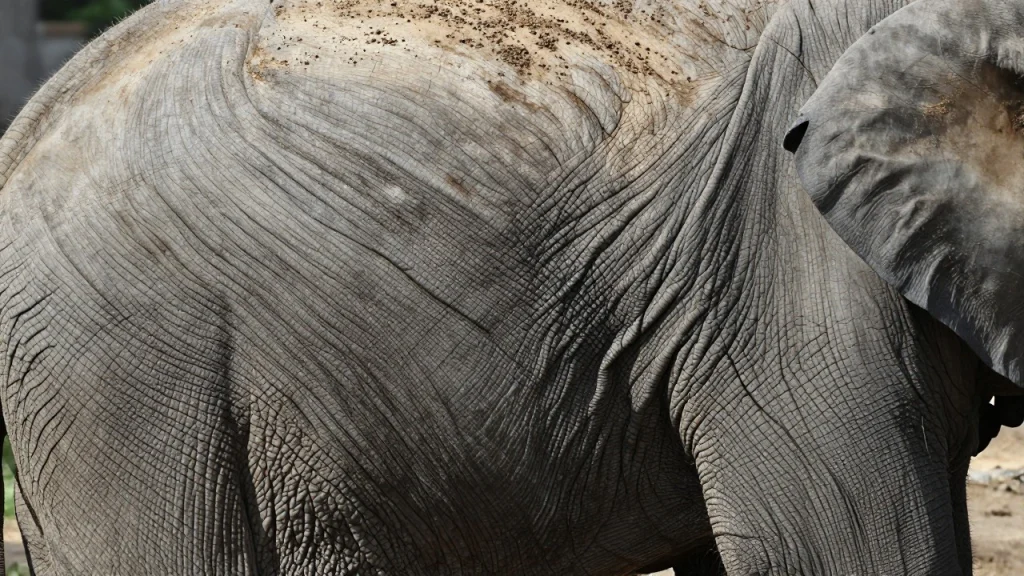
An elephant’s skin can reach a maximum thickness of up to 1 inch (2.5 centimeters) on certain parts of its body. Despite its massive overall size, this thickness is not uniform across the entire animal. Elephant skin can be as thick as 1 inch around the back and paper thin inside the ears.
Understanding how thick an elephant’s skin is reveals a fascinating biological adaptation. This heavy outer layer acts as a tough armor against harsh environments, predators, and physical injury, while also serving critical roles in temperature regulation and moisture retention.
Variations in skin thickness across the elephant’s body
The hide of an elephant varies dramatically depending on the specific body location. Elephant skin acts as a barrier against the environment, while folds allow stretching for movement and a rich nerve supply keeps it sensitive.
- Back and trunk apex: Skin thickness reaches about 1 inch (2.5 cm) around the back.
- Flanks and legs: This skin is thick and largely immobile, though areas that move the most have a bumpier texture.
- Ears and underbelly: This skin is paper thin, such as on the inside of the ears.
These precise variations allow the elephant to shield high-impact zones while maintaining sensitive areas for communication, hearing, and precise movement.
Why elephant skin appears cracked and wrinkled
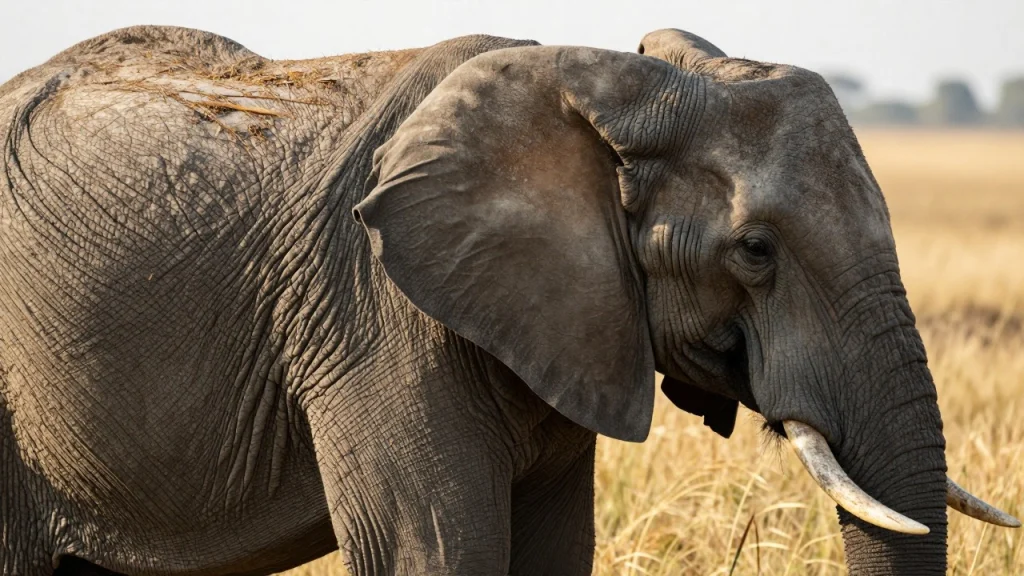
A closer look at an elephant reveals a dense network of tiny cracks and deep wrinkles across its entire hide. Rather than being a sign of aging, these micro-cracks are essential structural features of pachyderm skin.
Unlike mammalian skin that secretes oil to stay supple, elephants lack sweat glands and sebum-secreting glands except for specialized glands near their eyes and feet. African bush elephant skin channels can retain 5–10 times more water than a flat surface, improving thermal regulation.
When an elephant bathes or wallows, water lodges into these tiny crevices. As the moisture evaporates slowly, it cools the blood vessels beneath the skin, regulating the animal’s internal body temperature.
The protective functions of elephant hide
The substantial thickness of an elephant’s hide serves several vital ecological and physical functions in the wild.
Defense against physical threats
In the wild savanna and dense forests, elephants frequently walk through dense, thorn-filled brush. Thick skin prevents deep punctures, cuts, and scrapes. Elephant skin protects the body against minor cuts and abrasions, and the dorsal trunk provides impact protection during fights with predators such as lions.
Protection from solar radiation and moisture loss
Exposure to intense tropical sunlight can dry out skin quickly. Elephants supplement their natural skin barrier by throwing mud and dust over their backs. This layer of dirt adheres to the wet, wrinkled skin, forming a protective natural sunscreen and bug repellent.
Differences between African and Asian elephant skin
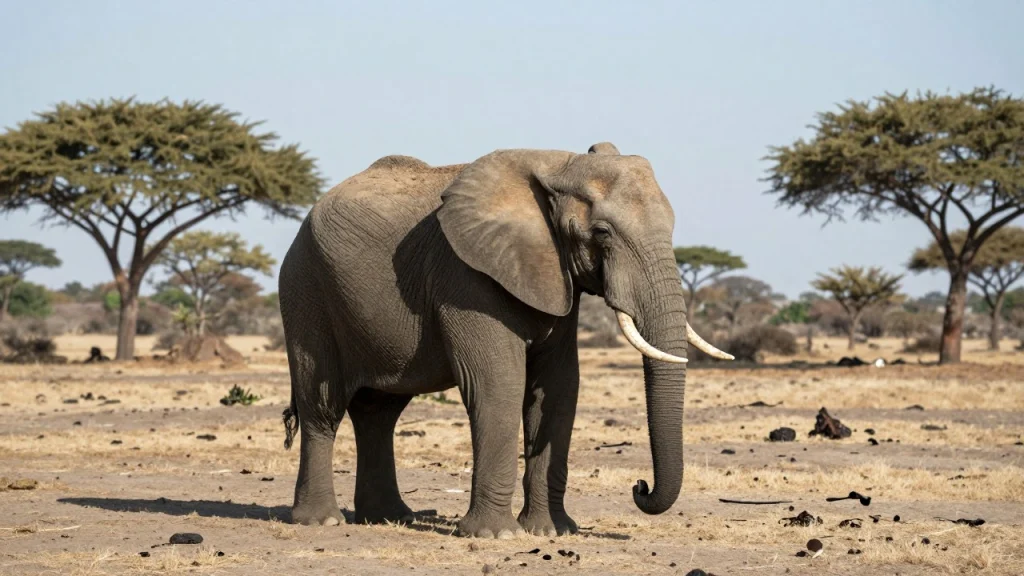
African and Asian elephants have thick skin, with differences in features such as ears, tusks, back shape, and trunk tip.
African elephants generally feature more deeply wrinkled skin than Asian elephants. Because African environments are often drier and subject to higher temperatures, these deeper crevices are necessary to maximize water retention and evaporative cooling.
In contrast, Asian elephants are considered forest animals that live in scrub forests and rainforests in India, Nepal, and parts of Southeast Asia. Asian elephant skin is sometimes depigmented, especially on and around the ears, forehead and trunk.
Caring for thick skin in natural habitats
Regular bathing, spraying, and mud-wallowing help hydrate elephant skin and promote evaporative cooling. Without regular wallowing in mud, dusting, and bathing in rivers, the hide can dry out, crack painfully, or become infested with parasites.
Through these daily habits, elephants leverage their specialized integumentary system to survive challenging conditions, demonstrating how even the thickest skin relies on constant behavioral care to function effectively.
Sources
- San Diego Zoo Wildlife Alliance: Elephant | San Diego Zoo Animals & Plants
- Smithsonian’s National Zoo and Conservation Biology Institute: Asian elephant
- Animal Diversity Web: Loxodonta africana (African bush elephant) | INFORMATION | Animal Diversity Web
- Nature Communications: Locally-curved geometry generates bending cracks in the African elephant skin
- Proceedings of the National Academy of Sciences: Skin wrinkles and folds enable asymmetric stretch in the elephant trunk