
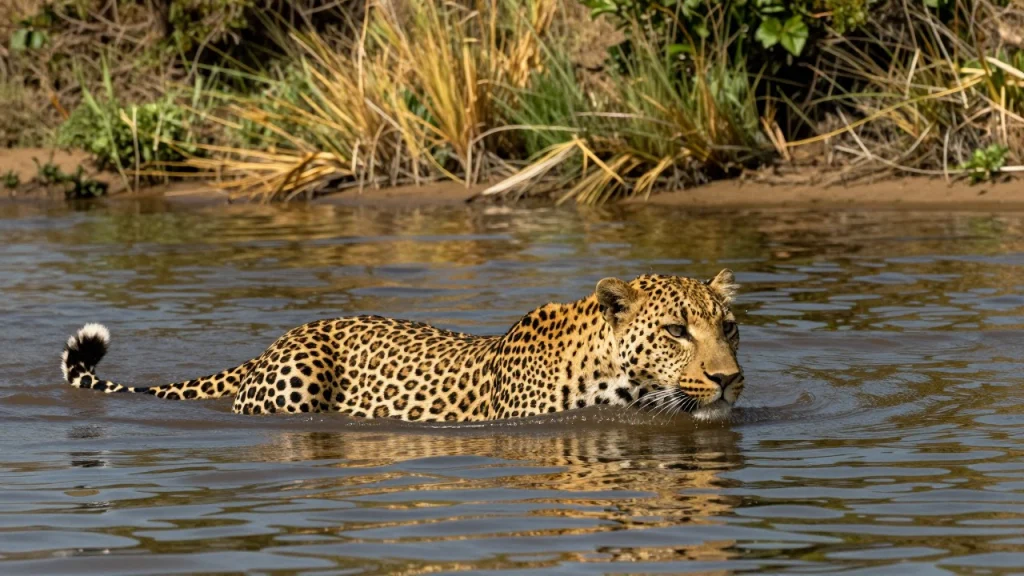
Leopards are capable swimmers, comfortable in water, and will swim across rivers when needed. While they are primarily recognized for their climbing ability and stealth on land, water does not act as a barrier to these adaptable big cats. When stalking prey, a leopard will voluntarily enter rivers to reach animals on the opposite bank or ambush prey drinking near the water’s edge.
Leopards are strong swimmers, although they are not as aquatic as tigers; jaguars are also well known for their swimming ability. Understanding how and why leopards navigate rivers offers key insights into their versatile hunting strategies and survival techniques.
Can Leopards Swim across Rivers to Stalk Prey?
Yes, leopards are strong swimmers and are comfortable in water.
When stalking prey across a river, a leopard uses the water to mask its approach. Leopards stalk prey at waterholes and use stealthy movements. If prey is spotted grazing on an island or the opposite shoreline, a leopard will submerge itself up to its neck and paddle quietly across to initiate a stalk.
Leopards also compete with lions and spotted hyenas and may hunt at different times or avoid areas where these predators are most populous.
How Leopards Hunt in and around Water
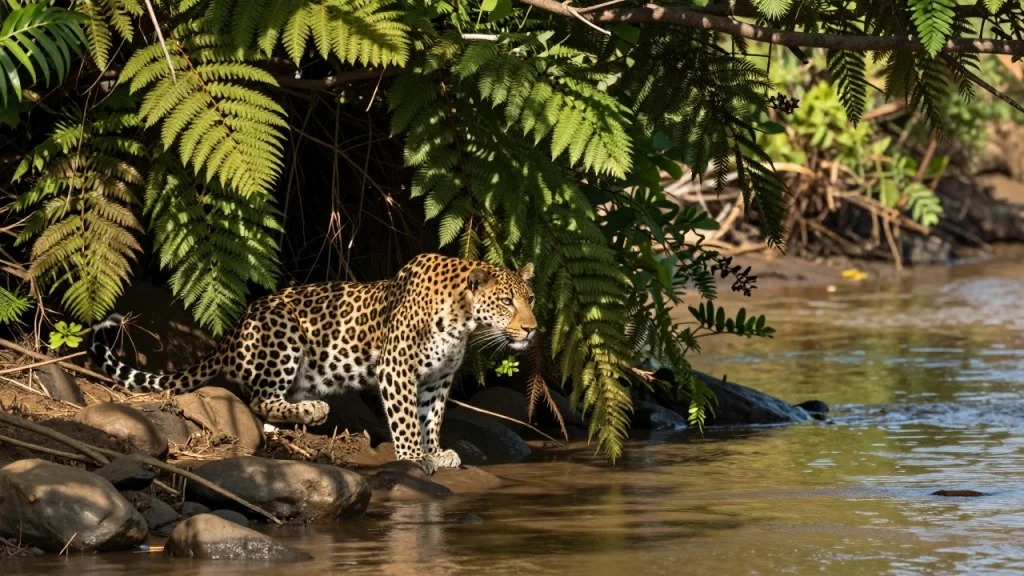
Leopards are opportunistic stealth hunters, and riverbanks provide ideal cover for ambush tactics. Their strategy near water relies on patience, camouflage, and tactical positioning.
- Ambushing drinking animals: Leopards often crouch in dense riverine vegetation, waiting for herbivores to lower their heads to drink. This brief window of vulnerability gives the leopard the split-second advantage needed to pounce.
- Aquatic hunting: While not their primary source of food, leopards will actively hunt aquatic and semi-aquatic prey. They eat fish, amphibians, snakes, and other animals.
- Silent navigation: Leopards swim using a dog-paddle motion, keeping their heads clear of the water while using their powerful legs to push forward with minimal splashing.
By incorporating riverbanks and water crossings into their hunting routines, leopards maximize their chances of securing a meal in varied habitats.
Physical Adaptations That Make Leopards Good Swimmers
Leopards possess several biomechanical and physical traits that allow them to swim effectively across strong river currents:
- Muscular shoulder and leg structure: Powerful forelimbs built for climbing trees also provide the strength required to propel a heavy body through water against river currents.
- Compact, lean body: A sleek torso minimizes drag in the water, enabling smooth movement without excessive exertion.
- Keen sensory awareness: A leopard keeps its ears, eyes, and nostrils above the surface while swimming, allowing it to stay alert to potential threats or fleeing prey.
These physical capabilities ensure that rivers act as hunting corridors rather than physical obstacles.
Why Leopards Enter the Water
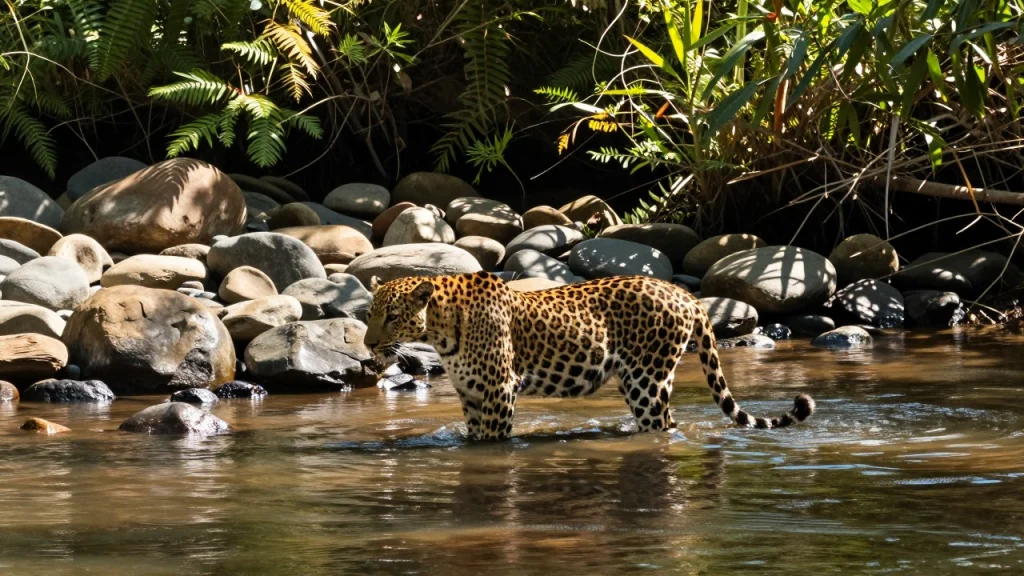
While stalking prey is a major reason for crossing rivers, leopards also take to the water for several other practical purposes:
1. Escaping Apex Competitors
Lions and spotted hyenas pose a constant threat to leopards, often stealing their kills or attempting to eliminate them as competitors.
2. Territorial Patrols
Leopard home ranges often span both sides of a riverbank. To mark scent boundaries and patrol their territories, resident males and females must regularly navigate river crossings.
Dangers Leopards Face When Swimming Rivers
Despite their swimming proficiency, entering deep rivers carries serious risks for a leopard. Water crossings are calculated decisions rather than casual activities.
Nile crocodiles inhabit African rivers and attack animals that cross their path; saltwater crocodiles inhabit parts of South and Southeast Asia and prey on animals at the water’s edge. Crocodiles are apex ambush predators in aquatic environments and possess a distinct advantage over big cats in deep water. A swimming leopard is vulnerable to being dragged underwater by a large crocodile.
Additionally, strong seasonal river currents during flood seasons can sweep cats downstream or cause exhaustion. As a result, leopards evaluate their surroundings carefully before stepping into deep, flowing water.
Comparing Leopard Swimming Habits to Other Big Cats
Not all felids view water the same way. Among big cats, swimming behavior varies significantly based on evolution and habitat:
- Tigers and Jaguars: Tigers cross rivers by swimming, and jaguars are well known for their swimming ability. They regularly enter rivers to cool off, play, and actively track prey in deep water.
- Leopards: Leopards swim comfortably when necessary (such as to cross rivers, escape danger, or stalk prey), but they generally prefer staying on dry land or in trees when resting.
- Lions: Lions can swim and will cross rivers under pressure, such as territorial conflicts among males, but they generally avoid deep water when possible.
In summary, leopards demonstrate remarkable ecological flexibility. Swimming across rivers to stalk prey is just one of many behaviors that highlight the leopard’s status as one of nature’s most adaptable predators.