
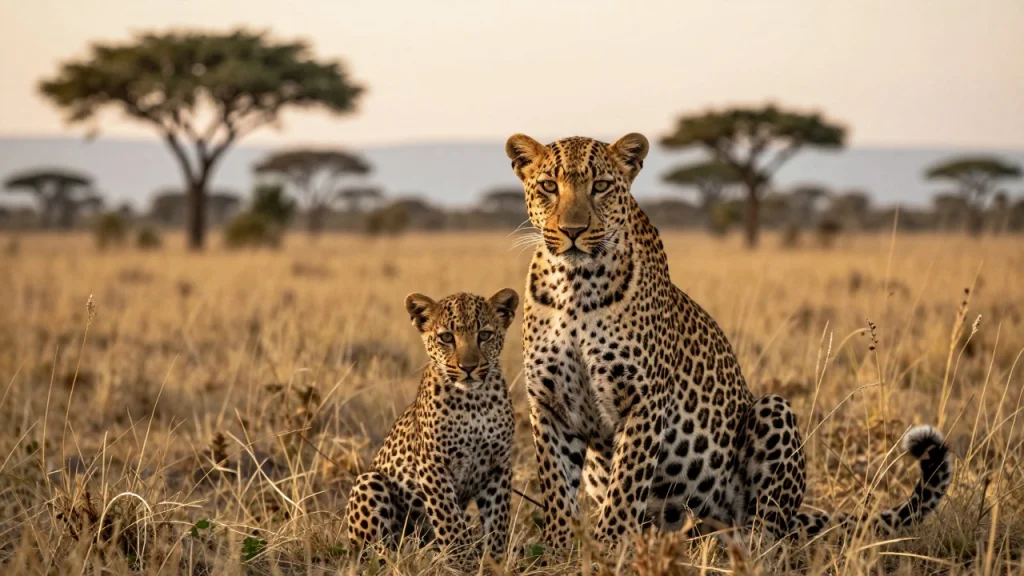
Wild leopard cubs typically become independent from their mother between about 9 and 31 months of age, averaging around 19 months. During this crucial period, young leopards transition from helpless newborns to skilled, solitary apex predators capable of hunting, climbing, and defending their own territories.
While some cubs begin venturing away from their mother around 1.5 years of age, others remain nearby until they are two years old. The exact timing depends on factors such as food availability, gender, and when the mother becomes pregnant with her next litter.
The Early Months: Vulnerability and Dependence
At birth, leopard cubs have little hair, sealed eyes, and are altricial. A typical litter consists of two to three cubs hidden in a secluded den, such as a rocky crevice, a thicket, or a hollow tree trunk.
For the first two months, cubs survive exclusively on their mother’s milk. Female leopards must leave the den periodically to hunt, making this early stage the most dangerous phase of a cub’s life. Predators like lions, hyenas, and even male leopards pose constant threats while the mother is away.
Around 65 days of age, cubs begin following their mother outside the den and start sampling solid meat. However, they continue nursing alongside eating meat until they are fully weaned at around three to four months old.
Developing Hunting Skills and Tree-Climbing Mastery
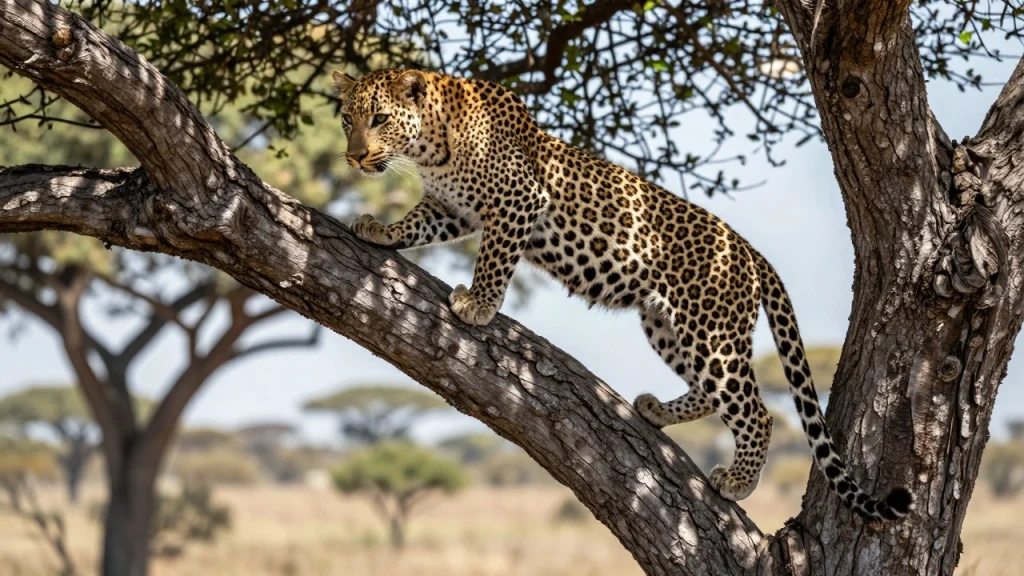
By about 11 months, cubs are hunting. Arboreal agility is a vital survival skill for wild leopards, as hauling kills up into branches protects their food from opportunistic scavengers like hyenas and lions.
During this stage, cubs practice hunting smaller animals, including rodents, birds, and small reptiles. Key milestones during their development include:
- 3 Months: Cubs begin accompanying their mother to learn hunting skills, and weaning is complete soon after.
- 11 Months: Cubs are hunting on their own, and one sibling pair was recorded killing an adult impala.
Throughout this period, the mother continues to supply the bulk of their food while providing protection and teaching essential territorial navigation.
The Transition to Independence
The final phase of a cub’s time with its mother ends with independence, on average at around 19 months. As young leopards mature, their mother’s maternal support gradually decreases.
The separation process is gradual rather than immediate:
- Decreasing maternal support: The mother shares fewer kills and actively encourages young leopards to forage independently.
- Territorial separation: Young leopards begin expanding their home ranges outside their mother’s core area.
- Establishing self-sufficiency: Once a leopard can consistently hunt ungulates and secure its prey in trees, it departs permanently.
Gender Differences in Leaving the Mother
The path to independence varies significantly between male and female leopard cubs.
Young females often establish a home range that overlaps with or stays adjacent to their mother’s territory. This spatial proximity allows females to remain in familiar hunting grounds with reliable access to water and shelter.
In contrast, young males must undergo natal dispersal. They travel long distances to locate unclaimed territory far away from their birth site to avoid competition with dominant adult males, including their own father. Because of this dispersal, young males face higher mortality risks as they navigate unfamiliar landscapes and establish their independence.
Sources
- IUCN/SSC Cat Specialist Group: Living Species – Leopard
- San Diego Zoo Wildlife Alliance Library: Reproduction & Development – Leopard (Panthera pardus) Fact Sheet
- Animal Diversity Web: Panthera pardus (leopard)
- San Diego Zoo Wildlife Alliance: Leopard | San Diego Zoo Animals & Plants
- National Geographic: Leopard