
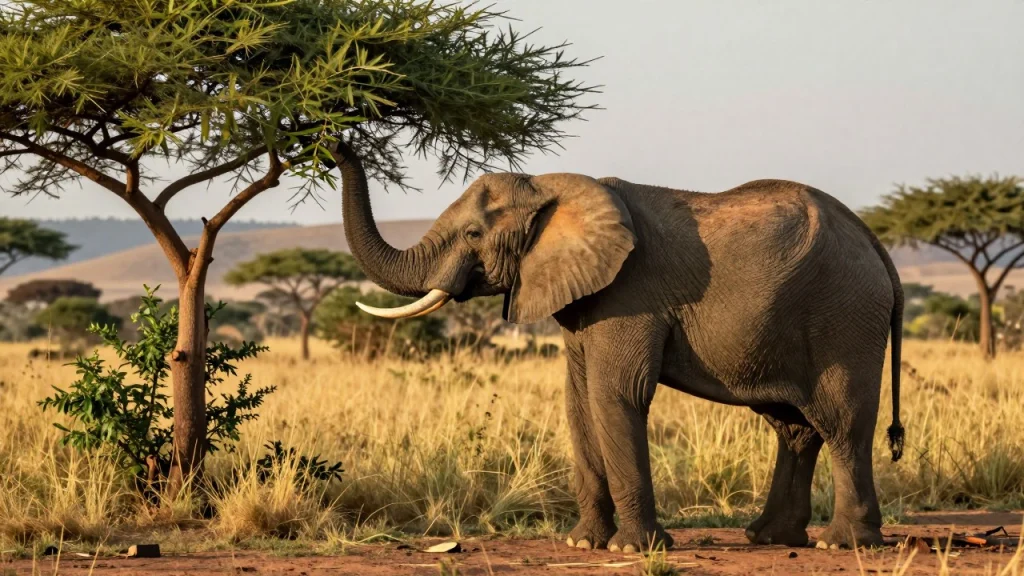
Elephants are strict herbivores that consume vast quantities of plant matter every day to sustain their massive bodies. Their wild diet consists primarily of grasses, leaves, tree bark, twigs, roots, flowers, and fruits. Depending on the season and their environment, these large mammals adapt their feeding choices to whatever vegetation is most abundant and nutritious.
Because of their immense physical scale and relatively inefficient digestive systems, adult elephants must spend up to 18 hours a day foraging. An adult elephant typically consumes about 165 to 330 pounds (75 to 150 kilograms) of food per day in the wild; a very large male may eat twice that amount. Understanding what elephants eat offers valuable insight into how these gentle giants survive in the wild and shape their natural habitats.
Key Components of an Elephant’s Wild Diet
As mega-herbivores, elephants are unspecialized feeders capable of eating a wide variety of plant material. Botanists and wildlife biologists generally divide their food sources into two main categories: grazing materials and browsing materials.
- Grasses and herbs: During wet seasons, soft green grasses form the bulk of an elephant’s daily intake. These lush plants provide quick energy and high moisture content.
- Tree bark and wood: Rich in minerals, calcium, and fiber, tree bark is a vital dietary component year-round, particularly when fresh grasses dry up.
- Leaves and twigs: Elephants strip branches using their trunks to access foliage rich in nutrients and essential minerals.
- Roots and tubers: Using their sturdy tusks and feet, elephants dig into the soil to extract nutrient-dense roots during dry periods.
- Fruits and flowers: Seasonal treats like wild figs, marula fruit, and seed pods provide concentrated sugars and essential vitamins.
The Importance of Tree Bark and Roots
While soft foliage might seem easier to eat, tree bark is crucial for an elephant’s health. Bark provides calcium and roughage that aid in digestion and help maintain structural bone strength. Elephants use their tusks to chisel bark off tree trunks before tearing it away with their trunks.
Roots also play a critical role during droughts. When surface vegetation vanishes, underground roots remain hydrated and packed with stored nutrients. Elephants use their front feet to kick away topsoil and their tusks to pry up thick roots.
Dietary Differences Between Elephant Species
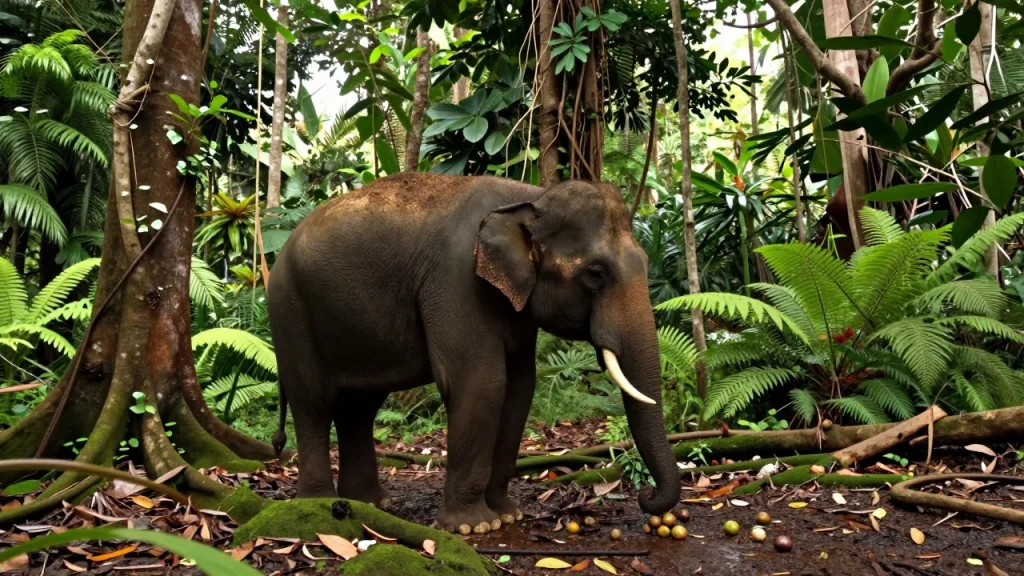
While all elephants are herbivores, dietary preferences vary significantly between African and Asian species due to differences in their geographical habitats and available flora.
African Savannah Elephants
African savannah elephants (Loxodonta africana) inhabit open grasslands, bushlands, and woodlands. Their diet shifts dramatically with the rainfall cycle. During the wet season, savannah elephants are more likely to forage on grasses. In the dry season, they transition primarily to browsing on acacia leaves, woody shrubs, and thick bark.
African Forest Elephants
African forest elephants (Loxodonta cyclotis) live in the dense tropical rainforests of Central and West Africa. Unlike their savannah relatives, forest elephants are major fruit eaters. They feed on hundreds of tree species and play an indispensable role in spreading seeds across vast forest territories.
Asian Elephants
Asian elephants (Elephas maximus) roam grasslands, tropical evergreen forests, and scrub forests across South and Southeast Asia. Their diet includes a high proportion of bamboo, palms, sugarcane, and native grasses. Because their habitats often border human settlements, they also feed on cultivated crops like bananas and rice when natural sources grow scarce.
How Elephants Harvest and Process Food
An elephant’s feeding mechanism is one of the most remarkable adaptations in the animal kingdom. From their versatile trunks to their specialized molars, every aspect of their anatomy aids in food collection and processing.
The Multifunctional Trunk
An African elephant’s trunk contains about 40,000 muscles, providing exceptional strength and delicate precision. Elephants use their trunks to strip leaves from tall branches, pluck individual blades of grass, and snap sturdy tree limbs. The trunk acts as a hand, arm, and nose combined, allowing them to gather food from ground level to overhead tree branches.
Massive Teeth and Constant Replacement
Elephants do not have sharp canine teeth or incisors for chewing; instead, they rely on four large molars located in the back of their mouths. These flat, ridge-patterned teeth grind tough plant fibers like wood and dry grass into a coarse pulp.
Over a lifetime, an elephant goes through six sets of molars. As one set wears down from constant grinding, a new set moves forward from the back of the jaw to replace it. Once an elephant exhausts its final set of teeth in old age, it can no longer grind tough vegetation, which often limits its natural lifespan.
Digestion and Daily Energy Needs
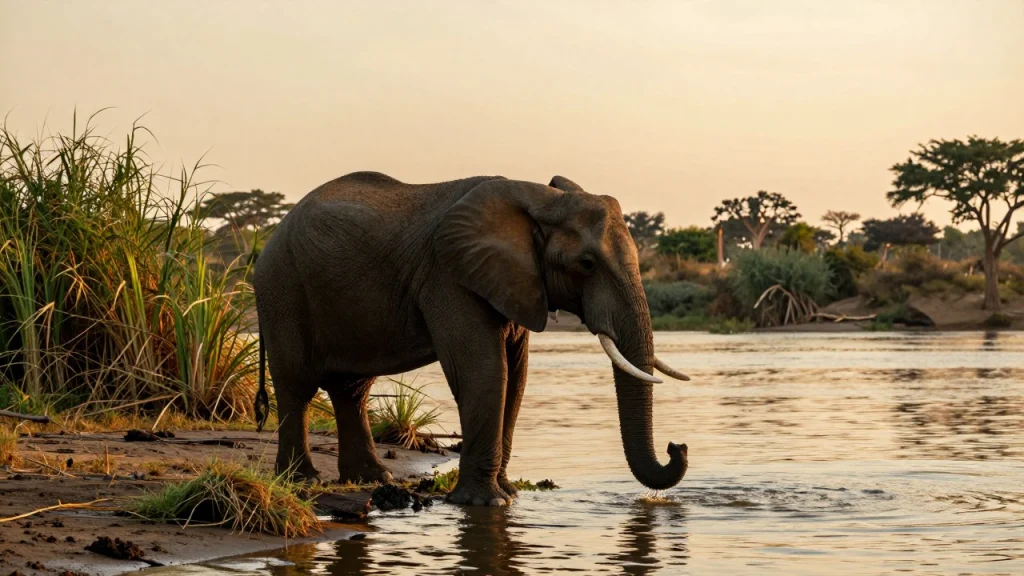
Despite the massive volume of food consumed daily, an elephant’s digestive system is surprisingly inefficient. Elephants are hindgut fermenters, meaning they process food quickly through a relatively simple stomach and a large cecum.
Because they only digest about 40% to 50% of the plant material they swallow, the rest passes through their system unabsorbed. This low efficiency forces elephants to eat almost continuously throughout the day and night to meet their body’s energy requirements.
- Feeding time: Elephants spend 12 to 18 hours daily searching for and eating food.
- Water intake: To digest all this fibrous food, an adult elephant drinks between 30 and 50 gallons (110 to 190 liters) of water daily.
- Waste production: An adult produces over 200 pounds of nutrient-rich dung every single day.
How Elephant Diet Shapes Entire Ecosystems
As landscape architects, elephants play a vital ecological role through their feeding habits. By tearing down trees, clearing paths through dense brush, and digging for roots, they create open spaces that allow sunlight to reach the forest floor, benefiting smaller herbivores and plants.
Furthermore, elephants are vital seed dispersers. Many plants spread via seeds deposited in elephant dung some distance from the parent plant. As elephants travel dozens of miles each day, they transport seeds across large distances, depositing them in fertile manure that protects and nourishes young seedlings.
Summary of the Elephant Diet
In summary, elephants are versatile herbivores whose diet centers around grasses, leaves, bark, roots, and fruits. Their daily survival relies on consuming hundreds of pounds of vegetation and devoting most of their waking hours to foraging. Through these intensive feeding habits, elephants not only sustain their own impressive growth but also maintain the health and diversity of ecosystems across Africa and Asia.
Sources
- San Diego Zoo Wildlife Alliance: Elephant | San Diego Zoo Animals & Plants
- Smithsonian’s National Zoo: Asian elephant | Smithsonian’s National Zoo and Conservation Biology Institute
- National Geographic: African Elephant
- National Geographic: Asian Elephant
- Animal Diversity Web: Elephas maximus – Animal Diversity Web