
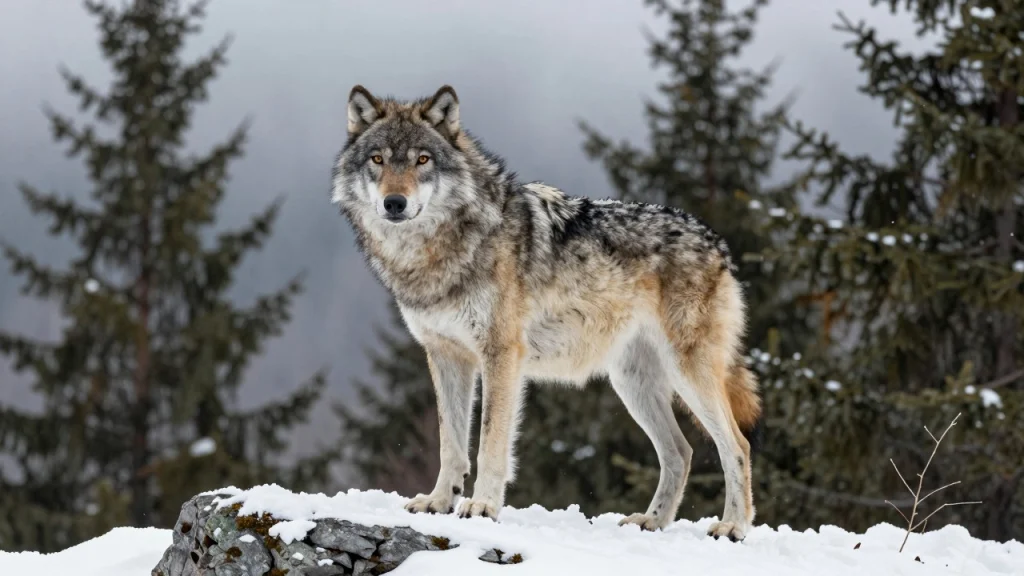
When observing wild canids in their natural habitats, many wildlife enthusiasts ask: how big can a wolf get? The answer depends heavily on the specific subspecies, geographic location, and gender, but the largest wild wolves can reach impressive dimensions. On average, an adult male gray wolf weighs between 70 and 145 pounds (32 to 66 kilograms), stands 26 to 33 inches tall at the shoulder, and measures between 4.5 and 6.5 feet in total length from nose to tail.
However, exceptional wild specimens in northern latitudes can grow even larger. The maximum documented weight for a wild gray wolf in North America reaches approximately 175 pounds (79 kilograms). These large animals represent the apex of size within the Canidae family, displaying physical adaptations that enable them to navigate harsh winter environments and bring down large ungulate prey like moose and elk.
Average Size and Dimensions of the Gray Wolf
The gray wolf (Canis lupus) is the largest wild member of the dog family. To understand its scale, wildlife biologists measure wolves across three primary dimensions: shoulder height, total body length, and body mass.
- Shoulder height: Adult gray wolves typically stand 26 to 33 inches (66 to 84 centimeters) tall at the shoulder. Their long legs provide exceptional clearance over deep snowpack and rough terrain.
- Total body length: From the tip of the nose to the tip of the tail, an adult gray wolf generally measures between 4.5 and 6.5 feet (1.4 to 2.0 meters). The bushy tail alone accounts for about 13 to 20 inches of this total.
- Weight range: Adult females usually weigh between 60 and 100 pounds (27 to 45 kilograms), while adult males average 70 to 145 pounds (32 to 66 kilograms).
These physical dimensions allow wolves to maintain high endurance over long distances, trotting effortlessly at a pace of about 5 miles per hour for hours at a time.
Subspecies and Geographical Variations in Size
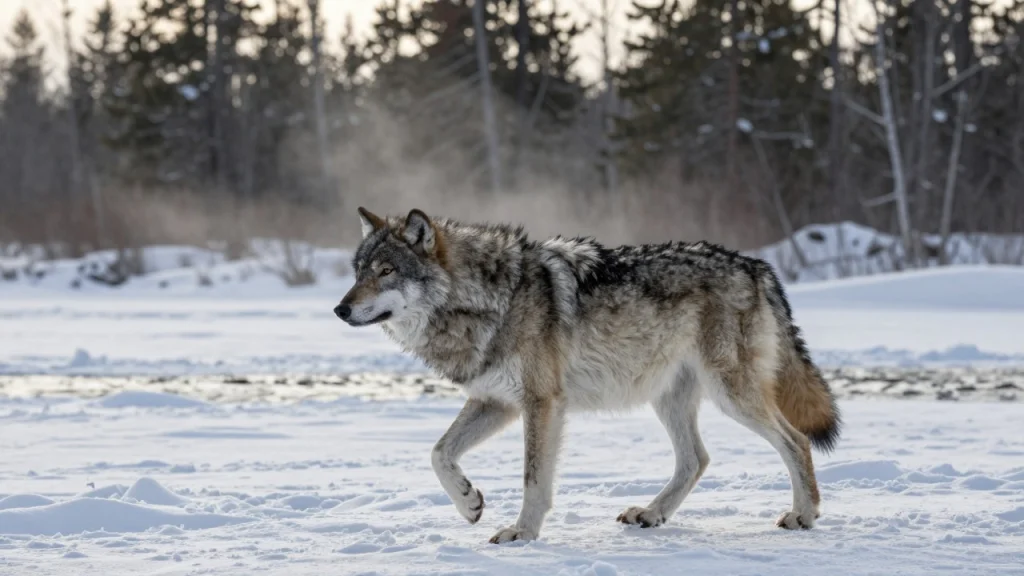
Not all wolves grow to the same size. Wolf populations follow a ecological principle known as Bergmann’s rule, which states that individuals within a broadly distributed clade tend to be larger in colder climates and smaller in warmer regions.
Northern Gray Wolves (The Largest Canids)
The largest wolves inhabit the far northern reaches of North America and Eurasia. These northern wolves represent the upper limits of wolf size.
In these frigid environments, larger body mass helps animals retain core body heat more efficiently. A heavy body structure also gives northern wolves the muscular leverage necessary to hunt formidable prey like bison, muskoxen, and adult moose.
Southern and Desert Subspecies
In contrast, wolf subspecies inhabiting southern latitudes are significantly smaller and more slender.
- Arabian wolf (Canis lupus arabs): A subspecies of the gray wolf adapted to hot desert conditions of the Arabian Peninsula.
- Indian wolf (Canis lupus pallipes): A smaller subspecies with a compact body suitable for the semi-arid plains of India.
- Red wolf (Canis rufus): Native to the southeastern United States, adult red wolves average 45 to 80 pounds (20 to 36 kilograms), making them intermediate in size between coyotes and gray wolves.
Key Factors That Influence Wolf Growth
A wild wolf’s final adult size relies on a combination of biological traits, environmental pressures, and resource availability throughout its life cycle.
1. Sexual Dimorphism
Within almost every wolf pack, males are noticeably larger than females. On average, male wolves are noticeably heavier and larger in overall frame than females of the same subspecies. Males possess broader skulls, thicker necks, and heavier forequarters, which assist in territorial defense and prey capture.
2. Nutrition and Prey Availability
Pup development heavily depends on pack stability and prey density. Young wolves experience rapid growth, reaching their full adult size by about one year of age.
3. Seasonal Fluctuation
A wild wolf’s weight changes throughout the year. Wolves store fat reserves during late autumn and early winter when hunting success is high. By late spring, after enduring harsh winters and raising new litters, an adult wolf’s weight may drop noticeably.
How Wolves Compare to Large Domestic Dogs
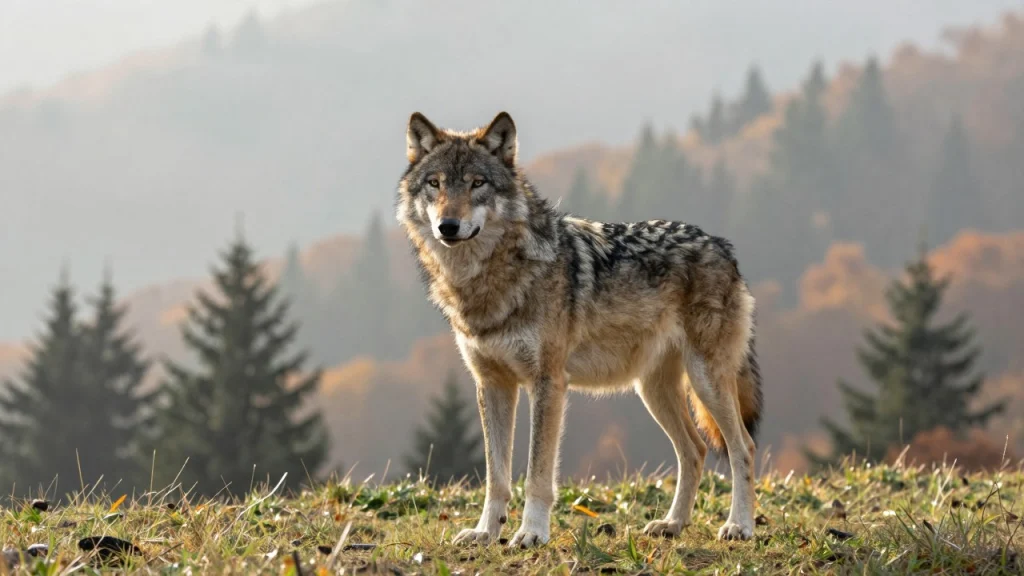
Because domestic dog breeds stem from ancient wolf ancestors, people frequently compare the size of wolves to large domestic breeds like Great Danes, Mastiffs, or Timber Shepherds. While some giant dog breeds outweigh wild wolves, their physical proportions differ significantly.
- Chest and torso structure: Wolves have narrow, deep chests with limbs set close together, optimizing aerodynamic efficiency and endurance. Domestic dogs often feature wider, stockier chests.
- Leg length and paw size: Wolves possess proportionally longer legs and significantly larger paws relative to their body weight. Oversized paws act like snowshoes, allowing them to distribute weight over soft snow.
- Coat thickness: A wolf’s winter coat features a dense layer of insulating underfur beneath long guard hairs. This thick fur can make a 100-pound wolf appear visually larger than a 130-pound short-haired domestic dog.
Summary of Wolf Physical Limits
Understanding how big a wolf can get requires looking at both standard averages and extreme outliers in nature. While unverified reports of much larger wild wolves occasionally circulate, verified records show that weights above 160 pounds are extremely rare.
The vast majority of mature gray wolves weigh under 140 pounds, perfectly balancing muscle mass, thermoregulation, and stamina. Through these evolutionary proportions, wolves remain among the most efficient apex predators in wild mammalian ecosystems across the Northern Hemisphere.
Sources
- Animal Diversity Web: Canis lupus (gray wolf) | INFORMATION | Animal Diversity Web
- Smithsonian’s National Zoo: Gray wolf | Smithsonian’s National Zoo
- Alaska Department of Fish and Game: Big Wolves and Ordinary Wolves – Alaska Fish and Wildlife News, March 2011
- Animal Diversity Web: Canis rufus (red wolf) | INFORMATION | Animal Diversity Web
- National Park Service: Wolf Ecology Basics (U.S. National Park Service)
- PMC (Biology, MDPI): Conservation of the Threatened Arabian Wolf (Canis lupus arabs) in a Mountainous Habitat in Northwestern Saudi Arabia