
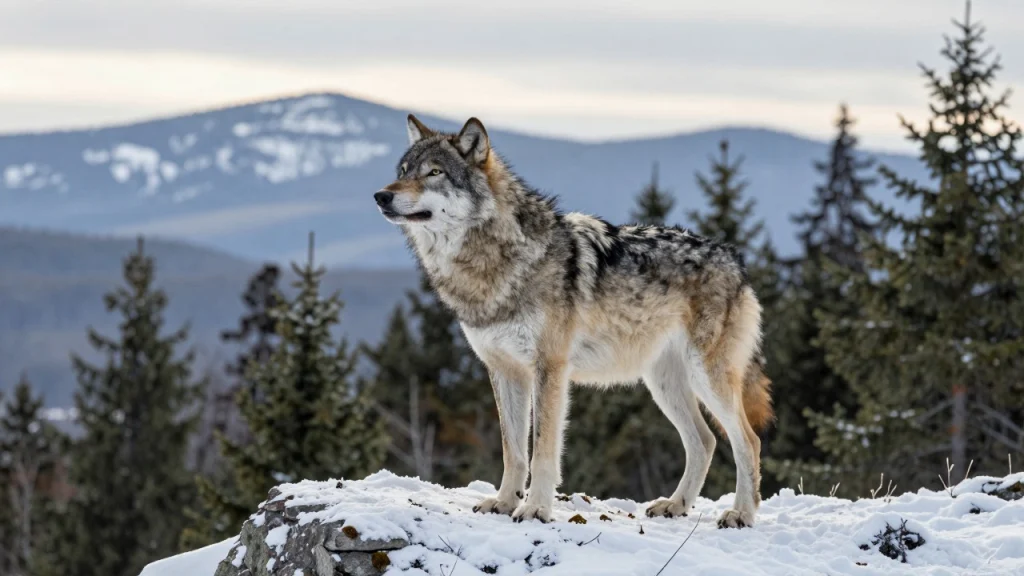
Wolves are legendary for their hunting prowess across vast wildernesses. Wolves rely heavily on their sense of smell, which is far keener than a human’s, making it one of their primary tools for finding food. Wolf conservation groups estimate that a wolf can scent prey about 2 to 3 kilometers (1.2 to 1.9 miles) away, and probably farther when the wind is favorable. The 1.75-mile figure often repeated online fits that estimate, but no published measurement gives an exact distance.
This acute olfactory power enables wolf packs to detect prey long before visual contact is established. By sensing tiny chemical markers carried on atmospheric currents, wolves can locate herds of elk, deer, moose, or bison across dense forests, rolling hills, and snow-covered plains.
How far can a wolf smell its prey under different conditions?
The distance at which a wolf can detect prey varies with environmental factors. The sense of smell in wolves operates by capturing airborne scent molecules, meaning atmospheric stability plays a critical role in detection distances.
Several environmental conditions dictate how far a scent trail will carry:
- Wind direction and speed: A steady breeze blowing from prey toward the wolf carries concentrated scent particles over maximum distances, while crosswinds or tailwinds hinder detection.
- Humidity and air moisture: Damp air holds scent molecules closer to the ground, significantly increasing a wolf’s ability to pick up subtle odors.
- Temperature: Cold, crisp air helps preserve scent trails longer than dry, hot air, which can cause volatile odor compounds to evaporate rapidly.
- Terrain features: Open landscapes like tundra or alpine meadows allow scent plumes to travel uninterrupted, whereas dense vegetation can disrupt airflow.
The olfactory system of the wolf
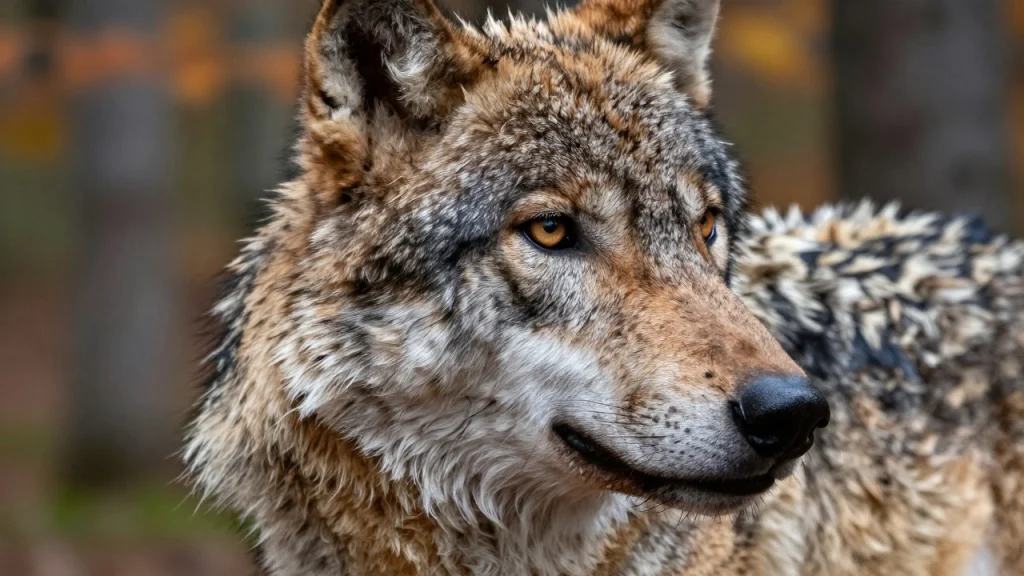
To understand how wolves achieve such remarkable detection ranges, it is helpful to look at their anatomy. The wolf’s vomeronasal system exhibits unique characteristics.
The nasal cavity contains millions of specialized sensory receptors, far exceeding human capabilities.
Massive sensory surface area
Inside a wolf’s nose is a complex labyrinth of fine bones called turbinates. The main olfactory system comprises millions of neuroreceptor cells situated in the olfactory epithelium covering the olfactory turbinates.
A wolf’s sense of smell is estimated to be thousands of times better than humans.
Dedicated brain processing
A significant portion of the wolf’s brain is dedicated entirely to analyzing scents. The olfactory bulb, which receives direct signals from the nasal receptors, processes complex mixtures of airborne chemicals.
This enables wolves to not only detect the presence of an animal, but also distinguish between different prey species, evaluate the freshness of a trail, and determine the health or stress level of an individual prey animal.
How wolves use scent to hunt and navigate
Olfaction is integrated into every phase of a wolf pack’s hunting strategy. Because prey species like moose and elk are widely scattered across large territories, searching visually would consume excessive energy. Scent tracking allows wolves to conserve vital resources during long searches.
Wolves utilize their sense of smell in several distinct ways during a hunt:
- Air-scenting: Wolves frequently raise their heads into the wind to sample airborne scent currents, allowing them to locate distant herds without moving.
- Ground-tracking: Once a pack locates a fresh trail on the ground or in snow, they follow the footsteps left by ungulates, gauging how recently the animals passed.
- Identifying vulnerable prey: Scent signals can reveal whether an animal is injured, sick, old, or pregnant, helping the pack choose targets with higher chances of success.
In addition to hunting, wolves rely on their sense of smell for social communication. Scent marking with urine and scat helps packs establish territory boundaries and avoid unnecessary, dangerous conflicts with neighboring packs.
Comparing wolf smell to other wild carnivores
While wolves possess an outstanding sense of smell, they are part of a broader group of wild predators with specialized sensory capabilities. A polar bear can smell a seal on the ice 20 miles (32 kilometers) away.
However, among canids and cursorial (running) pack hunters, the wolf’s olfactory range is exceptionally well-suited to their cooperative, long-distance hunting lifestyle. As top predators, gray wolves are important in regulating populations of their prey animals.
Sources
- CHWOLF: Sinnesorgane
- National Park Service: Wolf Ecology
- Animal Diversity Web, University of Michigan: Canis lupus (gray wolf) | INFORMATION | Animal Diversity Web
- Journal of Anatomy: The vomeronasal system of the wolf (Canis lupus signatus): The singularities of a wild canid
- San Diego Zoo: Polar Bear | San Diego Zoo Animals & Plants