
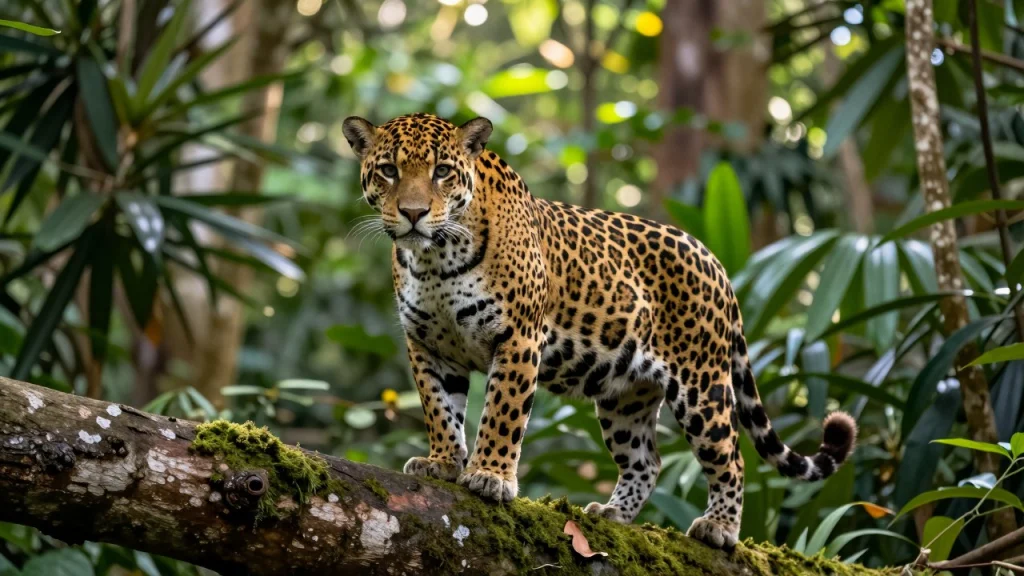
Understanding the difference between a leopard and a jaguar comes down to geographical location, physical appearance, rosette patterns, and hunting techniques. While both belong to the genus Panthera and share a striking spotted coat, they are distinct big cat species adapted to entirely different ecosystems and continents.
Leopards (Panthera pardus) are native to Africa and Asia, whereas jaguars (Panthera onca) are the largest big cats in the Americas, ranging through South and Central America into Mexico. Beyond their native ranges, key physical markers such as body build, rosette markings, and jaw mechanics clearly separate the two.
Geographic Range and Wild Habitat
The most immediate distinction between leopards and jaguars is their geographic location. Because their natural habitats do not overlap in the wild, knowing where a big cat originates instantly identifies its species.
- Leopards: Highly adaptable predators found across sub-Saharan Africa, northeast Africa, Central Asia, India, and China. They thrive in diverse ecosystems including savannas, grasslands, dense forests, and mountainous regions.
- Jaguars: Native exclusively to the Western Hemisphere. Their range spans from the tropical rainforests of the Amazon Basin through Central America. They strongly prefer wet habitats such as swamps, marshes, and river valleys.
Physical Size and Body Build
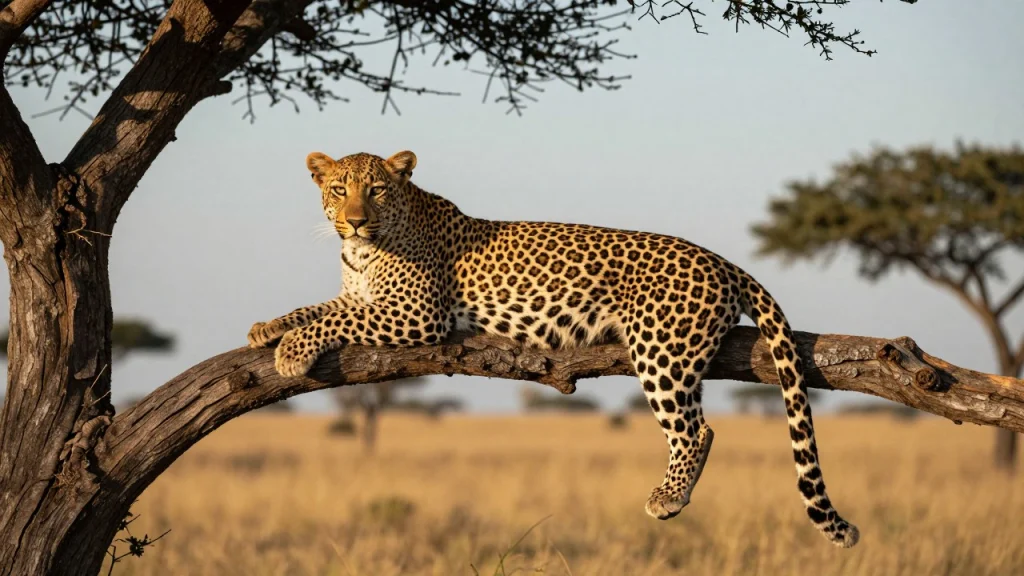
While both cats possess muscular bodies built for ambush hunting, jaguars are significantly larger and more stocky than leopards.
Jaguars rank as the third-largest feline species in the world, surpassed only by tigers and lions. They feature a broader head, wider jaw, shorter tail, and a compact, exceptionally sturdy frame. This heavyweight build provides the power required to overpower large prey and navigate dense jungle terrain.
Leopards, by contrast, feature a longer, more slender physique designed for agility and vertical climbing. Their comparatively longer tail acts as a vital counterweight when balancing on high tree branches.
Rosette Markings and Coat Patterns
At first glance, both cats appear to have simple spots, but their coats feature distinct geometric patterns called rosettes. Examining these markings closely reveals clear visual differences:
- Jaguar rosettes: Larger, more widely spaced rings that enclose distinct dark spots inside the rings.
- Leopard rosettes: Smaller, more tightly clustered rings that are generally empty inside, lacking central spots.
Hunting Behaviors and Bite Strength
Both species are solitary, stealthy apex predators, but their hunting habits reflect their specific ecological adaptations.
Arboreal Capability vs. Aquatic Preference
Leopards are famous for their extraordinary climbing ability. To protect their kills from ground scavengers such as lions and hyenas, leopards frequently haul prey, sometimes weighing more than themselves, high up into tree branches.
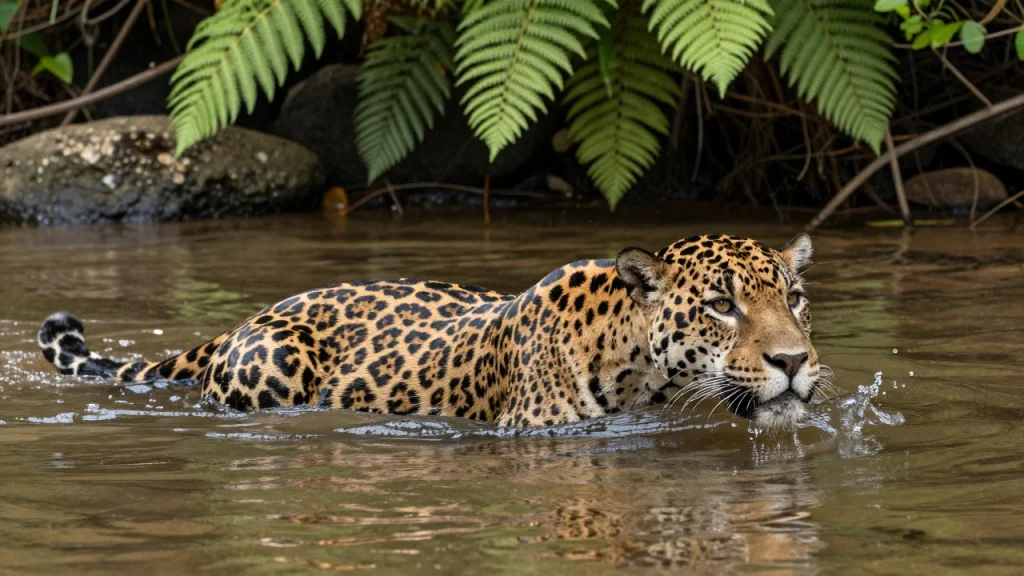
Jaguars are also capable climbers, but they are uniquely adapted to water. Unlike many felines, jaguars seek out riverine habitats, swim regularly, and actively hunt aquatic prey such as caimans, turtles, and fish.
Bite Strength and Predation Mechanics
The jaguar possesses an extraordinarily powerful bite relative to its size. Jaguars often use their powerful jaws to bite through the skull or shell of their prey, and they also use direct bites to the neck. Leopards rely on a traditional suffocating bite to the throat to subdue prey like antelopes and deer.
Conservation Status
Both species face ecological pressures, primarily driven by habitat loss, fragmentation, and human-wildlife conflict. The International Union for Conservation of Nature (IUCN) classifies both big cats on its Red List:
- Leopard: Listed as Vulnerable, with several subspecies (such as the Amur leopard) critically endangered due to poaching and habitat degradation.
- Jaguar: Listed as Near Threatened, facing population declines due to deforestation in rainforest environments and agricultural expansion.
Protecting wildlife corridors and preserving native habitats remain essential strategy efforts for ensuring the long-term survival of both species.