
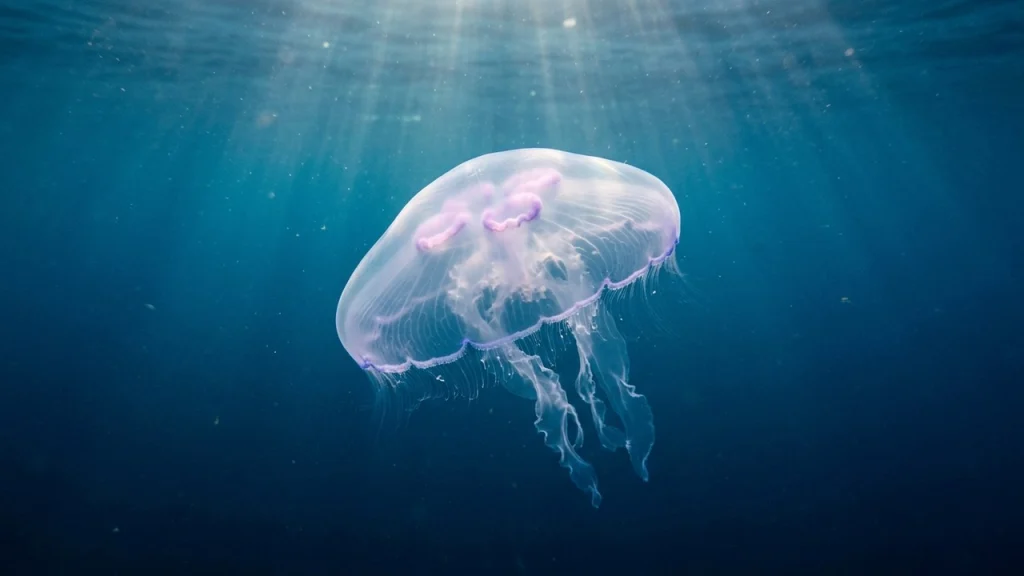
Jellyfish trade off two ways of making more with each generation, with swimming medusae reproducing sexually and polyps cloning themselves. Fertilized eggs develop into drifting planulae that settle as scyphistoma polyps, according to the Virginia Institute of Marine Science and a Scientific Reports study of scyphozoan jellyfish. Those polyps multiply without fertilization, Animal Diversity Web reports, then free immature ephyrae by strobilation that mature into medusae, the institute adds.
This elaborate cycle lets true jellyfish use good conditions fast, the institute reports. The familiar stinging swimmer is only the medusa stage, while that database describes medusae as dominant in the generational swap and as gonochoric.
How medusae spawn and brood larvae
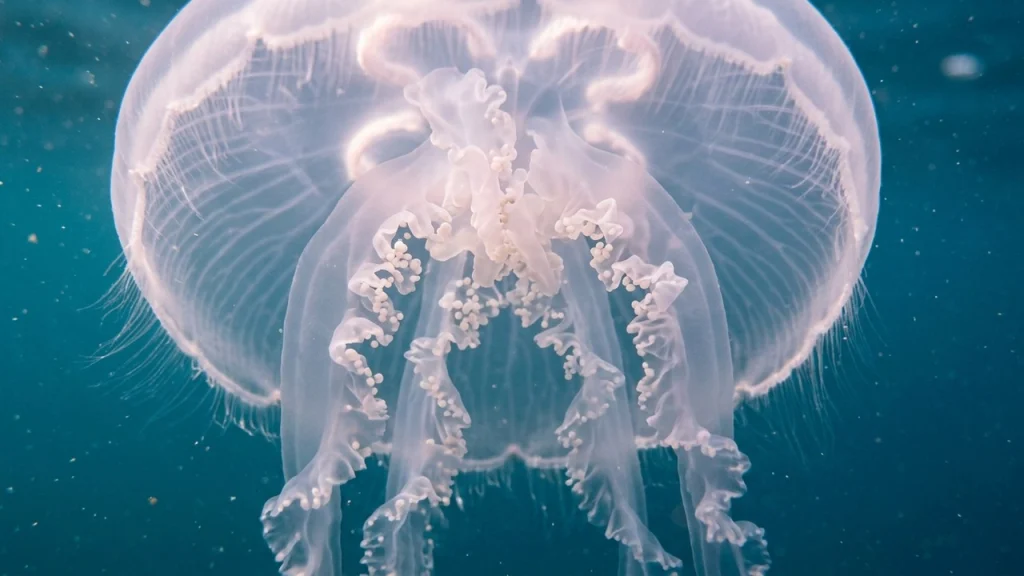
Adult male moon jellies let go of sperm strands that females swallow, the Monterey Bay Aquarium reports. A PeerJ study of moon jellyfish Aurelia aurita found mature eggs drop into the stomach cavity, where beating hairs move them to pouches on the feeding arms. After fertilization, females keep the young on those arms, the aquarium reports.
Embryos stay inside pockets on the feeding arms until they reach the planula larva stage, the study found. In Chesapeake Bay, sea nettle medusae cast eggs and sperm into open water through late summer, according to the Virginia Institute of Marine Science.
Planulae settle and become polyps
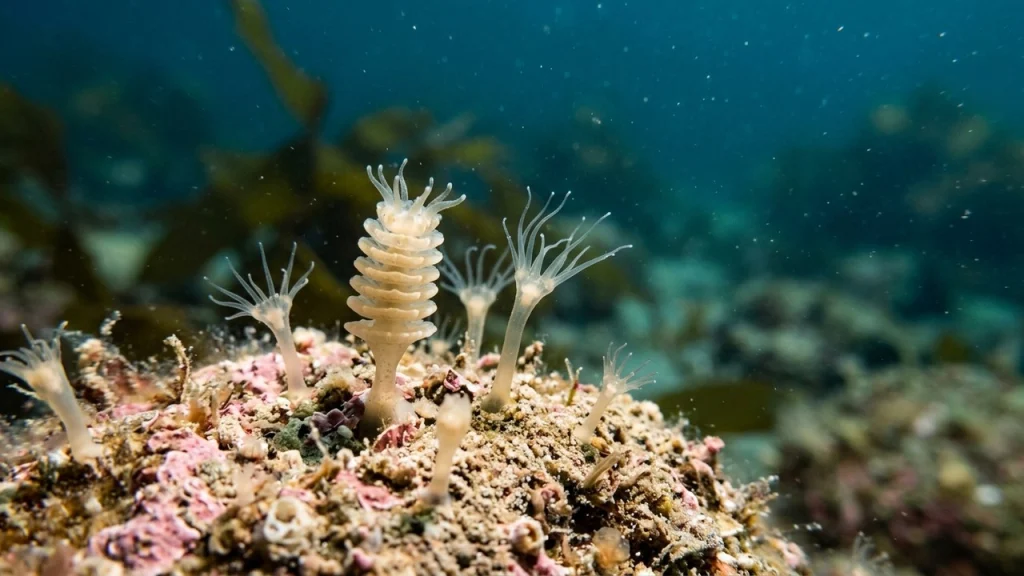
A PeerJ study of moon jellyfish Aurelia aurita says a ready larva exits the feeding arms to attach and transform. These drifters wander until they touch firm ground such as rock or oyster shell, according to the Virginia Institute of Marine Science. The larvae sink to the sea floor, anchor and change into scyphistoma polyps, according to a Scientific Reports study of scyphozoan jellyfish.
True jellyfish scyphistomae look like tiny anemones under less than an inch long and snag small prey with tentacles, the institute says.
Polyps clone, wait and release ephyrae
In the scyphistoma stage, a polyp can branch out to clone itself, according to the Virginia Institute of Marine Science. Polyps in the asexual phase can also form buds that mature into new polyps, the Monterey Bay Aquarium reports. When heat climbs or food runs scarce, a scyphistoma can shrink into a small dome shaped cyst, the institute says.
Those podocysts stay hardy and can last for years until conditions improve, the institute adds. Once surroundings turn favorable again, the cyst can revert to polyp form and keep growing, the institute reports. When waters warm to about 62 F in spring, true jellyfish polyps lengthen into a chain or stack of tiny clones called a strobila, the institute notes.
That strobila may resemble a stack of saucers, each saucer an immature medusa called an ephyra, Animal Diversity Web reports. In time a scyphistoma turns into a strobila whose far end develops into a medusa like animal, the database says. Periodically the tip piece breaks away and swims off in a process called strobilation, the institute describes. In moon jellies, polyps in this phase produce tens of ephyrae that detach and mature into adult medusae, the aquarium says.
Those ephyrae soon hunt other zooplankton and keep growing into medusae, restarting the cycle, the institute concludes.
Sources
- Animal Diversity Web: Scyphozoa
- Virginia Institute of Marine Science: Life Cycle of Jellyfish
- Monterey Bay Aquarium: Moon jelly
- PeerJ: Embryonic development of the moon jellyfish Aurelia aurita: from blastula to planula
- Scientific Reports: The elusive life cycle of scyphozoan jellyfish: metagenesis revisited