
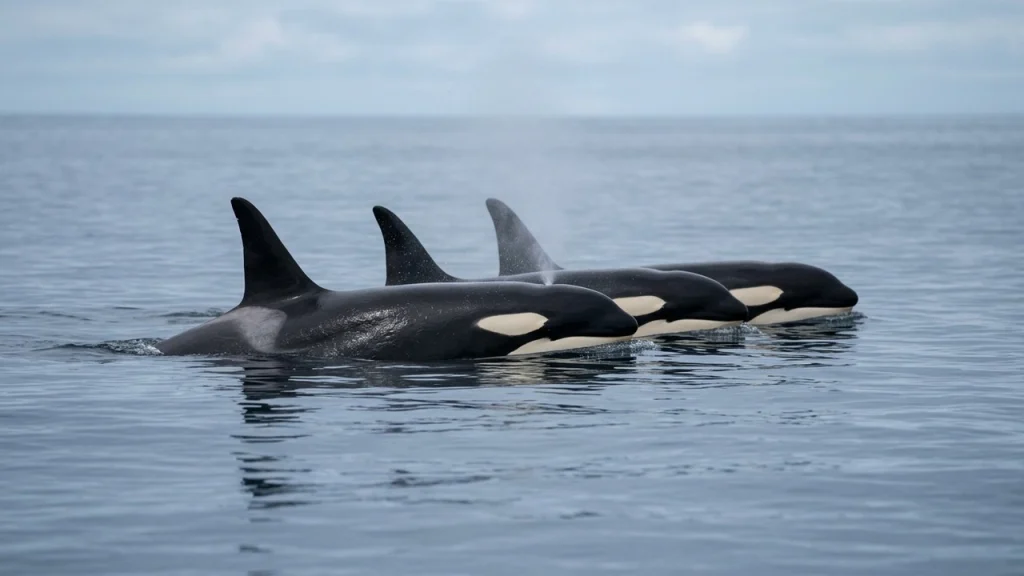
Whales and dolphins still need to breathe air, according to NOAA Fisheries, and National Geographic says whales can’t breathe underwater. SeaWorld’s page on killer whale adaptations describes a type of sleep during which one half of the brain enters a sleep-like state while the other half keeps visual and auditory awareness and lets the animal rise for air.
SeaWorld says that resting killer whales may swim slowly. They may instead make three to seven short dives, each under a minute, and follow them with a long dive of up to three minutes. Observers also note, SeaWorld says, that killer whales typically rest motionless at different points in the day and night, either for short periods or for as long as eight hours straight.
Half the brain rests, half stays awake
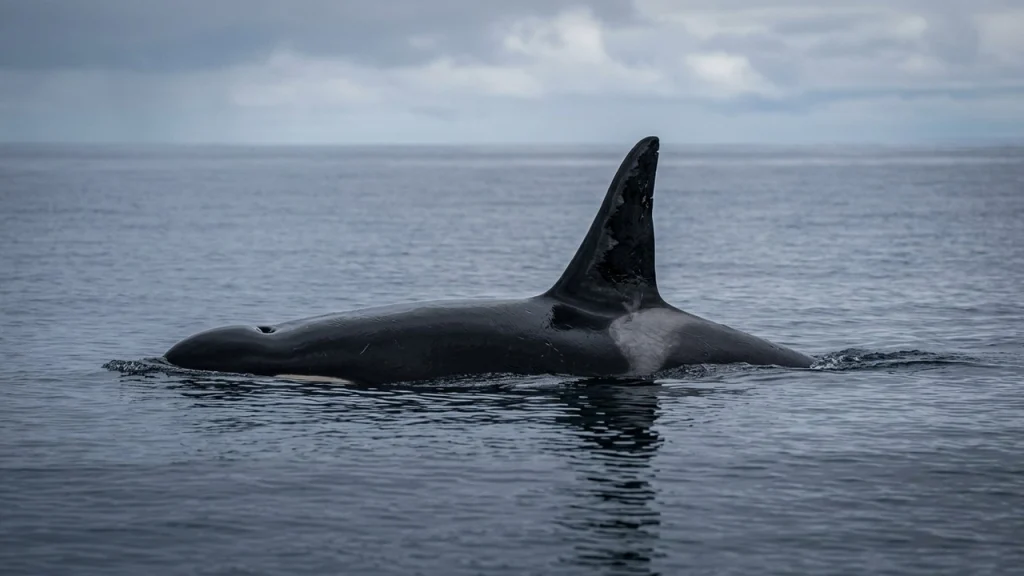
NOAA Fisheries says whales and dolphins rest only half of their brain, with the other half staying awake so they can breathe. An article in Neuroscience and Biobehavioral Reviews, available through PMC, describes unihemispheric slow wave sleep (USWS) and says it has been seen in all cetaceans examined to date.
The article discusses three functions suggested for USWS: control of breathing, facilitation of movement and more efficient sensory processing. The article says cetacean sleep is characterized by either a negligible amount of REM sleep or none at all, together with movement of varying degree that is associated with body size. An asymmetrical eye state is also part of how the article characterizes cetacean sleep. Dolphins commonly shut one eye during one-sided rest.
Resting together and breathing at rest
Resident orcas frequently settle into a group, lined up side by side. SeaWorld reports a resting respiratory rate of about 3 to 7 breaths every 5 minutes for killer whales at SeaWorld.
Mothers and calves in the first month
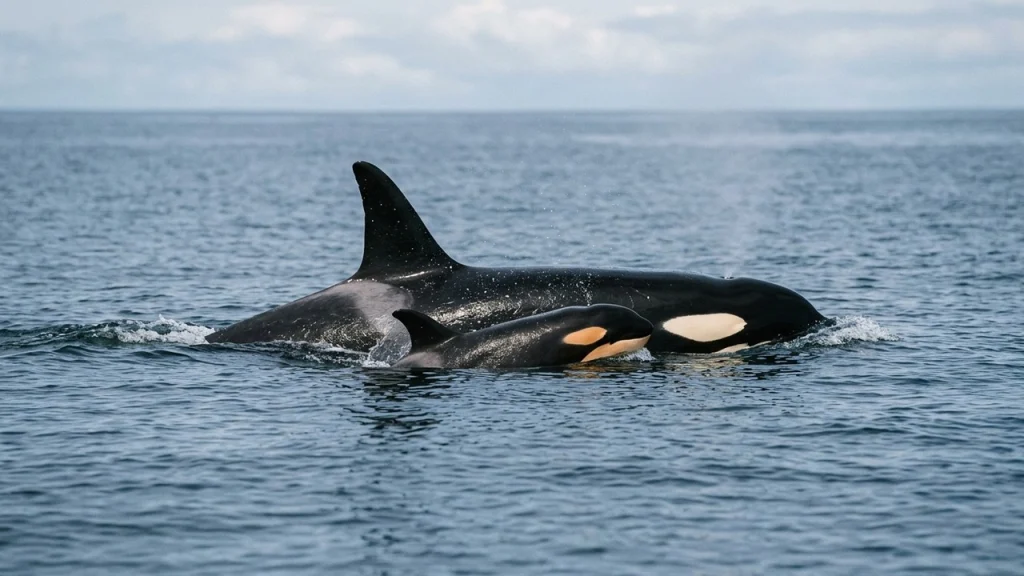
SeaWorld says researchers found that the mothers and calves they studied did not appear to sleep or rest at all in the first month of a calf’s life. In the months after that, rest came back little by little, until the animals reached the levels typical of adults.
How whales and dolphins breathe
NOAA Fisheries lists the killer whale, also known as the orca, as the largest member of the Delphinidae family, or dolphins. National Geographic says whales take air in and out through a blowhole on top of the head, and baleen whales have two.
National Geographic also says whales have conscious control over their breathing and heart rate. NOAA Fisheries adds that in most whales and dolphins the respiratory and digestive tracts are completely separate, so water does not reach their lungs while they feed underwater.
Sources
- NOAA Fisheries: 11 Cool Facts About Whales, Dolphins, and Porpoises
- National Geographic: Whales don’t spray water from their blowholes and other myths, debunked
- Neuroscience and Biobehavioral Reviews via PMC: Cetacean sleep: An unusual form of mammalian sleep
- SeaWorld / United Parks & Resorts: All About Killer Whales – Adaptations
- NOAA Fisheries: Six Reasons Why You Should Not Swim with Wild Spinner Dolphins
- NOAA Fisheries: Killer Whale