
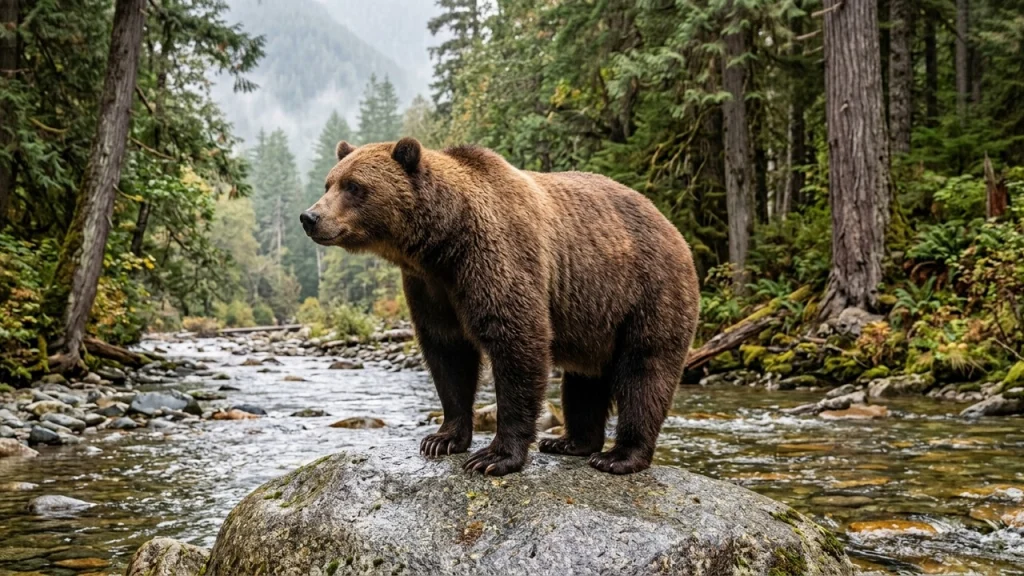
How long a bear lives depends on the species, so no single figure covers them all. Katmai National Park’s brown bear FAQ gives an average life span of about 20 years for a wild brown bear. Animal Diversity Web puts the upper end for wild American black bears at 30 years, yet says most live only about 10. For polar bears, the San Diego Zoo Wildlife Alliance lists a typical life expectancy of 15 to 18 years in wild populations and says few live past 25.
Human-care figures are a separate matter. The Smithsonian’s National Zoo gives an average of around 20 years for Andean bears in human care, while their longevity in the wild is unknown.
Brown bears and grizzlies
Two National Park Service pages give brown bear figures in different forms. Katmai’s page adds that many bears live longer than its average of about 20 years. Yellowstone’s grizzly page lists a life span of 20 to 30 years, with the oldest known bear in the Greater Yellowstone Ecosystem reaching 31 years. Katmai’s page also says the oldest wild brown bears known lived about 35 years, a record rather than a typical age.
Yellowstone’s grizzly figures change sharply with age. Survival rates are 55% for cubs and 54% for yearlings, compared with 95% for subadults, adult females and adult males. Human causes account for 85% of grizzly deaths in the Greater Yellowstone Ecosystem, and natural causes for 15%.
American black bears
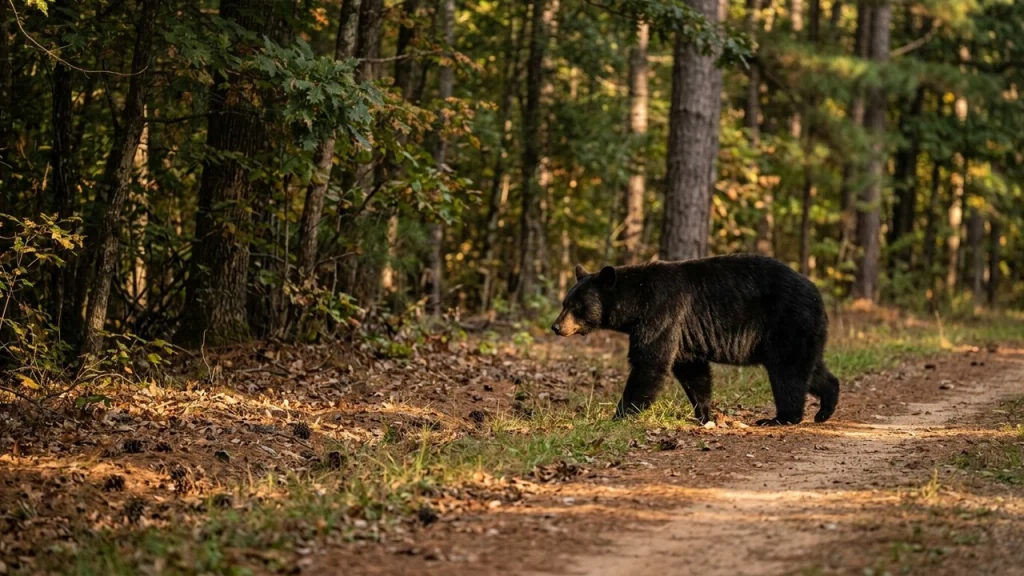
Animal Diversity Web links the gap between a 30-year maximum and a typical 10 years mostly to encounters with humans. It adds that gunshots, trapping, vehicle accidents and other interactions with humans account for more than 90% of black bear deaths after 18 months of age.
Polar bears
The 15 to 18 years for wild populations is credited to Polar Bears International (2023), and the note that few live past 25 to Derocher (2012). For males, the same fact sheet lists a separate median life expectancy of 20.8 years, citing AZA (2023). First-year survival was 44% in one study of 200 cubs in Hudson Bay (Derocher and Stirling, 1996).
Andean bears
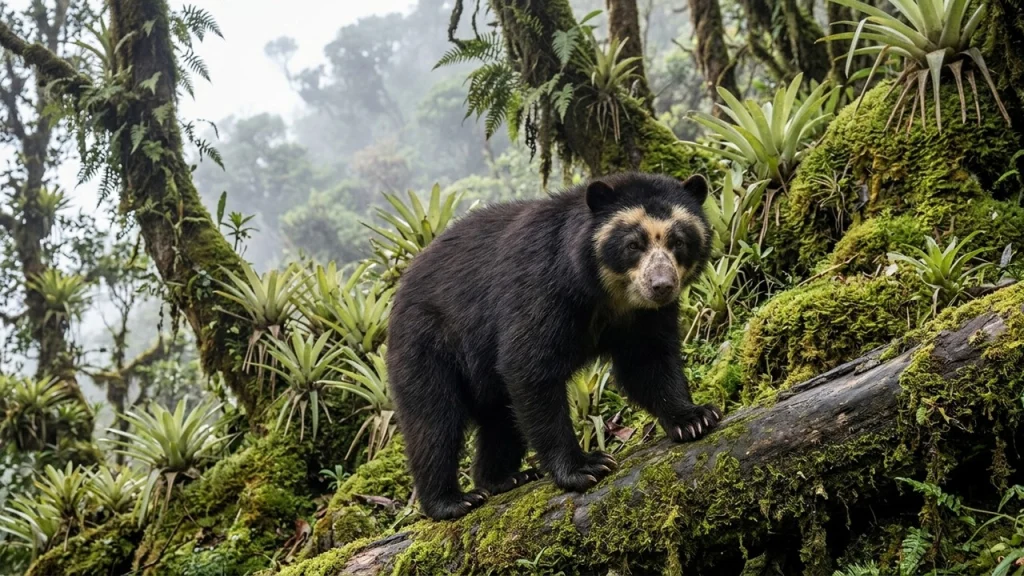
Andean bears are South America’s only bears. Their range runs through the Andes and the mountain ranges around them, from western Venezuela south to Bolivia. In human care, the Smithsonian’s National Zoo says it is not uncommon for them to reach their late twenties, and some occasionally reach their early thirties.
How young bears grow up and start breeding
Each species runs on its own timetable for raising cubs and reaching maturity.
- Brown bears at Katmai: cubs average about 1 pound (.45 kg) at birth. Cubs are called cubs-of-the-year in their first year and yearlings in their second, and yearlings will spend at least another winter denning with their mother. Cubs generally stay with their mothers for 2.5 years. Subadults are typically 2.5 to 5.5 years old, independent of their mothers but not yet sexually mature, and biologists classify bears as adults at 5 to 6 years.
- Grizzlies in Yellowstone: females first reproduce at an average age of 5.8 years, with an average of 2.78 years between litters. Maternal care lasts 18 to 42 months, and bears lose 15 to 30% of their body weight during hibernation.
- American black bears: cubs weigh between 2 and 5 kg when the family emerges in spring. They are usually weaned at around 6 to 8 months but stay with their mother, denning with her through their second winter, until about 17 months old. Females reach sexual maturity at 2 to 9 years old and then have cubs every other year. Males mature at 3 to 4 years but keep growing until they are 10 to 12 years old; at that size they can dominate younger bears without fighting.
- Polar bears: cubs nurse for up to 2 years and are weaned at about 2.5 years old, and they may stay with their mother until 2.5 years of age. Peak reproductive years are about 10 to 20 years old, and most females no longer have cubs by age 20.
- Andean bears: cubs generally stay in the den until they are about 3 months old, and females mature between four and seven years of age.
Sources
- National Park Service: Yellowstone Grizzly Bear Facts – Yellowstone National Park (U.S. National Park Service)
- National Park Service: Brown Bear Frequently Asked Questions – Katmai National Park & Preserve (U.S. National Park Service)
- San Diego Zoo Wildlife Alliance: Reproduction & Development – Polar Bear (Ursus maritimus) Fact Sheet – LibGuides at International Environment Library Consortium
- Animal Diversity Web: Ursus americanus (American black bear) | INFORMATION | Animal Diversity Web
- Smithsonian’s National Zoo and Conservation Biology Institute: Andean bear | Smithsonian’s National Zoo and Conservation Biology Institute