
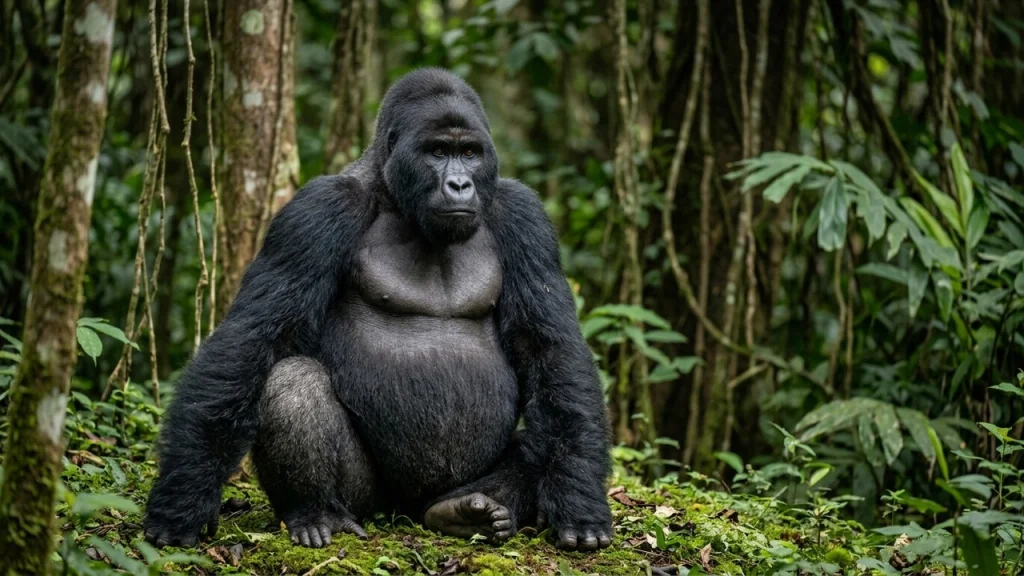
No winner can be named between a gorilla and a bear. None of the wildlife database, zoo or national park service sources behind this article records an encounter between a gorilla and a bear. The figures those sources give are separate for each animal: wild male western gorillas average 180 kg and eastern gorilla males average 160 kg, Animal Diversity Web’s brown bear account lists 80 to more than 600 kg, and adult male Yellowstone grizzlies average 413 lb (187 kg).
Each figure below stays tied to the page that gives it: western, eastern or western lowland gorillas on one side, and brown bears, grizzly bears or Yellowstone grizzlies on the other. Where a figure is an average, a range or an upper limit, the text says so.
Weight: separate figures for each animal
Animal Diversity Web’s western gorilla account puts the average male in the wild at 180 kg and says captive males reach as much as 275 kg. Its eastern gorilla account gives 70 to 114 kg for females and an average of 160 kg for males.
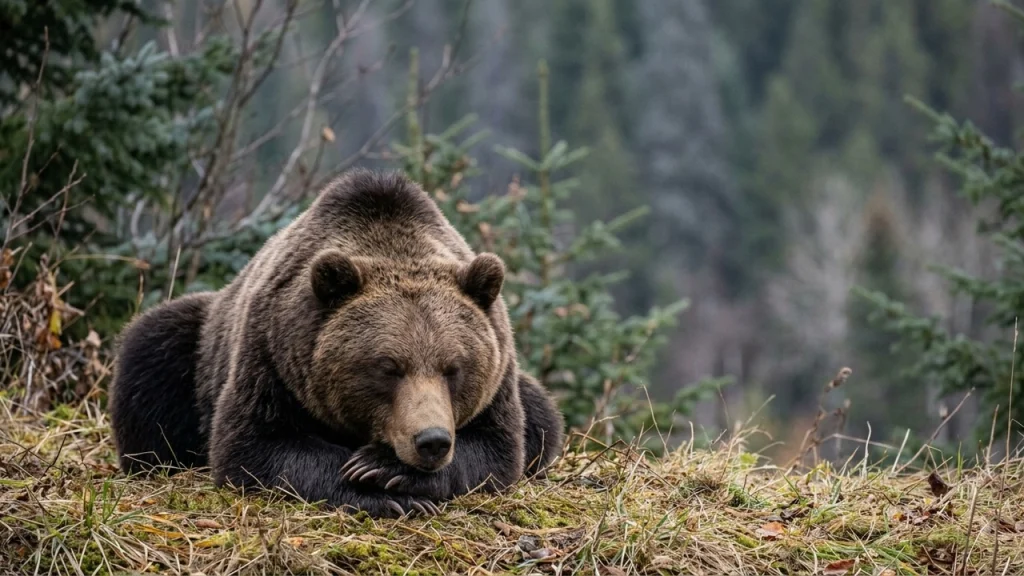
Animal Diversity Web’s brown bear account lists weights from 80 to more than 600 kg, and says adult males are on average 8 to 10% larger than females. The National Park Service’s Yellowstone grizzly page gives an adult male an average body mass of 413 lb (187 kg) and an adult female 269 lb (122 kg).
Length, height and arm span
Animal Diversity Web’s eastern gorilla account calls gorillas the largest primate, with an average length of 185 cm for males and 150 cm for females. Its western gorilla account says a male usually stands 1.75 meters high with bent knees, while a female is 1.25 meters on average.
For bears, Animal Diversity Web’s brown bear account describes grizzly bears as one of the largest living carnivores, 1 to 2.8 meters long from head to rump. It lists them at 90 to 150 cm at the shoulder, and says they can rise to 8 feet on their hind legs.
Arm span is listed for gorillas too. The Smithsonian’s National Zoo says on its western lowland gorilla page that the arm span of adult males is 8 feet (2.4 meters), against 6.5 feet (2 meters) for females. Animal Diversity Web adds that gorillas have an armspan larger than their standing height.
Strength, claws and teeth
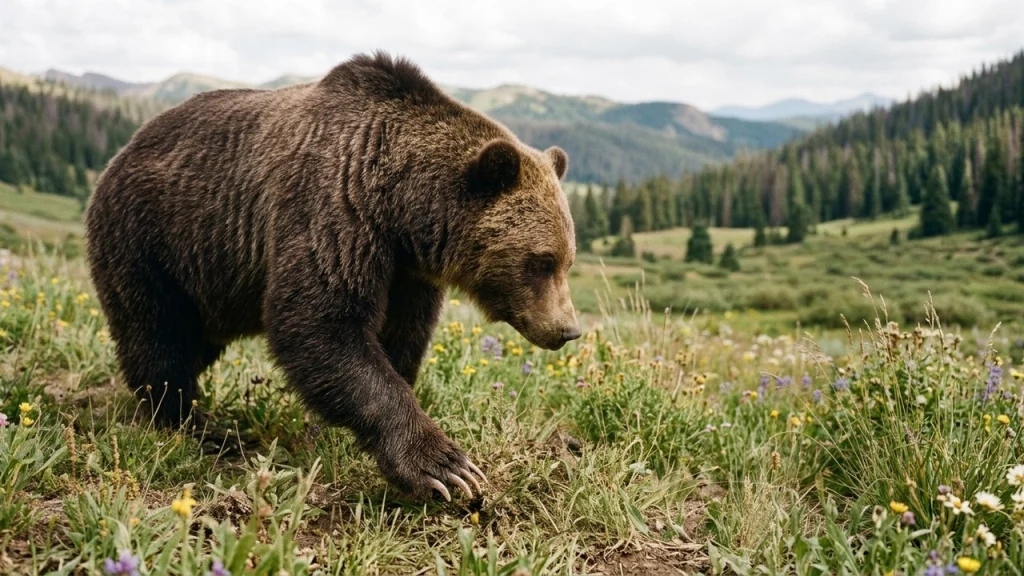
Animal Diversity Web calls brown bears extremely strong, with good endurance. It says a brown bear can kill a cow with a single blow, outrun a horse, outswim an Olympian and haul a dead elk uphill.
The National Park Service’s Yellowstone grizzly page gives an average claw length of 1.8 inches (45 mm) and a longest of 5.9 inches (150 mm). It also gives the number of teeth as 42 and the speed as 35 to 40 mph.
Animal Diversity Web’s eastern gorilla account describes a robust body with long, muscular arms, short legs and a massive head. It also says males have large, sharp canine teeth.
How each animal reacts to threats
Animal Diversity Web’s western gorilla account says gorillas seldom hit an intruder; they rush past it and may charge again. Its eastern gorilla account names humans as the only effective predators of eastern gorillas.
For brown bears, Animal Diversity Web says they are not often preyed upon, because of their size and aggressiveness towards threats. Its brown bear account adds that adults cannot climb trees. Its western gorilla account says western gorillas climb trees as high as 15 meters in search of food.
Range and diet
Animal Diversity Web says western or lowland gorillas live in the forests of equatorial Africa, in countries that include Angola, the Republic of Congo and Gabon, and possibly the Democratic Republic of Congo. According to the same site, brown bears (Ursus arctos) once ranged as far south as Mexico in western North America, and throughout northern and central Europe, Asia and the Atlas mountains of Morocco and Algeria.
On diet, Animal Diversity Web calls wild gorillas herbivores that live mainly on juicy stemmed plants, with leaves, berries, ferns and fibrous bark as well. It describes brown bears as omnivores that eat almost anything nutritious. In the Canadian Rockies and other areas, it says, grizzly bears (the subspecies of brown bear there) hunt moose, elk, mountain sheep and mountain goats, and it calls them quite carnivorous.
Sources
- Animal Diversity Web: Gorilla gorilla (western gorilla)
- Animal Diversity Web: Gorilla beringei (eastern gorilla)
- Smithsonian’s National Zoo and Conservation Biology Institute: Western lowland gorilla
- Animal Diversity Web: Ursus arctos (brown bear)
- U.S. National Park Service: Bear Identification
- U.S. National Park Service, Yellowstone National Park: Yellowstone Grizzly Bear Facts