
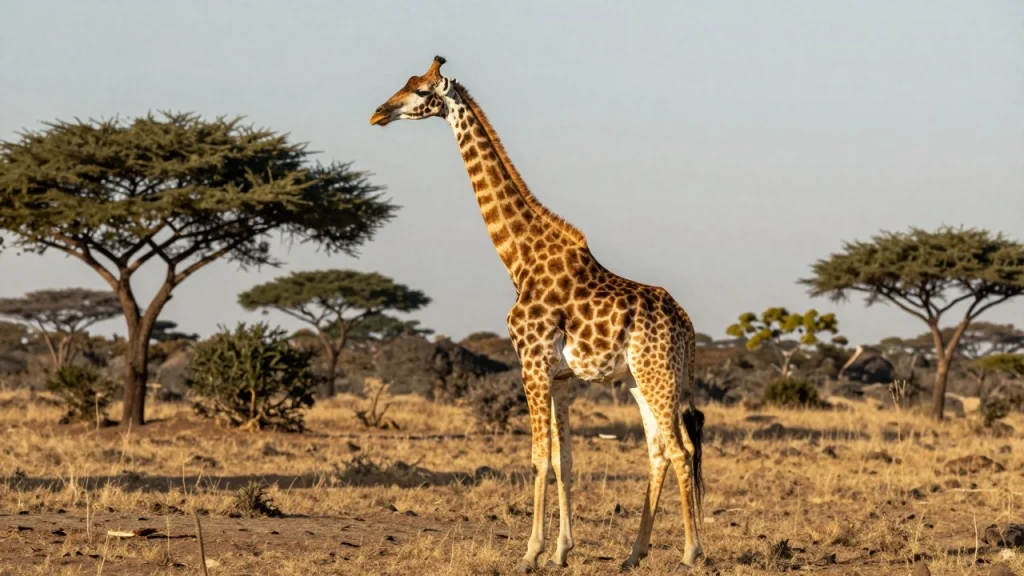
As the tallest living terrestrial animals on Earth, adult giraffes reach impressive heights that set them apart from all other wildlife. On average, a fully grown giraffe stands between 14 and 18 feet (4.3 to 5.5 meters) tall. Male giraffes, known as bulls, typically reach the upper end of this range, while female giraffes, known as cows, are slightly shorter, usually measuring between 14 and 16 feet (4.3 to 4.9 meters).
A significant portion of a giraffe’s remarkable height comes from its extraordinary legs and neck. Their legs alone are often taller than most human beings, averaging around 6 feet (1.8 meters) in height. Combined with an equally long neck, this exceptional vertical reach enables giraffes to forage high into the tree canopy where other herbivores cannot feed.
Height Differences Between Male and Female Giraffes
Sexual dimorphism is noticeable in giraffe height and overall mass. Male giraffes continue growing for a longer period than females, which allows them to achieve greater overall stature.
- Male giraffes (Bulls): Adult males usually range up to about 18 feet (5.5 meters) tall. Exceptional individuals have been documented reaching about 19 feet.
- Female giraffes (Cows): Adult females typically stand between 14 and 16 feet (4.3 to 4.9 meters) tall.
In addition to overall standing height, male giraffes tend to have thicker, heavier necks and heavier ossicones (the horn-like structures on their heads), which aid them during male-to-male combat known as necking.
How Fast Do Giraffe Calves Grow?
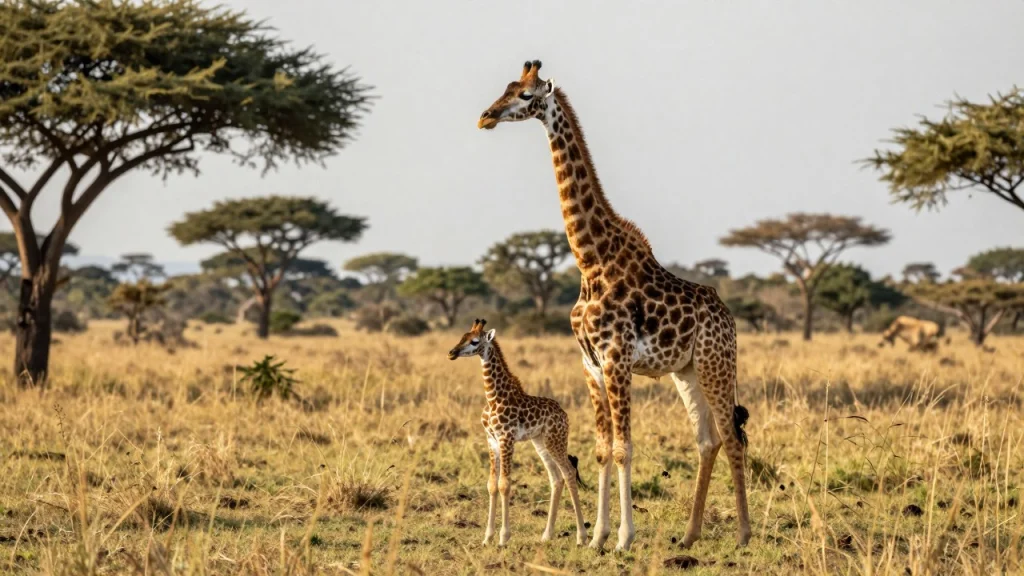
Giraffes are remarkably tall right from birth. A newborn giraffe calf enters the world standing approximately 6 feet (1.8 meters) tall, already taller than most adult humans.
During their first year of life, calves experience rapid growth, gaining up to 3 feet (0.9 meters) in height. This fast rate of development helps young giraffes reach a size where they are less vulnerable to apex predators like lions and hyenas. Giraffes generally reach their full adult height between 5 and 7 years of age.
Anatomy Behind the Giraffe’s Height
A giraffe’s vertical build is supported by a specialized anatomical design. Understanding how their body structure handles such extreme height reveals key physiological adaptations:
The Long Neck Structure
Despite its immense length, a giraffe’s neck contains only seven cervical vertebrae, the exact same number found in humans and almost all other mammals. However, each individual vertebra is greatly elongated, measuring over 10 inches (25 centimeters) in length.
Powerful Cardiovascular System
Pumping blood up a 6-foot neck to reach the brain requires high blood pressure. A giraffe’s heart weighs around 25 pounds (11 kilograms) and generates blood pressure nearly double that of a human. Specialized blood valves in the neck regulate blood flow, preventing fainting when the animal lowers its head to drink.
Sturdy Legs and Joint Support
A giraffe’s front and hind legs are roughly equal in length, supported by strong ligaments and fused foot bones. This structure acts like natural scaffolding, supporting body weights that reach up to 3,000 pounds (1,360 kilograms) in males and up to 1,500 pounds (680 kilograms) in females, without excessive strain.
Evolutionary Advantages of Extreme Height
The impressive height of giraffes offers critical survival advantages in African savanna ecosystems:
- Access to Upper Canopy Food: Giraffes occupy a unique ecological niche by feeding on leaves, shoots, and acacia foliage that other herbivores cannot reach.
- Superior Predator Detection: Standing tall provides giraffes with a panoramic view of the landscape, allowing them to spot predators from great distances.
- Efficient Body Heat Regulation: A tall, slender body shape increases surface area relative to mass, helping dissipate heat under the hot sun.
Through these combined physical traits, the giraffe’s height remains one of the most effective evolutionary adaptations among wild mammals.
Sources
- San Diego Zoo Wildlife Alliance: Giraffe | San Diego Zoo Animals & Plants
- San Diego Zoo Wildlife Alliance: Reproduction & Development – Giraffes (Giraffa spp.) Fact Sheet – LibGuides at International Environment Library Consortium
- Oregon Zoo: Giraffe | Oregon Zoo
- Los Angeles Zoo and Botanical Gardens: Masai Giraffe – Los Angeles Zoo and Botanical Gardens