
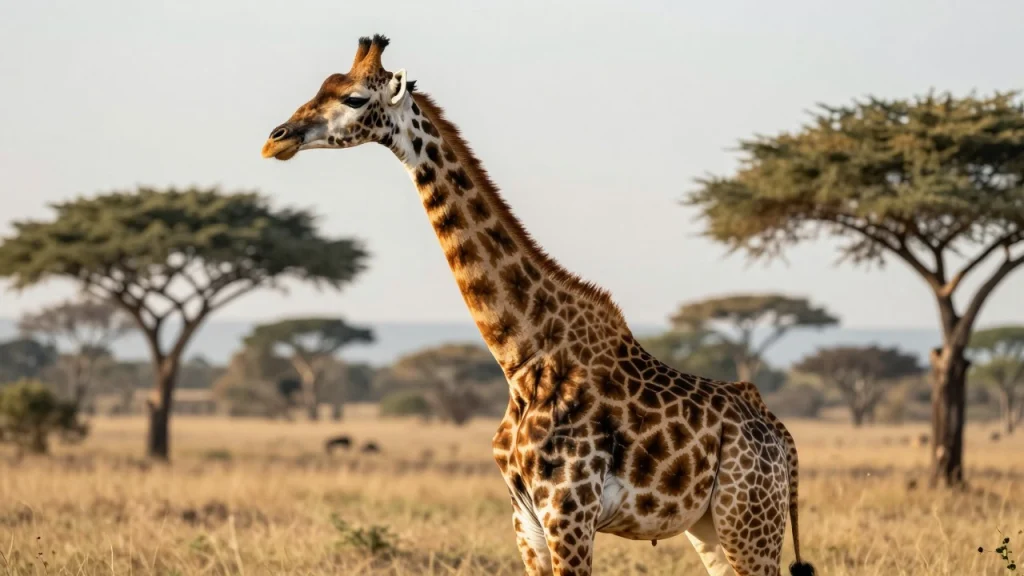
Yes, a giraffe’s spot pattern is completely unique to each individual, functioning much like a human fingerprint. Giraffes from the same area appear similar, while no two individuals have exactly the same pattern.
An individual giraffe’s skin pattern remains constant throughout the giraffe’s life. Scientists and conservationists routinely use these individual coat patterns to identify, track, and monitor specific giraffes in the wild over long periods.
How Giraffe Spot Patterns Work
Although all giraffes are covered in irregular patches separated by lighter lines, the fine details of their coat designs vary continuously. The size, border roughness, orientation, and color intensity of the spots differ from one animal to another, creating an irreplaceable visual profile.
Even twin giraffes do not share identical spot arrangements. While genetic inheritance influences the overall style and density of the patches, the micro-patterns form stochastically early in life, giving each calf a one-of-a-kind appearance that lasts for life.
The Role of Genetics and Inheritance
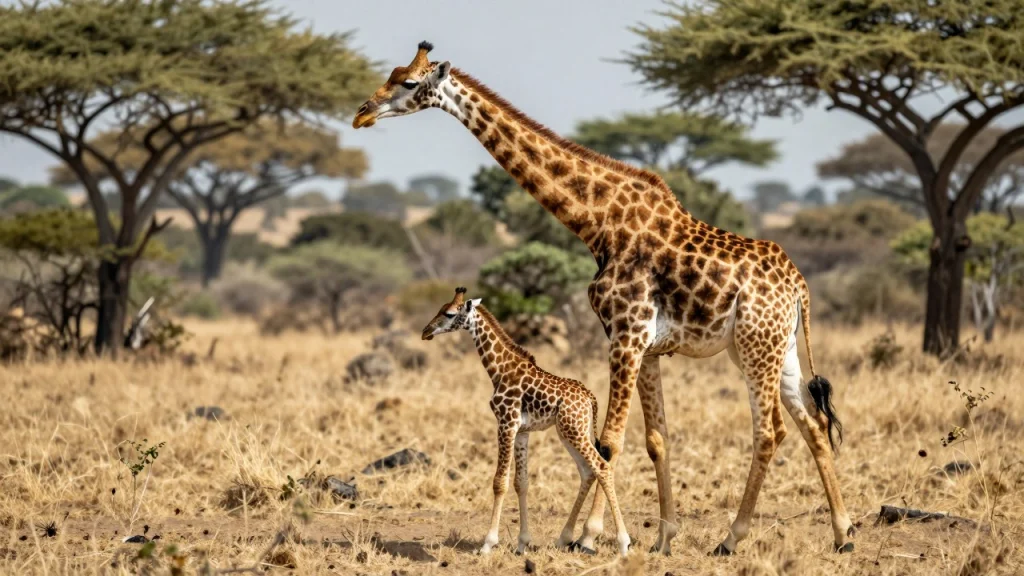
While every spot pattern is unique, traits within those patterns are passed down from mother to calf. Research indicates that certain characteristics of spot design are strongly inherited:
- Spot size and shape: Calves often inherit the general roundness or angularity of their mother’s patches.
- Border crispness: The smoothness or jaggedness of patch edges shows clear maternal inheritance.
- Regional variations: Reticulated and Masai giraffes have distinct coat patterns, and some authorities now classify them as separate species.
For example, Reticulated giraffes feature sharp, dark, polygonal patches separated by narrow white lines, while Masai giraffes display irregular, star-like or jagged blotches. Within those broad population styles, however, individual variations remain absolute.
Why Spot Patterns Matter for Giraffe Survival
A giraffe’s spot pattern can provide camouflage in its African habitat, and its patches may help dissipate heat.
Camouflage in the Wild
The patterned coat serves as camouflage in African habitat. In their natural habitat, the contrasting light and dark shapes break up the animal’s massive outline among dappled shade and acacia foliage, making it difficult for predators like lions and hyenas to spot them from a distance.
Thermal Regulation
Underneath each dark patch, giraffes have sweat glands, though these do not seem to be functional. Giraffe patches radiate heat and may help in very hot weather.
Social Recognition and Calf Survival
Visual identification plays a key role in herd dynamics. Giraffes recognize members of their group visually, and mothers rely on distinct markings to keep track of their young. Studies also suggest that certain inherited spot traits may correlate with higher survival rates in wild calves, possibly due to enhanced camouflage effectiveness.
How Researchers Use Spot Patterns to Track Giraffes
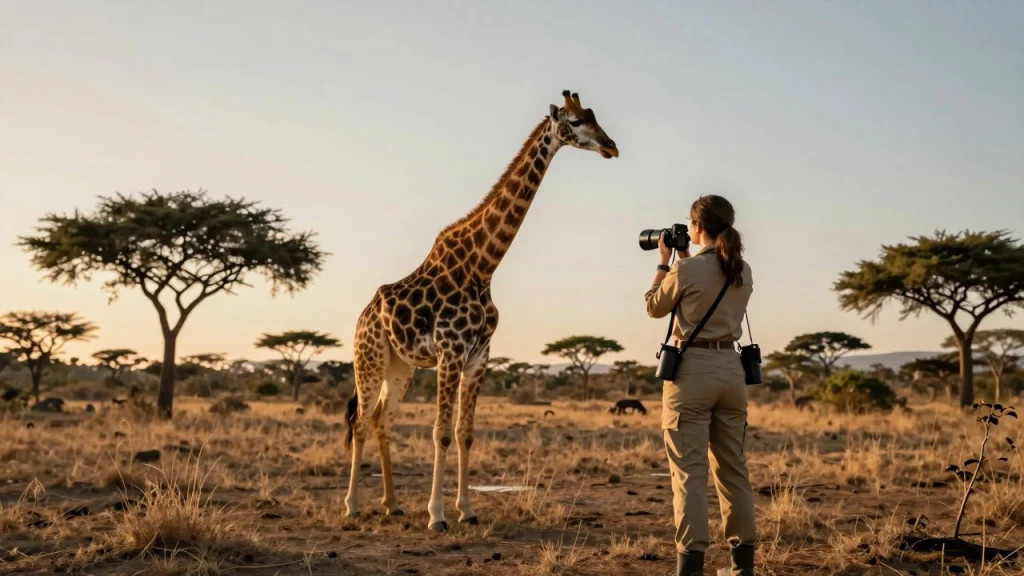
Because spot patterns remain unchanged from birth to death, wildlife researchers use them as natural identification tags. Instead of using invasive physical markers, field scientists rely on pattern recognition software and photographic surveys.
- Photographic Sampling: Researchers photograph the flank or neck region of giraffes during field expeditions.
- Computer Matching: Software algorithms analyze the spatial relationship between spot centroids and borders, comparing them against databases.
- Longitudinal Tracking: Researchers have used a Masai giraffe photo-identification dataset collected from 2012 through 2025 to estimate abundance and track population trends over time.
This non-invasive tracking method has revolutionized giraffe conservation efforts across Africa, offering a reliable, stress-free way to safeguard declining wild populations.
Do Giraffe Spots Change as They Age?
The underlying geometry and arrangement of a giraffe’s spots stay the same throughout its entire life. However, minor visual changes can occur over time due to age and environmental factors:
- Color darkening: In some individuals, particularly males, blotches may darken with age, turning from brownish to coal-black between about 7 and 10 years; this is likely not characteristic of all giraffes.
- Physical wear: Scars from predator encounters or thorn bushes can alter small areas of skin, though the surrounding pattern remains unchanged.
- Overall scale: As a calf grows into an adult, its spot pattern keeps the same fundamental layout, and researchers adjust for its increasing size when analyzing photos.
In summary, a giraffe’s spots provide a permanent, biological identity card that combines inherited family traits with absolute individual uniqueness.
Sources
- PeerJ: Seeing spots: quantifying mother-offspring similarity and assessing fitness consequences of coat pattern traits in a wild population of giraffes (Giraffa camelopardalis)
- Scientific Reports: An accurate, efficient, and accessible AI-powered solution for wildlife re-identification in conservation
- San Diego Zoo Wildlife Alliance: Giraffe | San Diego Zoo Animals & Plants
- San Diego Zoo Wildlife Alliance: Giraffes (Giraffa spp.) Fact Sheet: Physical Characteristics
- National Geographic: Giraffe | National Geographic