
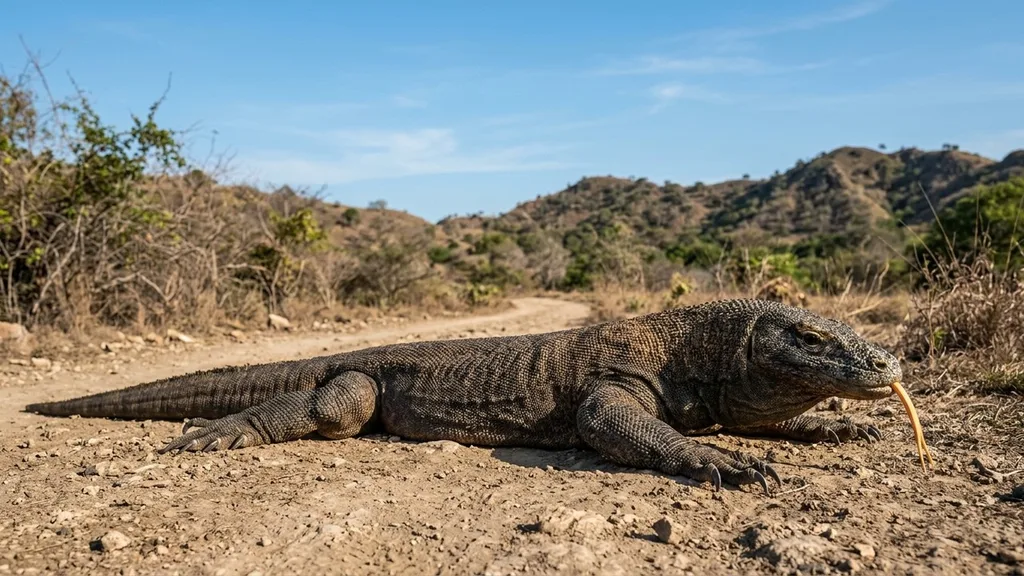
Komodo dragons are flexible carnivores that combine patient ambush hunting with regular scavenging, so their meals shift with age, size and opportunity. Mature animals depend heavily on carcasses yet also subdue sizable mammals, while hatchlings start on tiny invertebrates and small vertebrates among the branches.
That contrast between age groups, plus an ability to swallow enormous loads and digest nearly the whole carcass, explains why deer, pigs, buffalo and even other dragons appear in feeding records. What follows explains the adult menu, the juvenile diet, and the senses and weapons behind such variety.
Adult menu centers on carcasses and large mammals
Carcasses anchor the mature diet, while live capture supplies welcome variety across the seasons. Researchers describe full-grown individuals as principally carrion feeders that nevertheless assault an impressive range of hefty living animals.
- Wild pigs and Timor deer stalked on forest trails and savanna edges
- Water buffalo and horses overpowered during ambushes near grazing areas
- Goats taken when chances arise, plus smaller dragons consumed by dominant adults
- Snakes seized inland and fish gathered where the surf strands them ashore
Such breadth means almost any animal tissue can serve as a meal when found. Targets span from creatures the size of rats to buffalo weighing many times more than the lizard, which reveals minimal specialization.
Deer hold particular weight in this system because they supply the main hunted meat in several strongholds. On Padar, deer poaching wiped out the dragon’s main prey, and no dragons have been seen there since the 1970s, so guarding hoofed herds indirectly guards the reptiles.
Young dragons start small and descend over years
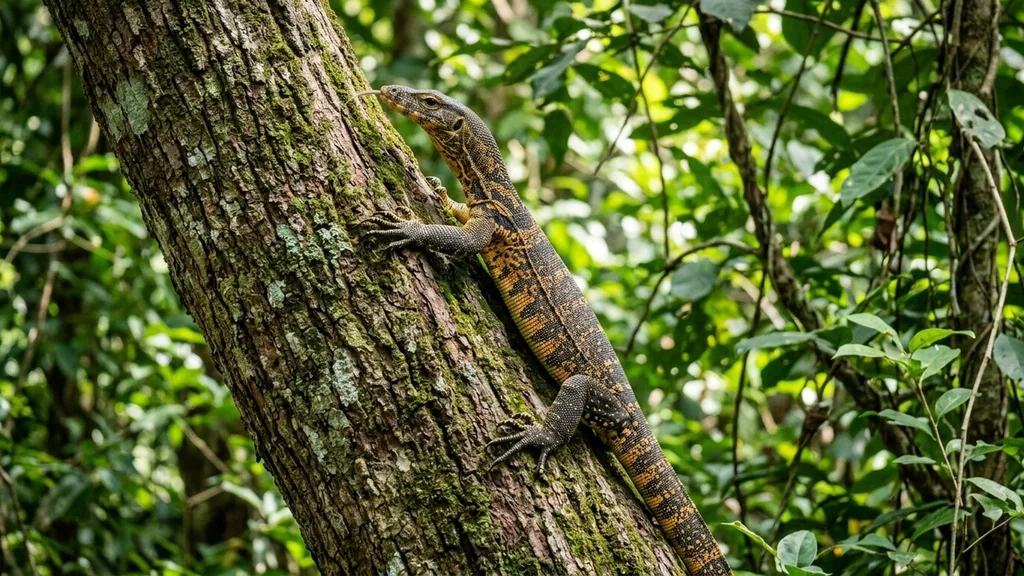
Hatchlings shelter largely in branches to evade hungry elders, and small gapes confine them to miniature food. First foraging brings beetles and grasshoppers, plus little geckos, birds, eggs and, with growth, small mammals.
Snakes and birds round out the early diet alongside small lizards and insects. Overall, abundant, manageable, small-bodied animals dominate early life.
Near 4 years old, at roughly 4 feet in length, juveniles become large enough to try life on the ground. After 5 years old the menu widens toward monkeys and rodents, then goats, wild boars and deer, with deer already standing out as a preferred item.
The schedule aids survival. Staying aloft postpones fatal encounters with dominant elders, and descending only after adding bulk lifts both capture success and the odds of escaping attack.
Solitary ambushers that bite, wait and track
Adults usually quest and strike alone instead of teaming up. A favored move is to loiter beside a wildlife path for hours until a rewarding animal of solid build strolls within rushing distance.
Success on the first rush is uncommon, so persistence counts more than sprinting. When teeth do connect, germs and venom in the saliva can turn the wound lethal over the next few days.
Wounded animals sometimes escape the initial clash, but the reptile trails them until hemorrhage or sickness brings them down. The wait may extend to four days, after which a keen nose guides the hunter to the remains.
Venom chemistry drives much of that result. Jaw glands discharge toxins that reduce blood pressure, unleash severe bleeding, hinder clotting and push victims toward shock. Saw-edged teeth and muscular necks rip deep openings, so blood loss accelerates.
Mouth microbes supply a second danger. About 50 distinct bacterial strains live in the saliva, and at least seven provoke grave infection. Shreds of meat caught between tooth serrations feed those germs, keeping bites septic between feedings.
Detection leans above all on scent sampled through the tongue tip, with vision as backup across open ground. Putrefying meat can be noticed from 2.5 miles off, allowing a lizard to march directly toward a carcass it never watched fall.
Ordered feasts, giant gulps and near-total use
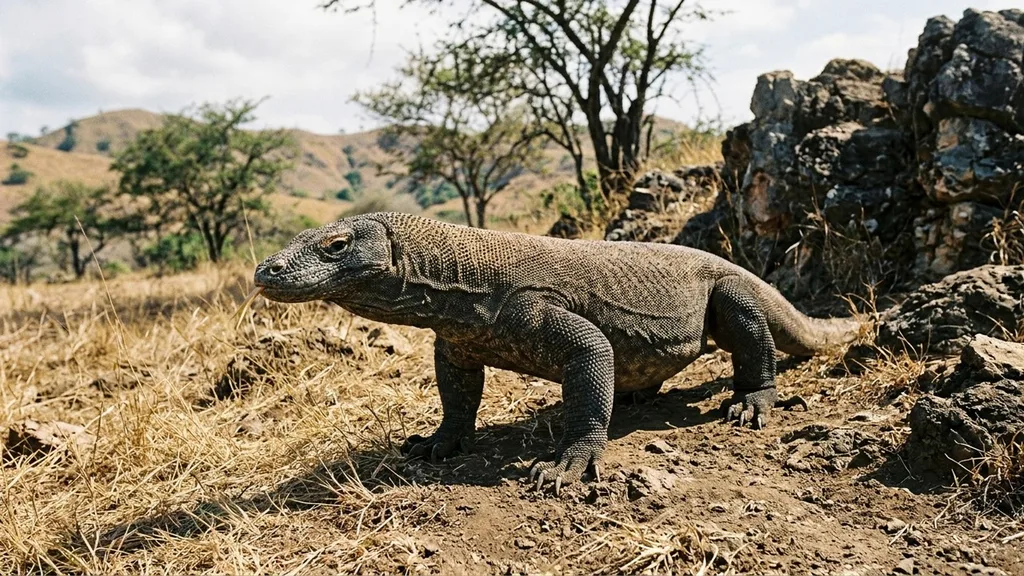
Feeding rank tracks bulk and sex rather than arrival time. Heaviest males claim first access at a kill, slimmer males and females follow, and young animals climb down from shelter only after the elders withdraw.
Dental gear fits speedy butchery. Around 60 brief, sawlike teeth fill the mouth, and successive replacements erupt through life as older ones wear. Watchers have seen a feeding lizard process 5.5 pounds of flesh during one minute.
Ingestion is equally extreme. A hinged jaw gapes remarkably wide while throat and skull yield to admit bulky morsels. The belly stretches smoothly, letting a grown dragon swallow 80 percent of its own mass in a single meal.
Use of the prize is almost complete. Roughly 12 percent alone remains uneaten, because bones plus hooves, hide fragments and intestines go down after their contents get flung clear. One sizable mammal can therefore fuel a long fast, a valuable trait where attempts often fail and days separate kills.
Why this appetite shapes dragons and islands
These island giants face no wild predators once mature, so meal supply and human disturbance cap their numbers. Their range stays narrow, confined to several Indonesian islands of the Lesser Sunda chain, namely Rintja, Padar, Flores and Komodo itself.
The animal behind the appetite is extraordinary: the longest and bulkiest lizard on Earth, bearing the scientific label Varanus komodoensis and delivering a venomous bite. Wild longevity reaches about 30 years, granting decades to master trails, carcass locations and seasonal prey rhythms.
Conservation therefore hinges on prey as well as parks. Curbs on deer poaching, protected reserve borders and penalties for lacing carcasses with poison keep both the menu and the hunter viable for future decades.