
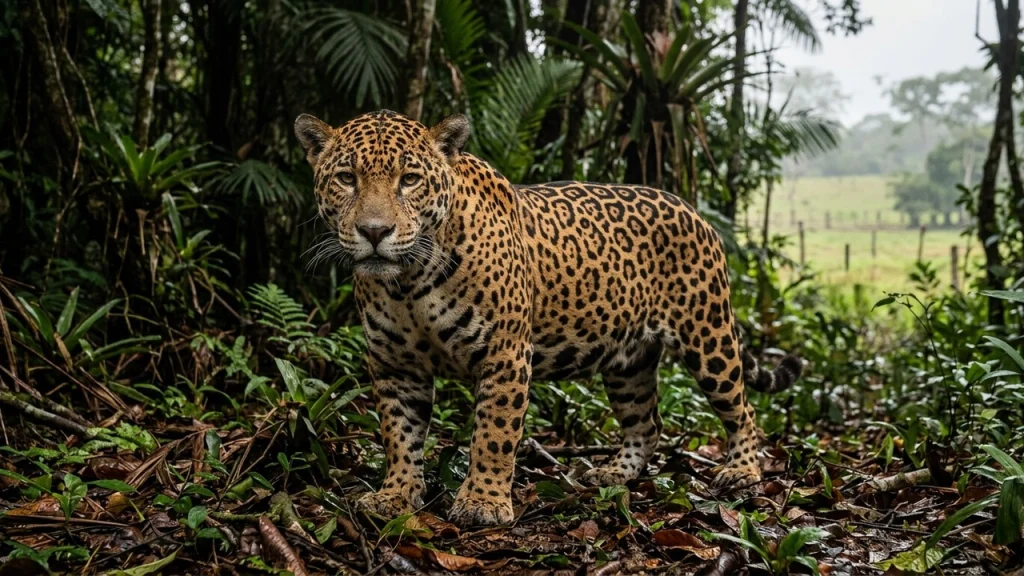
No wild animal is a regular hunter of the adult jaguar, and the only predator on record is human beings. The Animal Diversity Web account calls people the species’ main predators, and the fact sheet compiled by the San Diego Zoo Wildlife Alliance is blunter still, listing a single predator under a single heading: humans.
That answer describes healthy adults. A newborn cub faces different dangers, and the rival cat most often blamed is not supported by the best field evidence. Three things get tangled together here: animals that can kill a jaguar, animals that compete with one, and people who remove jaguars from the landscape.
A cat built to sit at the top of the food chain
Jaguars are treated as top predators and as a keystone species, because the animals they hold in check shape the wider community. Their build suits that role: built for power rather than speed, able to sprint only briefly. Adult weights run from 68 to 136 kilograms, and males tend to be 10 to 20% larger than females.
The technique is unusual among large cats. The IUCN Cat Specialist Group records that the jaguar is the only one of them that regularly kills prey by driving its canines through the skull, while Animal Diversity Web describes the alternative method, a direct bite to the neck that suffocates the victim. Either route relies on jaws strong enough to get through thick reptilian skin and turtle carapaces.
Solitude completes the picture. Jaguars are solitary except when mating or when a female is caring for young, and a male’s range typically encompasses two to three female ranges. Population density can be as high as 1 animal per 15 square kilometers in the best habitats, and every cat needs a large amount of living space to feed itself.
Why the puma is not the answer
The puma is the animal most often named as the jaguar’s natural enemy, and the closest field study of the two argues against the story. In Mexico’s arid north, at the edge of the jaguar’s breeding range, pumas are more numerous than jaguars, and the two cats are of similar size. Camera traps detected both species together more often than separately, and the authors could not treat the jaguar as the dominant predator in that study area. Their daily rhythms overlapped by 60%, and both were mainly nocturnal.
Read that pattern as competition over space and prey rather than predation. The two cats share habitat and hours without either clearly overpowering the other. Work in this overlap zone keeps finding coexistence, not kills.
The enemy that does the killing
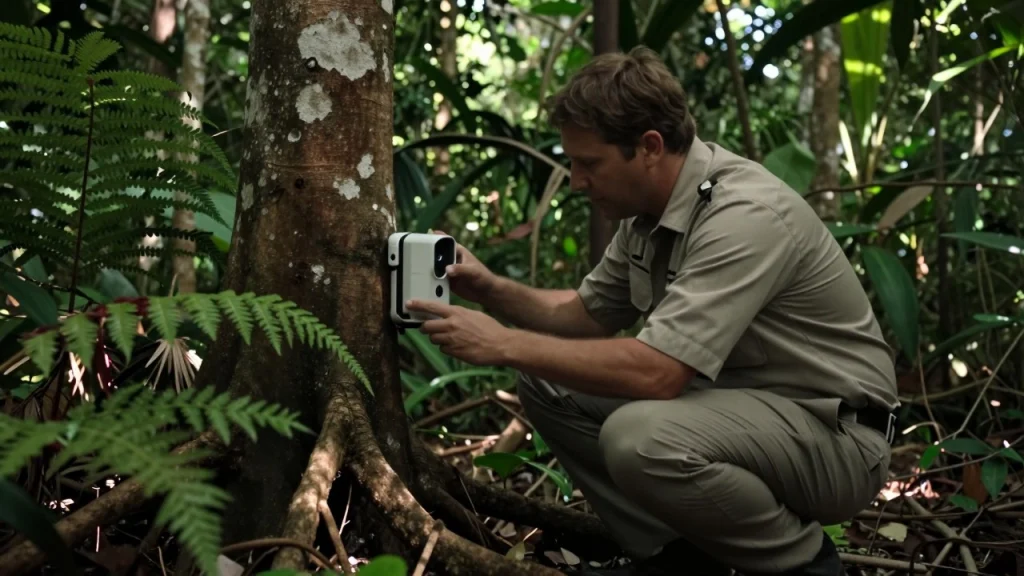
The Cat Specialist Group puts the human toll bluntly: many cats are killed outright where they are found, or poisoned while crouched over a kill. Animal Diversity Web supplies the motive, noting heavy persecution in ranching regions even where the species is legally protected.
Cattle are the usual motive. Jaguars sometimes take domestic stock, and ranchers respond by persecuting them; when wild prey is hunted or displaced, the cats may turn to farm animals instead. That builds a loop: fewer wild animals push jaguars toward farms, and losses on farms push people toward jaguars. Even where no livestock are involved, WWF reports that people also kill jaguars out of fear for their own safety.
That fear is mostly misplaced. Animal Diversity Web states that jaguars do not attack people without provocation, and that an animal seen following a human is thought to be escorting that person out of its territory.
The pressures that work slowly
WWF sorts the danger facing jaguars into four separate problems:
- forest cover shrinking and breaking into fragments
- clashes between people and wildlife
- the illegal trade in jaguars and their parts
- prey numbers falling away
The first and the last are the slowest and the hardest to reverse. When forest gives way to fields and pasture, the hunting ground shrinks and breaks into pieces, and the Cat Specialist Group notes that cut-off groups become easier to persecute. Losing prey does the same work more quietly: a hungry cat cannot afford to be fussy.
Around 173,000 jaguars are estimated to remain, and WWF reports a drop of at least 20-25% since 1990. WWF puts their present footprint at under half of the historic one, and even the global count is only an estimate, because a species this elusive is rarely tallied directly.
The single global label hides how unevenly the risk falls. WWF lists the jaguar as Near Threatened overall, yet the Cat Specialist Group reports that of 34 identified subpopulations only the Amazonian one counts as Least Concern, every other unit being Endangered or Critically Endangered. A jaguar in the Cerrado of Brazil or the Atlantic Forest faces a different prospect from one in the Amazon. The Cat Specialist Group warns that continued threats at the current rate could see the cat reclassified as Vulnerable soon.
What cubs are up against
Newborn cubs arrive with their eyes shut and cannot do anything for themselves. The dependency is total: cubs rely wholly on a single mother for food, instruction and protection from predators. Milk feeding lasts until cubs reach 5 to 6 months, when they start hunting alongside her. Litter size is usually 2 cubs, and up to 4 have been recorded.
In a 14-year camera trap study in the Cockscomb Basin Wildlife Sanctuary in Belize, only four cubs were detected in the entire study, and every one of them was already over 6 months old.
Independence arrives late: females usually stand on their own at an average of 2-3 years, males later at 3-4 years. For most of a young jaguar’s life, one adult’s territory is one cub’s entire world.
Parasites, age and the slow grind
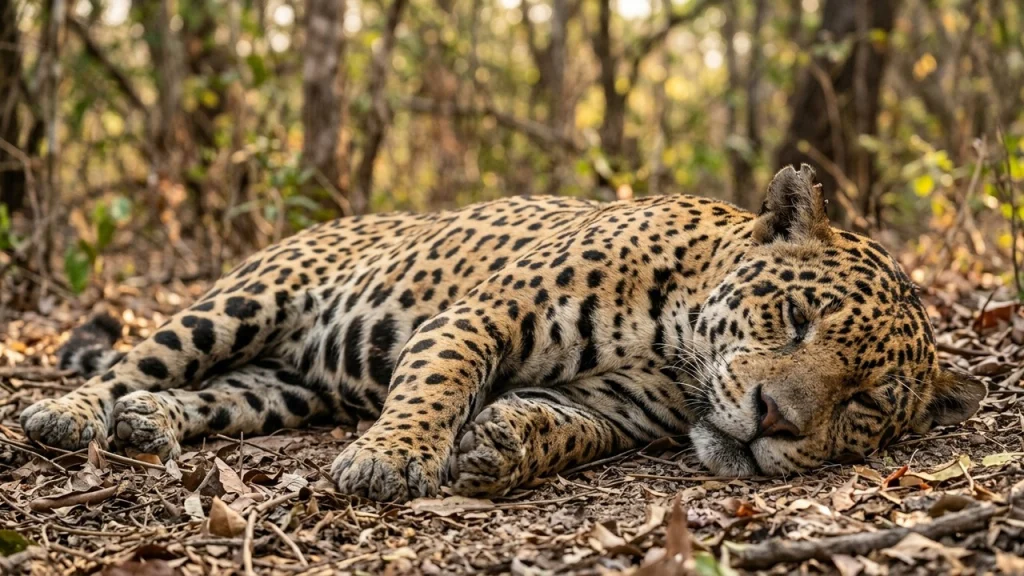
Even a healthy jaguar carries a full internal community. Animal Diversity Web lists tapeworms, whipworms and hookworms, plus lung flukes, as internal guests. Outside, the list adds ticks and warble fly larvae.
Age sets the limit. Wild jaguars average about 13-14 years of life, and the oldest age conservatively recorded in the Belize camera trap work was 14 years. The list of enemies for a jaguar that is never shot is therefore short but unforgiving: parasites, injury and difficulty.
The comparison that best isolates the human factor comes from that same Belize program. Jaguars there survived from one year to the next at a rate of about 0.78, which the authors linked to the fact that human disturbance in the study area is minimal while the main prey species have stayed stable or increased. The figure from Sonora in northern Mexico, a low density population, was lower, and the authors connect that result to mortality caused by people.
Protection that has measurably helped
Protection works best when it is specific. The Cat Specialist Group reports that commercial hunting fell sharply once CITES and anti-fur campaigns took effect, although demand for jaguar claws, teeth and other products persists, and it notes that enforcement on the ground is often too thin to stop illegal killing. Rules also differ from place to place: hunting is restricted in a handful of range countries, including Mexico and Peru, while Bolivia still permits trophy hunting, and two range countries, Ecuador and Guyana, give the cat no legal protection at all.
Where conflict is genuine, practical measures carry as much weight as paper. WWF describes a workshop where herders adopted simple deterrents, from cattle bells and solar lights to fencing, along with better herd management such as keeping calves away from the forest. Afterwards, the participants reported that no more of their domestic animals were taken. On a larger scale, the Cat Specialist Group counts that 73 conservation units, spread from Mexico down to Argentina, each judged able to hold enough jaguars to be self-sustaining over the next 100 years.
The bottom line
A jaguar’s worst enemy is a species, not a rival cat. Adults are built so that no wild animal reliably kills them. Cubs face something softer and slower, where parasites, a fragile food supply and a long dependence on the mother matter more than teeth. Keeping those two answers separate explains the whole picture: a species with no natural enemies, and a species with one very effective enemy.
Sources
- IUCN/SSC Cat Specialist Group: Living Species – Jaguar
- Animal Diversity Web, University of Michigan: Panthera onca (jaguar) | INFORMATION
- San Diego Zoo Wildlife Alliance: Jaguar (Panthera onca) Fact Sheet
- WWF: Jaguar
- PeerJ, via PubMed Central: Jaguar interactions with pumas and prey at the northern edge of jaguars’ range
- PLOS ONE: Long term monitoring of jaguars in the Cockscomb Basin Wildlife Sanctuary, Belize; Implications for camera trap studies of carnivores