
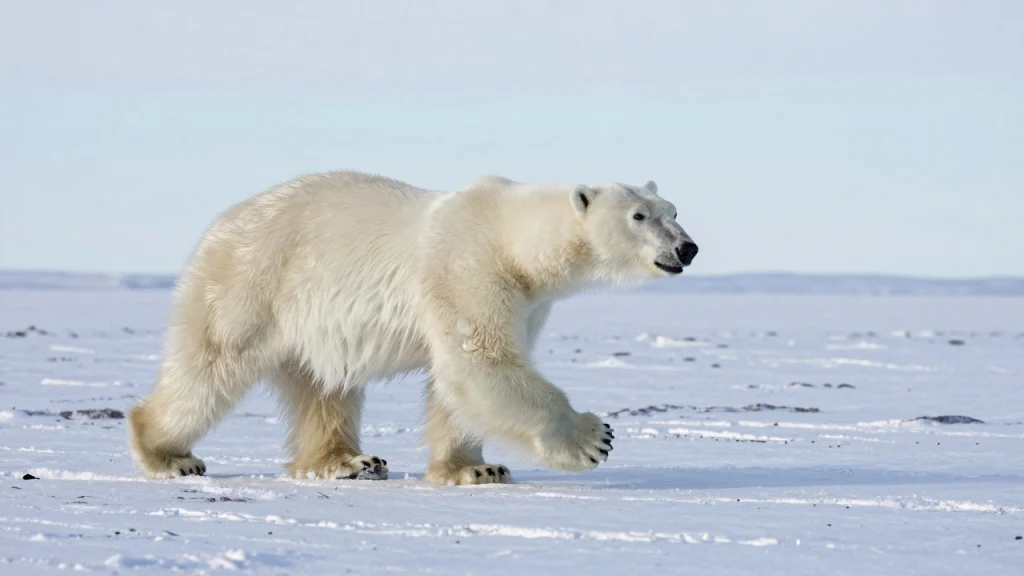
A polar bear on land usually ends a charge after a brief sprint, so expect a short dash rather than a long overland pursuit. Its top land sprint reaches 40 kph, yet that pace endures only for short distances because movement burns stamina and generates heat very fast.
The longest land efforts belong to lean adolescents, with top cases managing two kilometers nonstop. Bulkier adults quit sooner because they build heat quickly, which explains why these bears favor ambush over extended pursuit.
Why sprinters stop early on land
Locomotion is costly for this species, since moving across snow and ice demands far more fuel than the same pace costs slimmer mammals. San Diego Zoo researchers phrase the burden plainly: walking or running here consumes double the usual mammalian outlay, so resting between hunts saves vital reserves.
Heat adds a second ceiling. Animals built to retain warmth in severe cold can tip toward dangerous temperatures during hard effort, then they must pause or seek cold water to dump heat.
Normal travel looks unhurried by comparison. The typical walking pace is 5.5 kph, a steady shuffle used for patrolling ice, checking breathing holes and conserving fat. That contrast matters for safety planning: a bear may amble for hours, then explode into a sprint it has no intention of holding.
How polar bears prefer to hunt seals
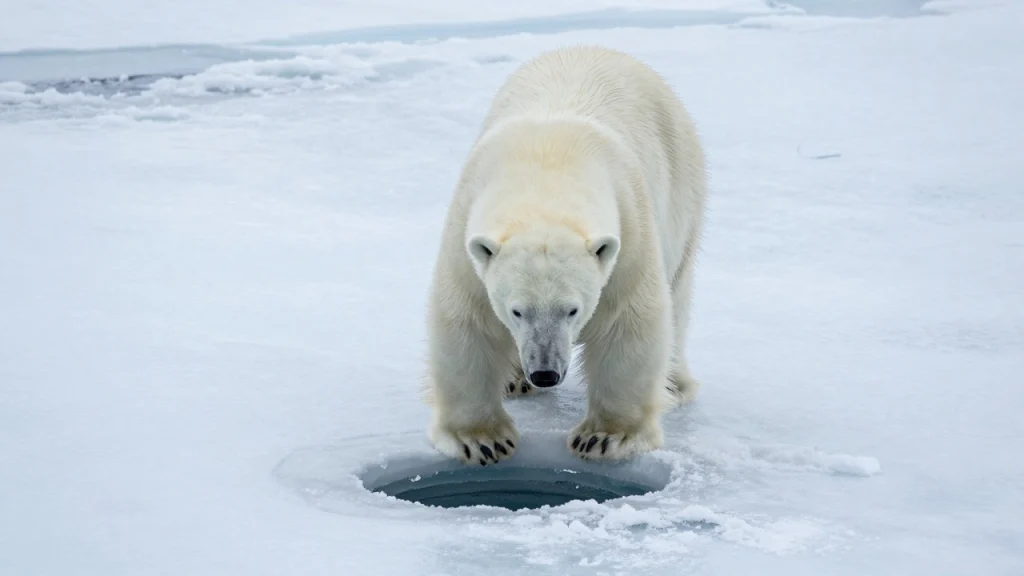
Polar bears prowl frozen seas, ambushing seals where cracks open or air holes appear. That habitat rewards patience, and many bears favor quiet ambush over sustained pursuit, letting the seal close the final gap itself.
Still hunting can last a remarkable time. A hunter can wait silently at one air hole for hours until a seal surfaces. Patrols along ice edges and breathing holes offer another low cost option, using stealth instead of speed.
Smell extends that ambush system across vast distances. Smell lets a bear detect distant seals on frozen surfaces 20 miles out, helping a bear choose which hole, crack or floe deserves attention. That sense of smell works with stealthy footwork and patience, not raw speed.
Food explains the patience. Ringed seals form the staple diet because those seals are abundant, and one adult seal can fuel a bear for 11 days. Feeding often follows a rhythm of eating every four to five days.
What water distance tells you about land chases
Swimming stamina does not translate into running stamina. In water, bears drive with broad forepaws and slightly webbed feet. Paddling can reach 6 miles per hour. Documented swims exceed 60 miles without rest in search of food, and individuals have crossed stretches spanning hundreds of miles offshore, often riding drifting ice between paddling bouts.
Those aquatic feats reflect efficient paddling, not an ability to gallop for miles. On land, bulk becomes a brake: the same mass that conserves heat in frigid seas overheats during a sprint. Cooling off in chilly water afterward restores balance, but it cannot extend the sprint already spent.
The scientific name captures that marine bias. Taxonomists call the animal Ursus maritimus, which means sea bear, a label that fits long ice edge patrols and open water crossings. Males commonly weigh 660 to 1,400 pounds, so accelerating that frame repeatedly is energetically punishing.
Season shapes encounters too. Where melt erases the frozen platform each summer, bears relocate to shore. A hungry bear near shore or a settlement deserves extra caution, even though most bears avoid wasting energy on uncertain targets.
How rarely chases of people turn into attacks
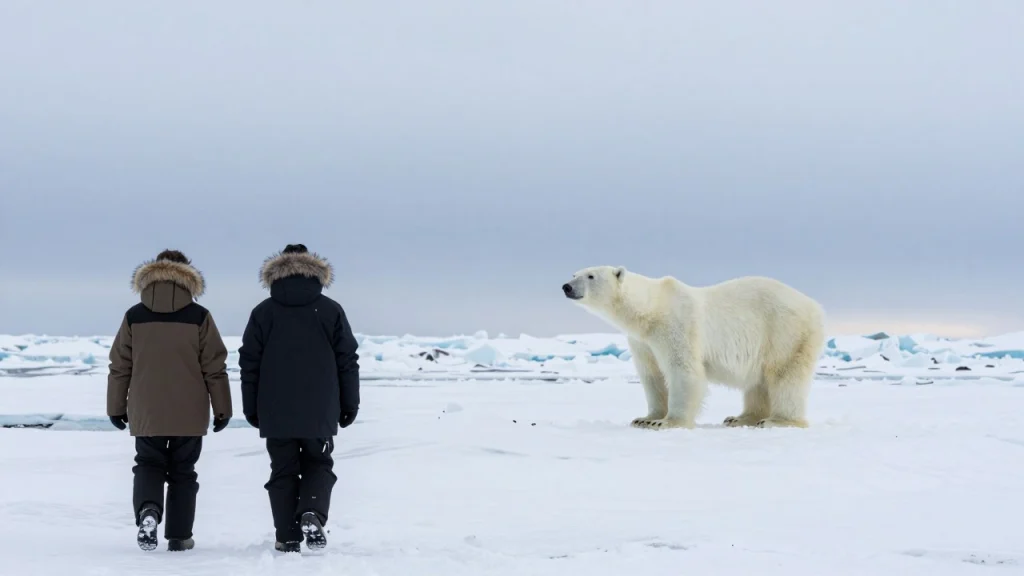
Records describe human assaults as exceptionally uncommon across the survey period. Between 1870 and 2014 the survey logged 73 wild bear assaults in the 5 range states (Canada, Greenland, Norway, Russia, United States), causing 20 deaths and 63 injuries to people.
Hunger and sex strongly shape risk. Hungry, thin adult males carried the greatest danger for people. Most incidents involved predatory behavior rather than defense, and nearly all attacks involved ≤2 people.
Age and family status add nuance. Not-yet-adult bears and mothers guarding cubs account for the largest share of charges in some records. By contrast, assaults by mature females stayed uncommon and usually involved guarding offspring instead of seeking people.
- Scan ice edges, pressure ridges and breathing holes before approaching, since those are natural hunting posts.
- Carry bear spray in an accessible holster because spray is a reliable defense in surprise encounters.
- Back toward shelter calmly when a bear appears, and never try to test its sprint limit.
Why you should treat every approach as serious
These are large predators, and an encounter could be dangerous to humans even when the bear looks calm or curious. They do not typically fear humans. Communities close to bear habitat sometimes see animals develop a liking for refuse, forcing risky closeness between bears and residents.
Feet and fur reveal an animal tuned for grip and stealth rather than marathon running. Paw undersides carry fur that shields from freezing ground and improves traction on slick ice. That traction helps explain the explosive start, while physiology explains the early finish.
Family life also affects behavior on the ice. Cubs remain alongside mothers for some 28 months while mastering Arctic survival. A mother in that period may act boldly.
The population context raises the stakes for avoidance. Researchers currently place the Arctic total at about 26,000 animals. Fewer run-ins keep both travelers and bears safer.
Bottom line for Arctic travel
Plan as if a bear can close nearby ground very quickly but will not willingly run down a distant target on land. Keep distance, store food securely, watch wind and visibility, stay near shelter or vehicles, and act early rather than waiting to learn its limit. Respect for an efficient ambush hunter is the safest strategy, because close range is the danger zone.
Sources
- SeaWorld: All About Polar Bears – Behavior | United Parks & Resorts
- McGill University: Polar bears can run up to 40 km per hour! | Office for Science and Society – McGill University
- San Diego Zoo Wildlife Alliance: Polar Bear | San Diego Zoo Animals & Plants
- National Geographic: Polar Bear | National Geographic
- U.S. Geological Survey: Polar bear attacks on humans: Implications of a changing climate | U.S. Geological Survey