
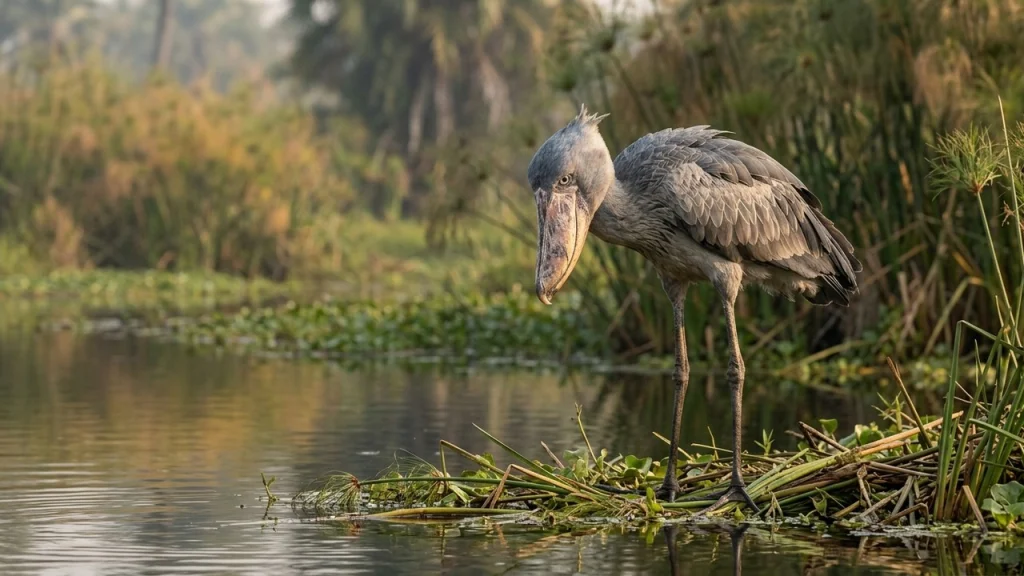
Animal Diversity Web notes that shoebills hold the head and bill vertically downward toward the breast to assist binocular vision. None of the zoo, wildlife agency or research sources behind this article records shoebills bowing or states why they bow.
The San Diego Zoo Wildlife Alliance observes that these birds are famous for standing still like statues while gazing into water for hours at a time. Animal Diversity Web notes that shoebills hunt by standing and waiting and by wading and walking slowly.
Ambush strikes in the water
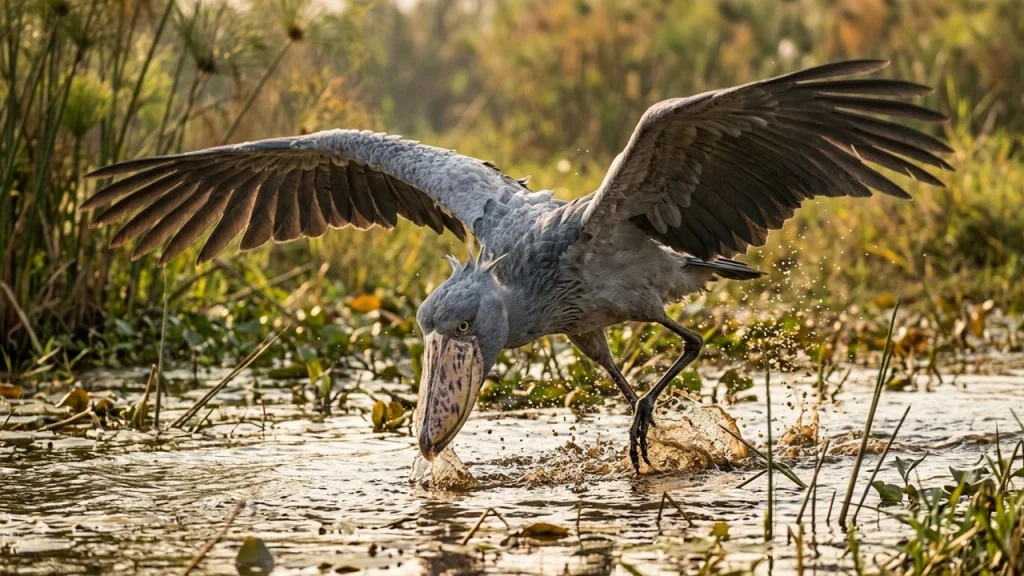
To ambush a fish, the bird lunges forward, throws its wings wide, and plunges head first into the water. Animal Diversity Web explains that the rapid forward stretch of the neck and head into the water causes the bird to lose balance and fall forward and downward. The shoebill then has to restore its balance before resuming its original standing posture.
Bill-clattering sounds and nest greetings
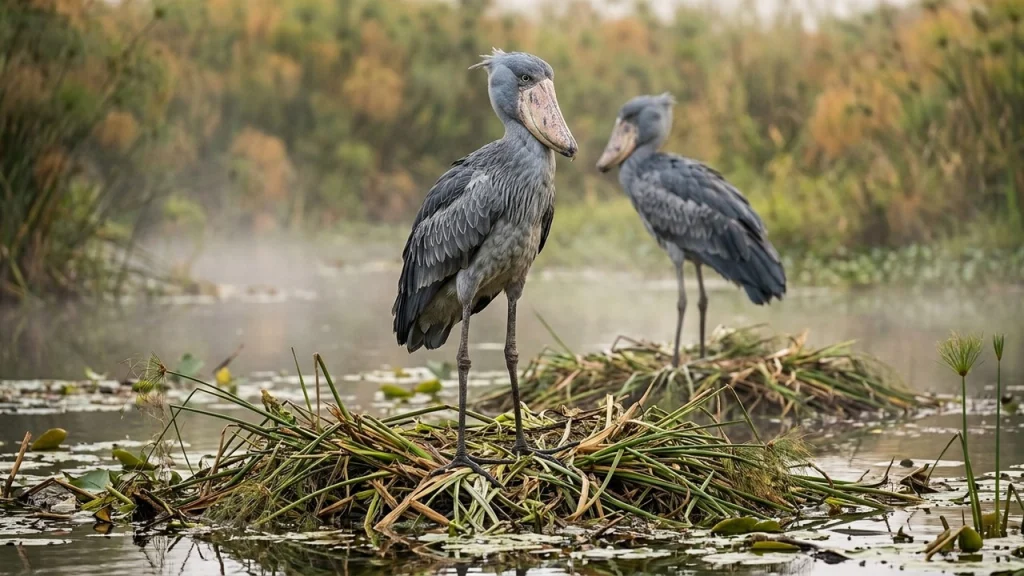
While shoebills are typically quiet, they clatter the bill often, which is a habit shared by true storks. Animal Diversity Web notes that adult pairs frequently clatter to greet one another at the nest, a display that young shoebills also practice.