
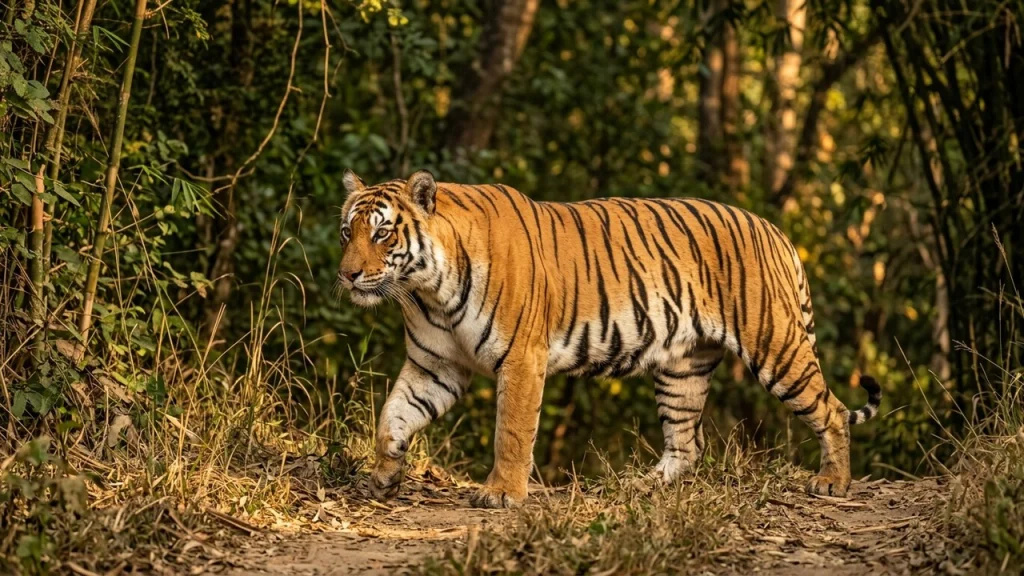
In the wild, tigers usually live 10 to 15 years, according to the Smithsonian’s National Zoo. Animal Diversity Web gives a different range: 8 to 10 years is usual for tigers in the wild, though they can live into their 20s.
In captivity, a typical lifespan is 16 to 18 years, according to Animal Diversity Web, which adds that tigers in captivity have been known to live as long as 26 years. The Smithsonian’s National Zoo says tigers in human care can live up to 20 years, and on rare occasions so can tigers in the wild.
Lifespan figures by subspecies
The Oregon Zoo gives figures for Amur tigers: 10 to 14 years in the wild and, in captivity, an average life expectancy of 14 to 16 years, with up to 20 years possible. National Geographic’s page on Bengal tigers lists an average life span in the wild of 8 to 10 years. Bengal tigers live in India, are sometimes called Indian tigers, and are the most common tiger, numbering about half of all wild tigers.
The San Diego Zoo Wildlife Alliance’s fact sheet lists median life expectancy for three subspecies, citing AZA 2023:
- Panthera tigris altaica: 16 years for males and 14.3 years for females
- Panthera tigris jacksoni: 16.1 years
- Panthera tigris sumatrae: 18.4 years
Cub survival and the move to independence
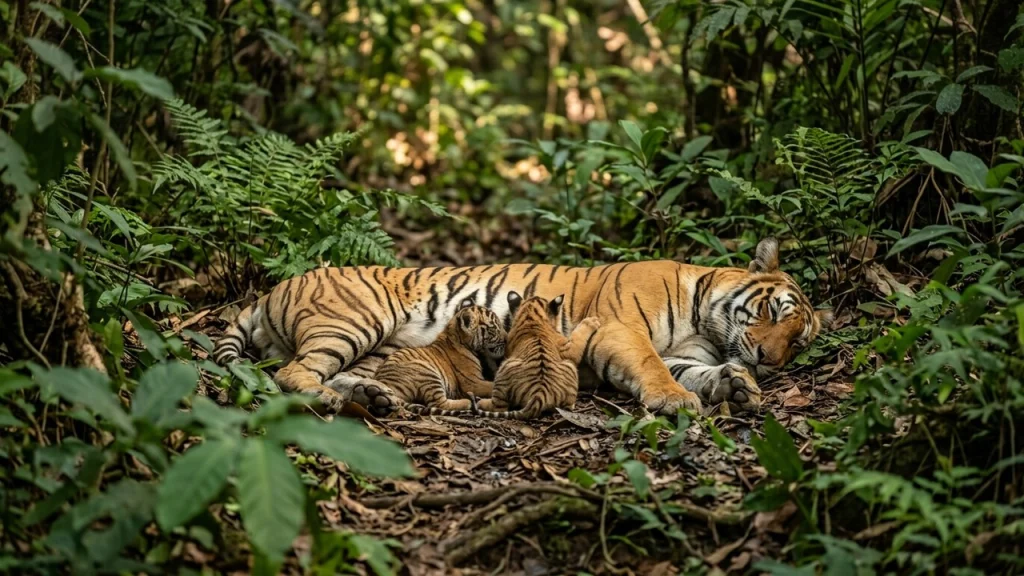
Approximately half of all wild tiger cubs do not live past their first two years, says the Smithsonian’s National Zoo. Cubs stay with their mothers until they can hunt successfully, which the Smithsonian’s National Zoo says usually happens at about 18 to 24 months old. The Oregon Zoo says a female Amur tiger starts teaching her cubs to hunt when they are about 3 months old.
Young tigers become fully independent after two to three years and then disperse to find their own territory. Juvenile males have a higher mortality rate than females, which the San Diego Zoo Wildlife Alliance’s fact sheet says is likely due to independence at an earlier age. Dispersing tigers face several dangers, including being attacked and eaten by male tigers, according to Animal Diversity Web. Of the young tigers that reach independence, only 40 percent survive to establish a territory and produce young, the Smithsonian’s National Zoo says.
Threats to adult tigers
The Smithsonian’s National Zoo says the risk of mortality remains high for adult tigers because of their territorial nature, which often puts them in direct competition with other tigers. National Geographic says tigers live alone and scent-mark large territories aggressively to keep their rivals out. The Oregon Zoo says female Amur tigers range over 95 to 170 square miles, sometimes dividing that area with their daughters, while male territories can reach up to 770 square miles and may overlap with those of several females.
Animal Diversity Web estimates that most adult tigers die from human persecution and hunting, though large prey can occasionally wound them fatally. The San Diego Zoo Wildlife Alliance’s fact sheet also lists humans as the most significant threat, with injuries during hunting and infections as other causes of death, and notes that wounds from porcupine quills can lead to death.
Threats to wild Amur tigers

About 400 Amur tigers remain in the wild, according to the Oregon Zoo, and they are listed as endangered. They are threatened by habitat loss, poaching of both tigers and their prey, tiger-human conflict and infectious diseases.
Breeding age and litter size
Females become sexually mature between age 3 and 4, and males at about 4 or 5 years old, according to the Smithsonian’s National Zoo. After a gestation of approximately 100 days, a female gives birth to one to seven offspring at a time, averaging two to four cubs. When a female loses her offspring to causes such as infanticide or starvation, she can conceive another litter right away.