
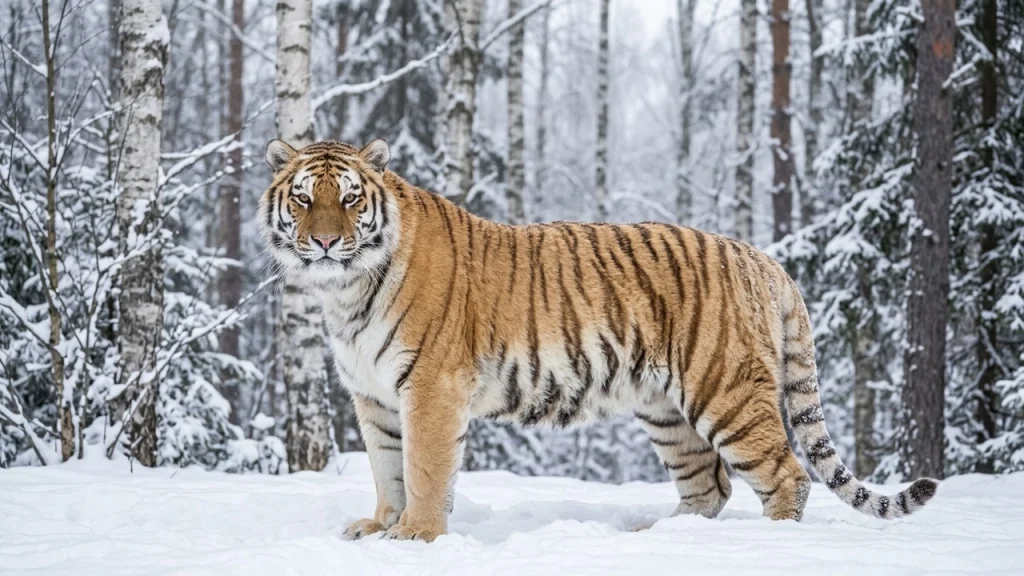
Between a Siberian and a Bengal tiger, the Siberian tiger, also called the Amur tiger, is the one that Animal Diversity Web and the Smithsonian’s National Zoo name as the largest tiger subspecies. According to Animal Diversity Web, a male Siberian tiger can reach 3.7 meters and weigh more than 423 kg. The Smithsonian’s National Zoo lists male Amur tigers at up to 660 pounds (300 kilograms) and 10 feet (3 meters). The two male figures are not the same.
In the traditional scheme, Siberian and Bengal tigers are separate subspecies. The IUCN SSC Cat Specialist Group says the modern tiger was traditionally considered to be made up of six extant and three extinct subspecies, and it lists the Amur tiger (Panthera tigris altaica) and the Bengal tiger (Panthera tigris tigris) under their own names. It adds that recent genetic studies propose only two subspecies, with Panthera tigris tigris including altaica among other names. Under that proposal, the Siberian and Bengal tigers would both fall inside Panthera tigris tigris.
How big Siberian tigers get
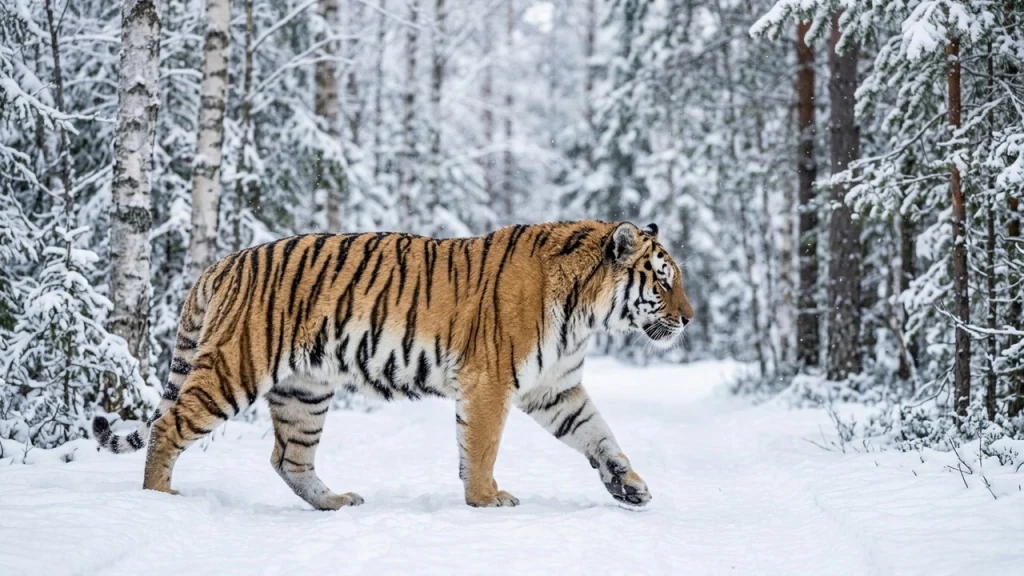
Animal Diversity Web puts female Siberian tigers at 2.4 meters long and 168 kg at most, next to the male figures above. The Smithsonian’s National Zoo says females of every subspecies tend to be smaller than the males. It also says the largest tiger on record was an Amur tiger.
Siberian tigers among all tigers
The IUCN SSC Cat Specialist Group calls the tiger the largest living cat species, but says size differs from subspecies to subspecies and that large lions (Panthera leo) can be bigger than smaller tigers. Animal Diversity Web names Sumatran tigers (P. t. sumatrae) as the smallest living subspecies. A third weight figure comes from the IUCN group’s tiger page, which lists weight as 75 to 325 kg.
What skull measurements show
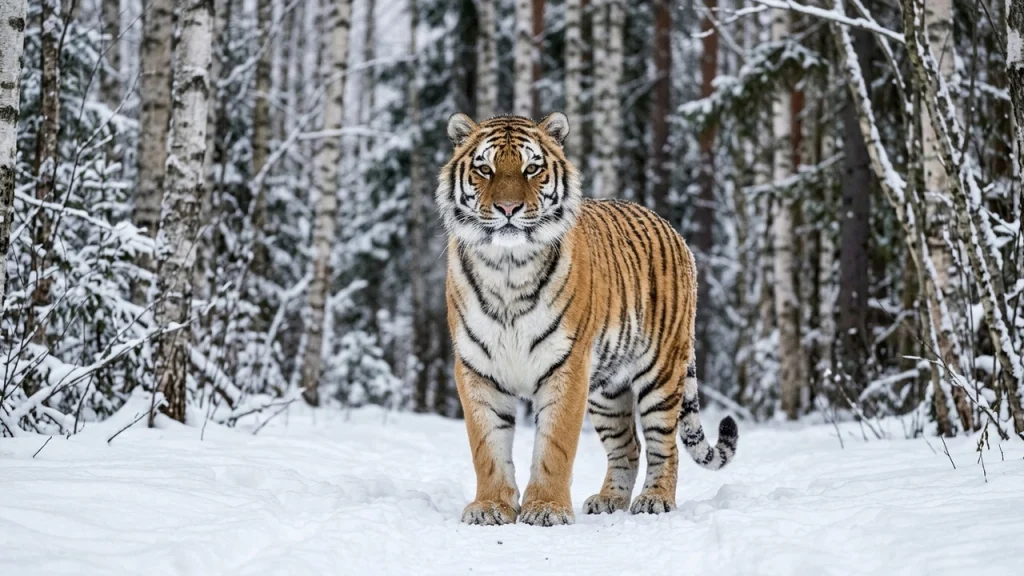
A Royal Society Open Science study analysed size and shape differences between wild and captive continental tiger skulls, drawing on fifty-seven measurements from 172 specimens. It says wild and captive specimens do not differ in overall skull size, though captive ones show broader skulls, with rostral depths and mandible heights that are shorter.
Compared with other continental tigers, the study says Amur tigers have a larger cranial volume, greater cranial height, a longer sagittal crest, broader mastoids and a smaller rostrum. The study reads this as probably a plastic response to the Russian Far East, where the environmental conditions are vastly different.
Where they live, and the Bengal tiger’s canines
The IUCN SSC Cat Specialist Group places the Amur tiger in north-eastern China and the Russian Far East, and the Bengal tiger on the Indian subcontinent. According to the San Diego Zoo Wildlife Alliance, Bengal tigers live in the wetlands and forests of Nepal, Bhutan, Bangladesh and India.
Animal Diversity Web says the canines of Bengal tigers (P. t. tigris) are the longest of any living large cat, measuring 7.5 to 10 cm.
Sources
- San Diego Zoo Wildlife Alliance: Tiger | San Diego Zoo Animals & Plants
- Smithsonian’s National Zoo: Tiger
- Animal Diversity Web: Panthera tigris (tiger) | INFORMATION
- IUCN SSC Cat Specialist Group: Living Species – Tiger | IUCN CatSG
- Royal Society Open Science: Phenotypic plasticity determines differences between the skulls of tigers from mainland Asia