

Governments across numerous countries, including the United States, have enacted legislation prohibiting commerce in commodities derived from tiger bodies, according to the San Diego Zoo Wildlife Alliance. Research in the Journal of Genetic Engineering and Biotechnology identifies trichinellosis as a global meat borne zoonotic illness caused by nematodes belonging to the genus Trichinella. Globally, infections among people occur chiefly through eating pork products from hogs or wild boar, as well as uncooked flesh from untamed predators such as badgers, bears, cougars, jackals, and walruses.
In an investigation of wild carnivores in Uttar Pradesh, India, four tigers tested positive for Trichinella infection alongside 14 leopards, representing 18 animals or 72 % of those tested. None of the zoo, wildlife agency or research sources behind this article states directly that eating tiger meat would make a person ill.
Parasitic worms and clinical laboratory findings in big cats

A study in the Journal of Genetic Engineering and Biotechnology explains that Trichinella roundworms persist in natural systems across three interlocking cycles (sylvatic, domestic, and synanthropic) whose overlapping boundaries pose an ongoing risk to people. From January 2021 to March 2022, forestry officials in Uttar Pradesh, India, submitted 25 muscle samples collected from wild creatures, comprising 17 leopards, seven tigers, and a solitary civet cat.
When researchers evaluated tissue with muscle squash preparations under microscopic examination, spiral Trichinella larvae appeared nestled within elliptical or oval nurse structures. Laboratory personnel successfully retrieved living larvae through an acid-pepsin digestion procedure. The investigation points out that finding this degree of infection among wild big cats points to endemic conditions, indicating that leopards and tigers function as reservoir hosts in India. Beyond roundworms, tigers harbor an extensive community of internal helminths across cestode, trematode, and nematode groups, including Paragonimus westermani, Toxocara species, Gnathostoma spinigerum, Diphyllobothrium erinacei, and Taenia pisiformis.
Trade bans and international legal restrictions
Animal Diversity Web notes that international conservation authorities classify the tiger as Endangered on the IUCN Red List. The species also appears under CITES Appendix I. To reinforce global wildlife trade restrictions established under that treaty, China prohibited internal commerce regarding tiger skeletons and derivative goods in 1993, according to PLOS ONE. That national decree dismantled an extensive lawful industry centered on feline bones and therapeutic treatments manufactured from skeletal parts.
Official Chinese records from 1990 to 1992 logged outward shipments reaching 27 million units of tiger goods, according to the same PLOS ONE publication. Despite strict wildlife statutes, illegal trafficking of feline components has expanded, with Nepal evolving into a critical supply point and transport corridor for poached parts, while contemporary news coverage from Vietnam, Malaysia, and China highlights clandestine markets distributing tiger meat. Cultural usage has deep historical roots; the educational database notes that traditional Chinese medicine has utilized tiger elements for more than 3000 years to remedy bodily injuries and illnesses. Healers historically prescribed the upper leg bone, or humerus, against rheumatism without any clinical evidence showing efficacy for that ailment.
Population declines and threats facing wild tigers
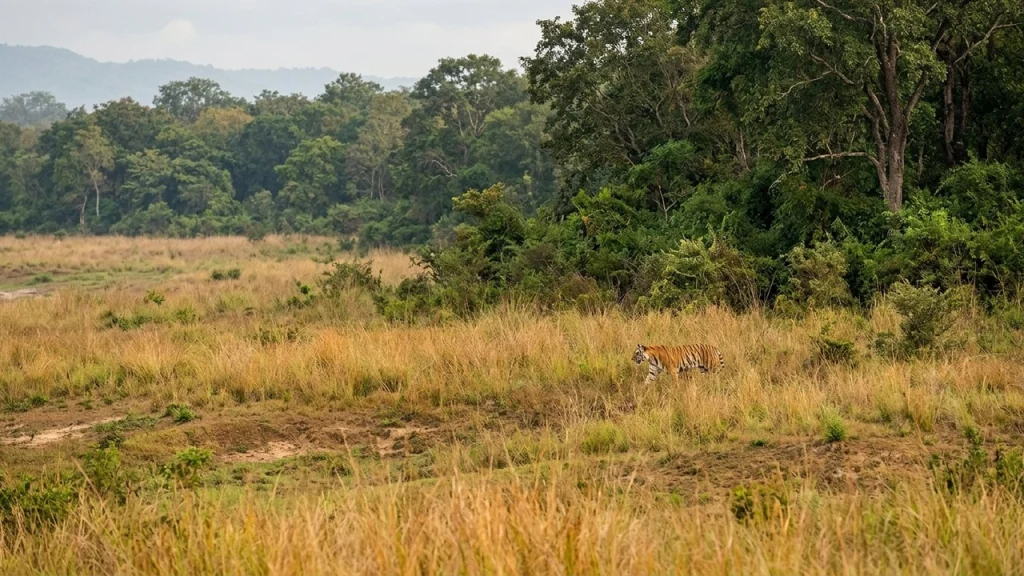
Throughout their geographical distribution, wild tiger communities face acute jeopardy resulting from degraded territories, illegal killing, and persistent consumer demand for body derivatives, according to PLOS ONE. Over the span of the past century, wild tiger numbers suffered a collapse exceeding >97%, reducing the global free-ranging population to approximately about 3,200 surviving individuals. In localized landscapes such as Nepal, the Bengal tiger (Panthera tigris tigris) survives as an imperiled top carnivore numbering less than 200 individuals.
According to the San Diego Zoo Wildlife Alliance, conservation researchers estimate that only about 3,000 tigers survive across the globe at present. The zoo emphasizes that poaching poses the largest threat confronting tigers.
Predatory habits and feeding behavior of tigers
Because they are top predators, tigers may be considered keystone species, and they face no natural predators besides humans, according to Animal Diversity Web. Typical body mass spans 165 to 716 pounds (75 to 325 kilograms) on the San Diego Zoo Wildlife Alliance fact sheet. The organization observes that these animals demonstrate tremendous patience during stalks, creeping quietly toward ungulate targets like pigs and deer over a typical duration of 20 or 30 minutes.
The San Diego Zoo Wildlife Alliance notes that a tiger uses its large canine teeth and powerful jaws to grab prey by the neck and suffocate it. Once the target is downed, the big cat uses its coarse tongue, textured like sandpaper, to strip leftover flesh from bones. The educational database records that after securing sizable prey, a tiger typically consumes 18 to 40 kg of flesh, though individuals do not generally feed every single day. To shield uneaten flesh from vultures or competing scavengers, the predator conceals the carcass beneath loose soil and foliage using its paws, while the San Diego Zoo Wildlife Alliance notes it returns over subsequent days for smaller snacks.
Sources
- Animal Diversity Web: Panthera tigris (tiger)
- San Diego Zoo Wildlife Alliance: Tiger | San Diego Zoo Animals & Plants
- Journal of Genetic Engineering and Biotechnology: Beyond the known: Unraveling the existence of novel Trichinella genotypes (T14 and T15) in India and expanding the species complex
- PLoS ONE: Attitudes toward consumption and conservation of tigers in China
- PLoS ONE: Species, sex and geo-location identification of seized tiger (Panthera tigris tigris) parts in Nepal-A molecular forensic approach