

Tigers are known for their solitary lifestyle and formidable hunting abilities, but the continuation of their species relies on the careful rearing of cubs by attentive mothers. Understanding tiger reproduction and family dynamics sheds light on how these magnificent wild mammals survive in the wild.
In most cases, a female tiger gives birth to a litter of two to three cubs. While litter sizes can range from a single cub up to five, two or three offspring represent the standard average across tiger subspecies.
Average Tiger Litter Size and Birth Rates
A typical tiger litter usually consists of two to three cubs. Female tigers, or tigresses, have a gestation period lasting approximately 100 to 108 days (around three and a half months).
Litters of four or five cubs can occur, but a mother typically cannot kill enough prey to feed such a large litter, so usually only two cubs survive. The mother’s ability to produce milk and secure enough prey directly influences how many young can mature into healthy adults.
| Aspect of Tiger Reproduction | Typical Detail |
|---|---|
| Average Litter Size | 2 to 3 cubs |
| Litter Range | 1 to 5 cubs |
| Gestation Period | ~103 days |
| Frequency of Giving Birth | Every 2 to 3 years |
Early Life and Vulnerability of Tiger Cubs
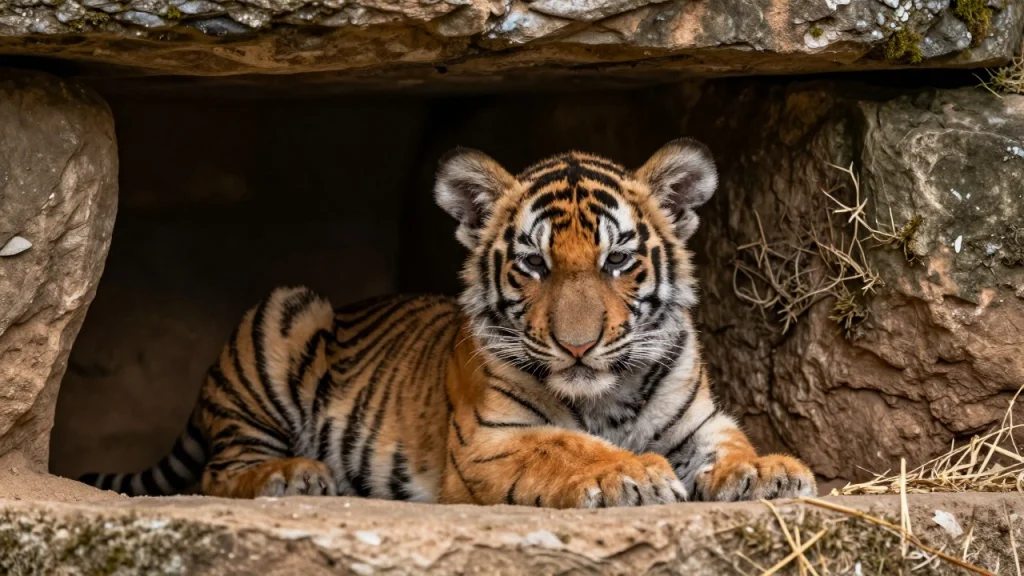
Tiger cubs are born helpless, blind, and completely dependent on their mother for survival. At birth, a newborn cub weighs about 2.2 pounds (around 1 kilogram). Their eyes remain closed for 6 to 14 days after birth.
During the first eight weeks of life:
- Cubs nurse frequently, and begin to take some solid food by about two months old.
- The mother keeps them hidden inside a protected den, such as a cave, dense thicket, or hollow tree trunk.
- The tigress leaves the den only to hunt, returning frequently to feed and groom her offspring.
Because cubs cannot defend themselves or travel far, the mother’s vigilance during these early months determines the fate of the entire litter.
Factors Affecting Cub Survival Rates in the Wild
Raising multiple cubs presents significant challenges for a solitary hunter. In the wild, it is estimated that nearly half of all tiger cubs do not survive past their second year. Several natural factors impact mortality rates within a litter:
Food Availability and Hunting Success
A mother must consume substantially more prey to support lactating demands and, later, to feed hungry growing juveniles. If prey is scarce, weaker or smaller cubs in the litter may succumb to malnutrition because older or stronger siblings dominate feedings.
Predation and Infanticide
Although adult tigers have almost no natural predators besides humans, unguarded cubs remain vulnerable to other tigers. Male tigers entering a new territory may kill existing cubs to bring the female back into estrus, ensuring the male can pass on his own genes.
Environmental Extremes and Disease
Severe weather, floods, harsh winters, and infectious diseases can quickly wipe out young cubs whose immune systems and physical endurance are not yet fully developed.
Growth Milestones and the Journey to Independence

As cubs grow, their development progresses rapidly through distinct physical and behavioral stages:
- Weaning Phase (2 to 3 Months): Cubs begin taking their first steps outside the den and start sampling solid meat provided by the mother, though nursing continues.
- Learning to Hunt (6 to 12 Months): Cubs accompany their mother on hunts, observing her stalking techniques, territorial marking, and movement strategies.
- Mastering Skills (18 to 24 Months): The young tigers actively participate in hunts and become capable of catching their own small-to-medium prey.
By the time young tigers reach two to two and a half years of age, they gradually separate from their mother to establish their own home ranges. Male offspring generally disperse farther than females, seeking territories with abundant prey and minimal competition from established resident males.
How Litter Sizes Support Conservation Efforts
Understanding average litter sizes provides essential baseline data for wildlife biologists and conservationists monitoring threatened wild tiger populations. Because a tigress only gives birth every two to three years, assuming her previous litter survives, population recovery happens at a naturally measured pace.
Protecting contiguous habitats, securing healthy prey populations, and minimizing human-wildlife conflict directly improve the survival rate of tiger litters. By ensuring more cubs reach adulthood, conservation programs can help stabilize and rebuild wild populations of these iconic apex predators.