
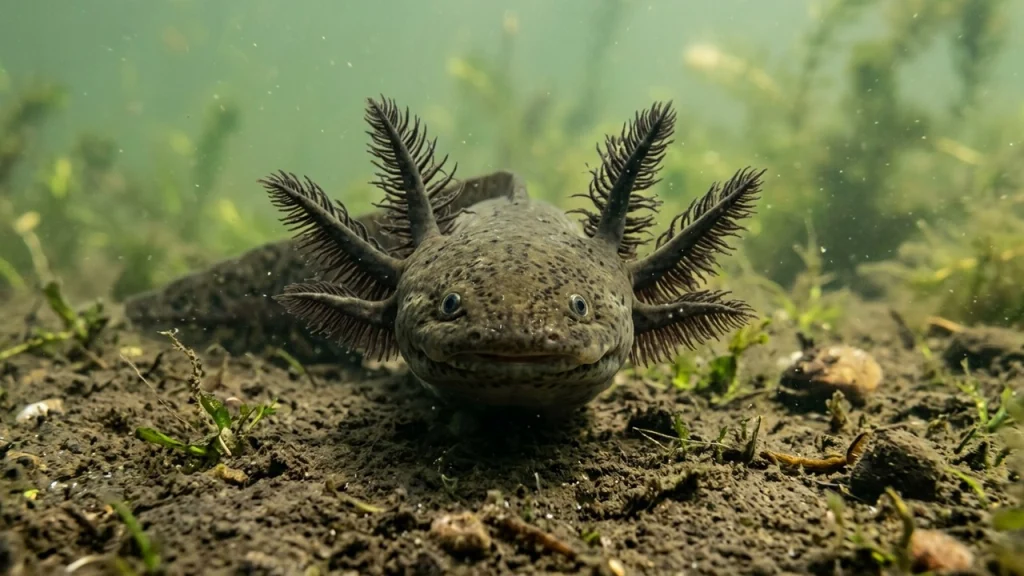
Axolotls are endangered because of habitat loss, pollution and introduced predatory fish. Animal Diversity Web calls them almost extinct in their native habitat, largely because predatory fishes were introduced and habitat was lost. National Geographic calls the axolotl critically endangered in the wild and blames pollution and urban sprawl that are threatening its habitat in the Mexican Basin.
Animal Diversity Web lists the axolotl as Critically Endangered on the IUCN Red List and under CITES Appendix II. A Developmental Dynamics paper ties that status to the deterioration of the animal’s natural ecosystem.
Habitat loss around Mexico City
Animal Diversity Web says Ambystoma mexicanum was historically found in Lakes Chalco and Xochimilco in the Valley of Mexico, near Mexico City. Lake Chalco has disappeared entirely after being drained for drinking water, while Lake Xochimilco is now only a scattering of canals and swamps.
According to the San Diego Zoo Wildlife Alliance, the Xochimilco-Chalco basin once covered about 77 square miles (200 square kilometers) and was made up of marshes, swamps and lagoons. Drainage projects completed 85 years ago shrank that area significantly.
National Geographic says axolotls once lived in the high-altitude lakes around Mexico City, but degraded habitat now confines them to a handful of inland canals nearby. A PLOS ONE paper describes A. mexicanum as endemic to Lake Xochimilco, which it calls the last remnant of what was once an extensive wetland system in the Central Valley of Mexico. Habitat loss has severely impacted its survival there, according to the same paper.
Urban growth and polluted water
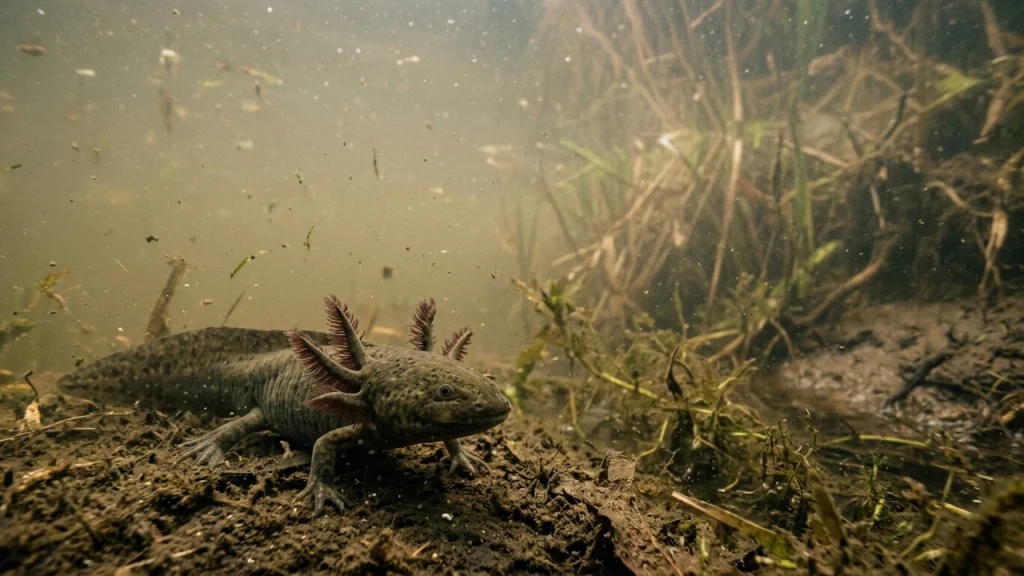
The San Diego Zoo Wildlife Alliance names urbanization and pollution in the freshwater lakes and ponds it lives in as its biggest threat. Losing habitat to tourism and residential housing development, along with agricultural and industrial pollution, has drastically cut the axolotl population, National Geographic says.
A PLOS ONE paper lists urban expansion, environmental degradation and invasive species, plus a severe decline in water quality, as having led to a marked decline in axolotl populations. It attributes the water quality decline to untreated wastewater discharge, agricultural runoff and surrounding urbanization.
The same paper describes the Xochimilco Lake area as an agricultural zone, and says agrochemicals are dumped into the canals through leaching. That affects the survival of amphibians that have permeable skin.
Introduced fish and other predators
National Geographic says invasive fish such as tilapia prey on baby salamanders and compete with the adults for food. The San Diego Zoo Wildlife Alliance says predation by introduced fish and large birds also contributes to the persistent decline, as does over-collecting axolotls for food and medicine.
The San Diego Zoo Wildlife Alliance also says axolotls have few predators in the wild, though storks, herons and large fish (carp and tilapia) may take them on occasion.
How few axolotls are left
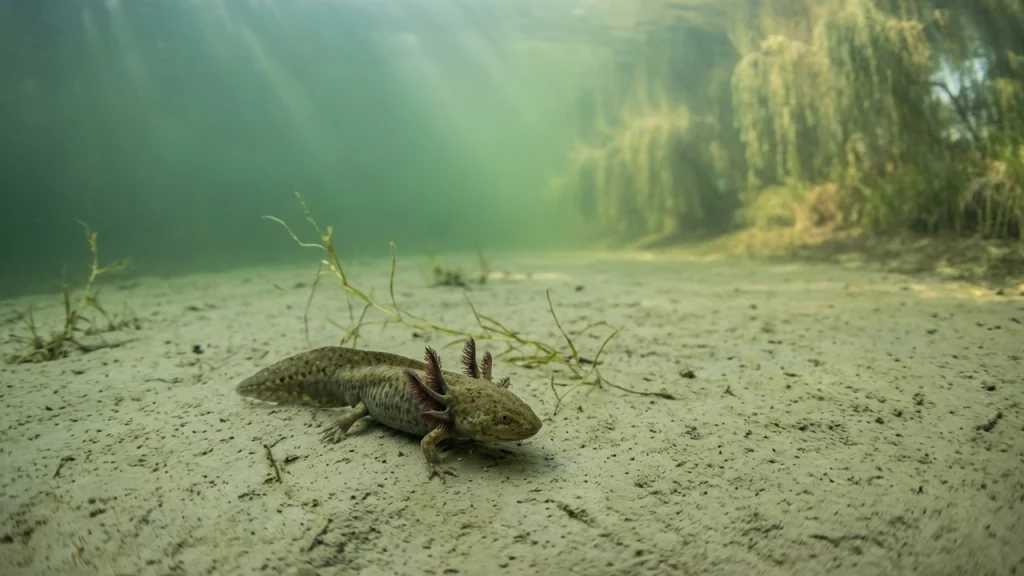
National Geographic cites an assessment that found only 50 to a thousand axolotls left in the wild, and says their numbers are dropping. According to a Developmental Dynamics paper, axolotls are close to extinction in their native Mexico, which it says has also led to a lack of genetic diversity in wild axolotls.
Animal Diversity Web says wild populations have been little studied: known populations are few and far between, and the ecology and natural history of A. mexicanum remain largely unknown.
Refuges and chemical-free farming
Chinampas are rectangular islands surrounded by canals. A PLOS ONE paper says they were created when wetlands were partially transformed during the Aztec Empire, and that they supported intensive food production and promoted local biodiversity.
The same paper says the chinampa-refuge project began in 2004 as a collaboration between local chinampero farmers and the Laboratorio de Restauración Ecológica of the Universidad Nacional Autónoma de México (UNAM). In Xochimilco, its authors used a 500 m² chinampa within that project, where canals are kept free of agrochemicals and fitted with filters to improve water quality and keep out exotic fish.
The San Diego Zoo Wildlife Alliance says conservationists are starting to build aquatic refuges for axolotls, installing water filters in the canals of Lake Xochimilco and keeping out non-native species such as tilapia. Through conservation education, it adds, farmers are increasingly adopting traditional agricultural practices without pesticides or fertilizers, to help conserve axolotls.
The PLOS ONE paper adds that agricultural activities put most of Lake Xochimilco at risk of agrochemical pollution, but restored chinampas that avoid agrochemicals offer critical refuges and show potential for sustainable conservation.
Sources
- Animal Diversity Web: Ambystoma mexicanum (Axolotl)
- San Diego Zoo Wildlife Alliance: Axolotl | San Diego Zoo Animals & Plants
- National Geographic: Axolotl, facts and photos
- PLOS ONE: Movement ecology of captive-bred axolotls in restored and artificial wetlands: Conservation insights for amphibian reintroductions and translocations
- Developmental Dynamics: The amazing and anomalous axolotls as scientific models