
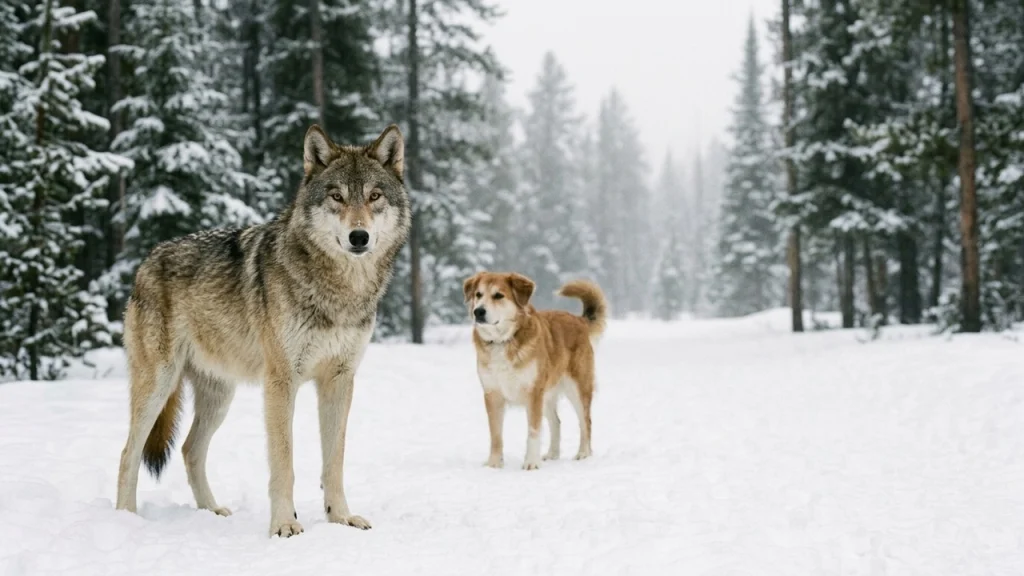
Animal Diversity Web says gray wolves are widely recognized as the ancestor of all domestic dog breeds. The Smithsonian’s National Zoo adds that 39 sub-species of gray wolf are currently described, a count that includes the dingo and the domestic dog.
On build, the U.S. National Park Service says a wolf’s legs are longer, its feet bigger and its chest narrower than those of large domestic dogs. On tails, the same agency says a wolf’s does not curl, though a domestic dog’s may. On breeding, female gray wolves come into estrus once a year, Animal Diversity Web says, while domestic dogs can reproduce about every six months, though usually less often.
Origins and range
Domestication of dogs happened between 9,000 and 34,000 years ago, Cornell University says, which suggests the earliest dogs most likely arose while humans were still hunting and gathering. Domestic dogs are now found worldwide, Animal Diversity Web says, while their wild ancestors, the gray wolves, occurred in continental areas of the northern hemisphere, among them North America and the Palearctic.
Size and build of the gray wolf
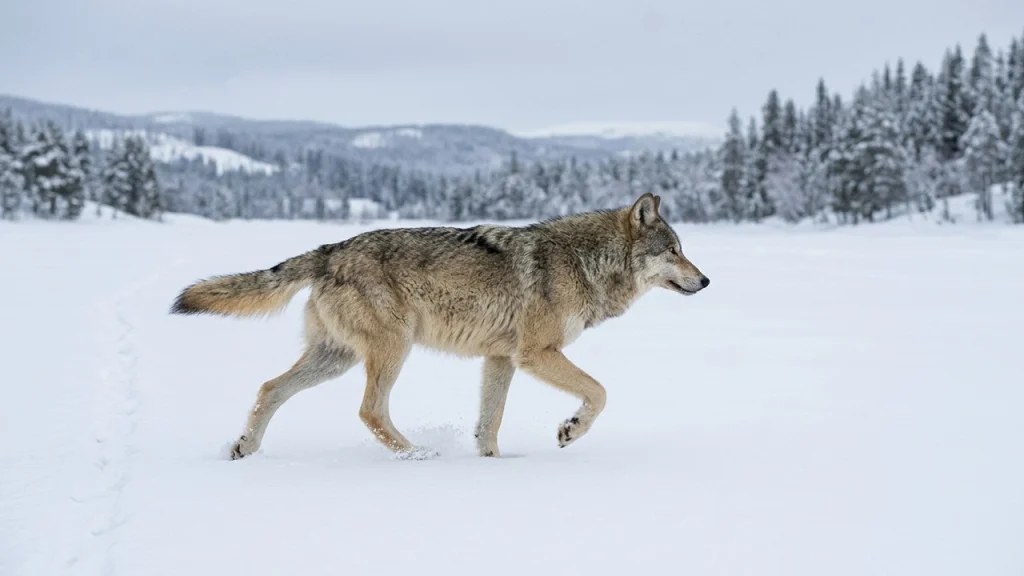
The Smithsonian’s National Zoo calls the gray wolf the biggest member of the canine family, with a coat that ranges from gray to brown, black or white.
The zoo lists male gray wolves at 65 to 175 pounds (30 to 80 kilograms) and females at 50 to 120 pounds (23 to 55 kilograms). Total length runs from 130 to 205 centimeters (4 feet 3 inches to 6 feet 9 inches), according to the zoo.
Breeding and lifespan
Animal Diversity Web adds that a female gray wolf’s estrus lasts 5 to 14 days. For domestic dogs, it says breeding can happen at any time of year.
For gray wolves, the Smithsonian’s National Zoo gives a gestation period of 62 to 63 days and an average litter of six. For wolves, the San Diego Zoo Wildlife Alliance lists 1 to 11 young at birth and a weight at birth of 1 pound (.45 kilograms).
Gray wolves can live between seven and eight years in the wild, the Smithsonian’s National Zoo says, and up to 20 years in human care.
Packs, territory and prey
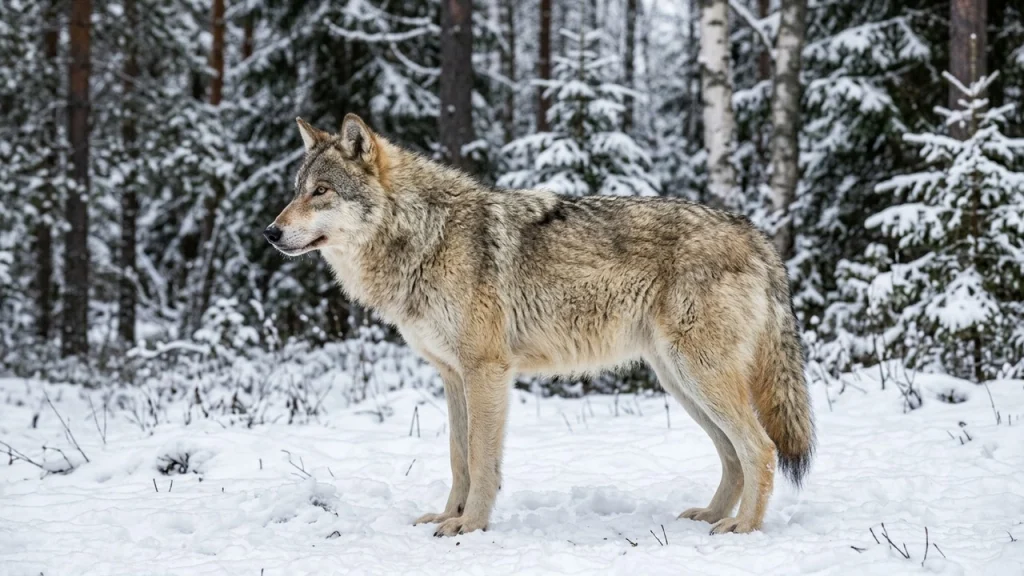
The Smithsonian’s National Zoo describes the wolf pack as essentially a family group made up of an adult pair, known as the dominant pair, along with their offspring. The dominant pair of a wolf pack sometimes mates for life.
Packs typically number five to eight wolves, though the zoo says packs as large as 36 have been reported. Animal Diversity Web puts a pack’s territory at 130 to 13,000 square kilometers and says it is defended against intruders.
Gray wolves hunt cooperatively in packs and can take down prey larger than they are, the zoo says, including caribou, moose, deer and bison. It also says wolves occasionally catch smaller animals, among them beaver, rabbit and fish, and sometimes eat berries.
Howls, speed and food
According to the U.S. National Park Service, wolves howl and whimper but rarely bark. The Smithsonian’s National Zoo says individual wolves have different howls that other wolves can hear from 6 to 7 miles (10 to 11 kilometers) away. The San Diego Zoo Wildlife Alliance says howls on the Arctic tundra can be heard from up to 10 miles away.
The San Diego Zoo Wildlife Alliance says wolves can spring as fast as 38 miles per hour (61 kilometers per hour) when hunting. Animal Diversity Web says wolves can cover up to 200 km in a day, at a usual pace of 8 km/hr.
The Smithsonian’s National Zoo puts a gray wolf’s daily food intake at around three to four pounds, while the San Diego Zoo Wildlife Alliance reports that wolves can ‘wolf down’ 20 pounds (9 kilograms) at one sitting. Feral domestic dogs will eat a variety of foods, among them animals and fruits, Animal Diversity Web says.
Sources
- Smithsonian’s National Zoo: Gray wolf
- Animal Diversity Web: Canis lupus (gray wolf) | INFORMATION
- U.S. National Park Service: Wolf Description and Biology – North Cascades National Park
- San Diego Zoo Wildlife Alliance: Wolf | San Diego Zoo Animals & Plants
- Cornell University: Study narrows origin of dogs | Cornell Chronicle
- Animal Diversity Web: Canis lupus familiaris (dog) | INFORMATION