
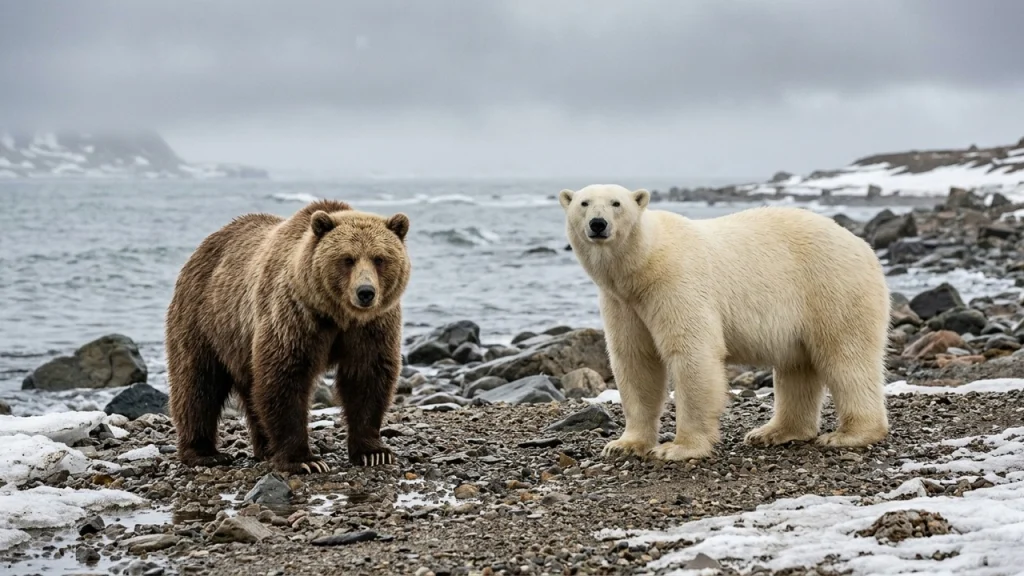
None of the zoo, park service or wildlife database sources behind this article records a contest between a grizzly and a polar bear or states which of the two is stronger. The U.S. National Park Service does say that, compared with brown bears, polar bears tend to be larger and have a more streamlined shape.
Animal Diversity Web calls brown bears extremely strong, and the San Diego Zoo Wildlife Alliance calls polar bears strong, ferocious, intelligent and patient hunters. Most descriptions of strength below name brown bears. The San Diego Zoo Wildlife Alliance says the brown bears of interior North America go by the name grizzly bear because their brown coats have white or tan tips.
How strength is described
Animal Diversity Web also says brown bears have good endurance and can drag a dead elk uphill, outswim an Olympian, outrun a horse and kill a cow with one blow.
The San Diego Zoo Wildlife Alliance says brown bears’ great front claws make every brown bear a powerful digger. The U.S. National Park Service describes the shoulder hump on a brown bear as a mass of muscle that helps them dig for roots, squirrels, etc. The San Diego Zoo Wildlife Alliance adds that brown bears have a large muscular hump on top of their shoulders, and that the grizzly’s is the most distinctive of all.
For polar bears, the San Diego Zoo Wildlife Alliance adds that they sit at the top of the food chain in the Arctic.
Size and weight
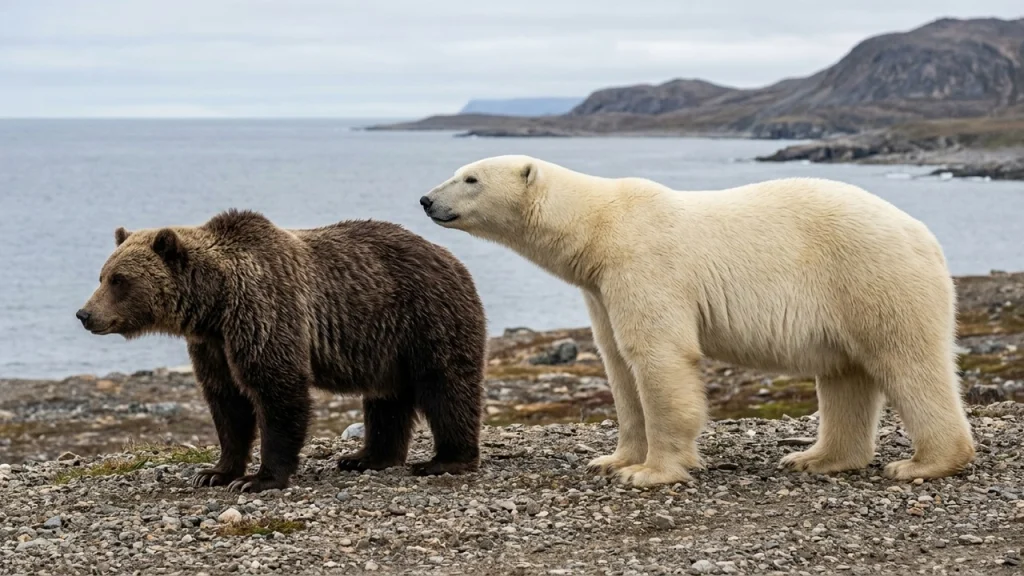
Animal Diversity Web says adult male polar bears weigh between 300 and 800 kg (660 to 1760 lbs) and can be as long as 2.5 m from nose tip to tail tip. Female polar bears weigh between 150 and 300 kg (330 to 660 lbs) and are 1.8 to 2 m long, it says.
For brown bears, the San Diego Zoo Wildlife Alliance lists females at 215 to 660 pounds (97 to 300 kilograms) and males at 330 to 1,500 pounds (150 to 680 kilograms). It gives a length of 1.8 to 3 meters (6 to 9.8 feet) and adds that males are larger than females.
The U.S. National Park Service’s brown bear FAQ for Katmai says most adult males typically weigh between 600 and 900 pounds (272 to 408 kg) in mid-summer. By October and November, it says, large adult males can weigh in at well over 1000 pounds (454 kg).
On the southern Alaska coast and on nearby islands, where Ursus arctos is largest, Animal Diversity Web says males average 389 kg and females 207 kg. Some males there have been weighed at up to 780 kg, it says. The same source says grizzly bears are 1 to 2.8 meters long from head to rump, with tails 65 to 210 mm long.
Body shape
Animal Diversity Web describes a polar bear’s body as large and stocky, similar to a brown bear’s except for the missing shoulder hump. The same source says a polar bear’s head is relatively smaller than those of other bears, and its neck is elongated.
Diet and hunting
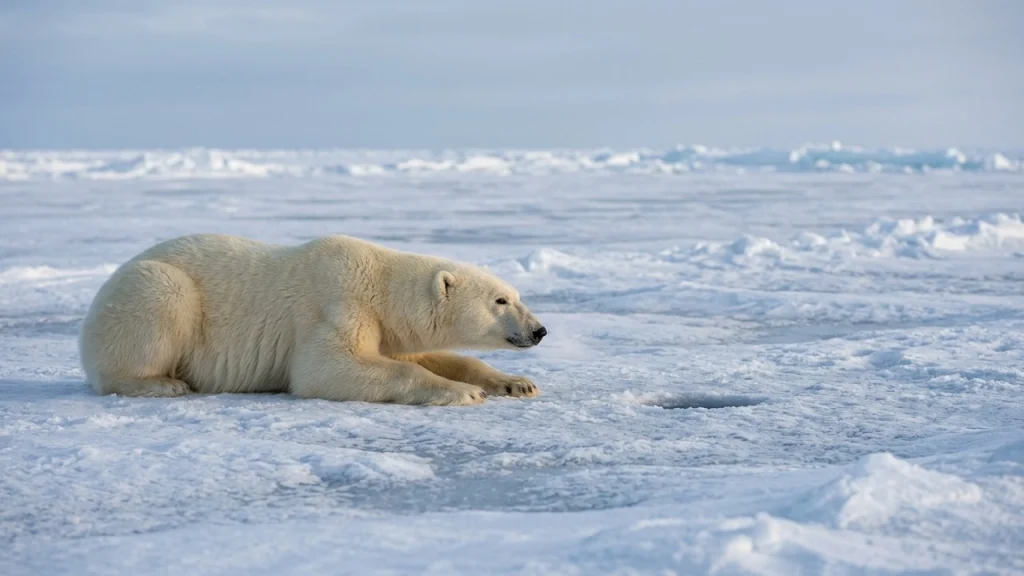
Polar bears are carnivores, Animal Diversity Web says, and their primary prey are ringed seals (Pusa hispida). Polar bears can stay motionless for hours over a seal’s breathing hole in the ice, waiting for a seal to pop up, the San Diego Zoo Wildlife Alliance says.
The San Diego Zoo Wildlife Alliance also says polar bears have no natural enemies. Animal Diversity Web calls them excellent swimmers, says they may range widely in search of food, and adds that documented sightings have reached as far south as Maine, in the United States. Brown bears, for their part, are omnivorous, eating almost anything nutritious, according to Animal Diversity Web.
Sources
- Animal Diversity Web: Ursus arctos (brown bear) | INFORMATION
- Animal Diversity Web: Ursus maritimus (polar bear) | INFORMATION
- San Diego Zoo Wildlife Alliance: Brown Bear | San Diego Zoo Animals & Plants
- San Diego Zoo Wildlife Alliance: Polar Bear | San Diego Zoo Animals & Plants
- U.S. National Park Service: Brown Bear Frequently Asked Questions
- U.S. National Park Service: Brown Bear – Kobuk Valley National Park