
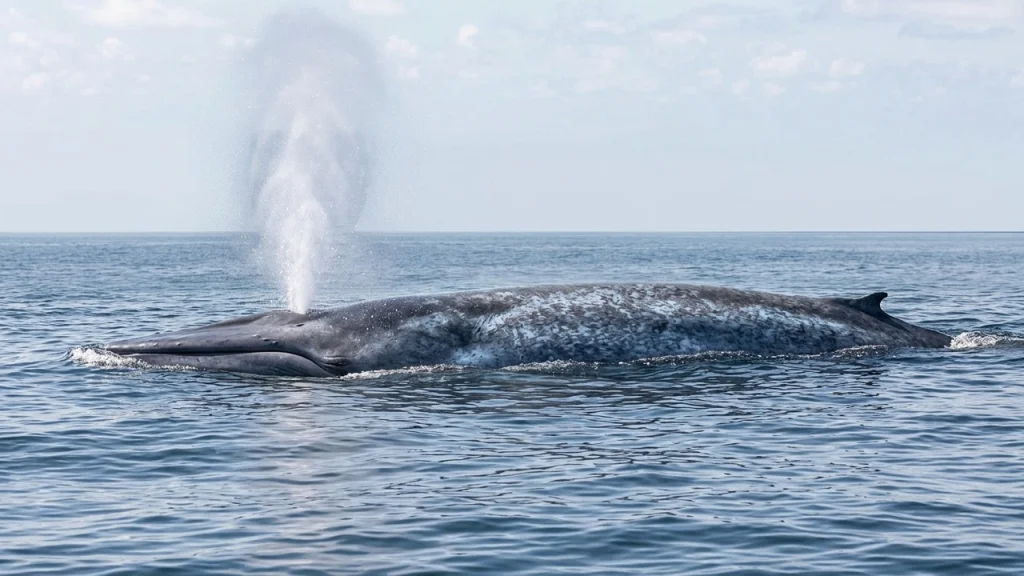
NOAA Fisheries says blue whales swim toward large schools of krill, mouths open, then close their mouths around the krill, inflating their throat pleats as they do. Their tongue pushes the trapped water out of the mouth, and their baleen plates keep the krill inside. A Biology Letters paper calls blue whales obligate lunge feeders: in a single, rapid gulp, they take in a large volume of water laden with prey.
NOAA Fisheries adds that krill is almost all blue whales eat. They strain huge amounts of ocean water through their baleen plates. The plates hang from the roof of the mouth and act like a sieve.
How the mouth opens wide and fills with water
NOAA Fisheries calls blue whales the largest of the rorquals, and the largest animals ever to live on the planet. A PLoS ONE paper on rorqual lunge feeding says large engulfment volumes are made possible by the mouth opening at wide gape angles, while the ventral pleats lining the buccal cavity wall unfold and stretch. The tongue plays a part too: the paper says a weakly-muscularized and highly elastic tongue inverts and distends, which also increases the volume of the cavity.
The paper says the full gape angle cycle during engulfment, from opening to closure, lasts several seconds. The widest the mandibles open is about 78 to 80°, a figure the paper gives for humpback, fin and blue whales together.
Baleen and throat grooves
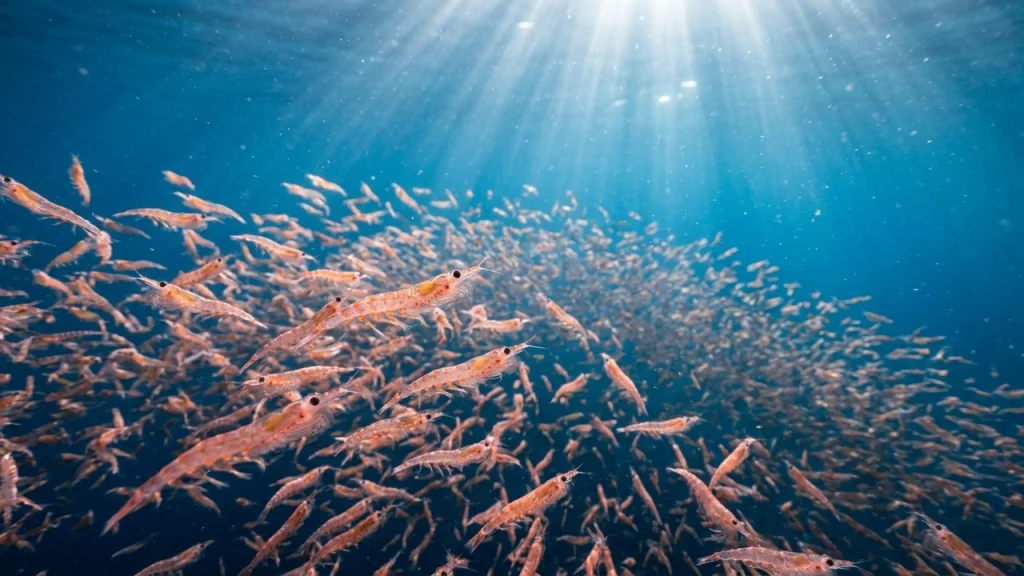
The San Diego Zoo Wildlife Alliance’s page on whales describes baleen as strands of tough, flexible keratin that hang from the top of a whale’s enormous mouth. Animal Diversity Web separately says blue whales have 50 to 90 throat grooves, running from the chin to just beyond the navel.
Rolling to line up with the krill
In a Biology Letters paper on blue whales, the analyses revealed 360° rolling lunge-feeding manoeuvres. The rolls reorient the body and put the lower jaws in position so a krill patch can be engulfed while the whale’s body is inverted.
The authors also recorded the rolling behaviours when whales were searching between lunges. They suggest this also lets the whale look over the prey field and maximize its foraging efficiency by surveying for the densest aggregations of prey.
Krill schools and daily intake
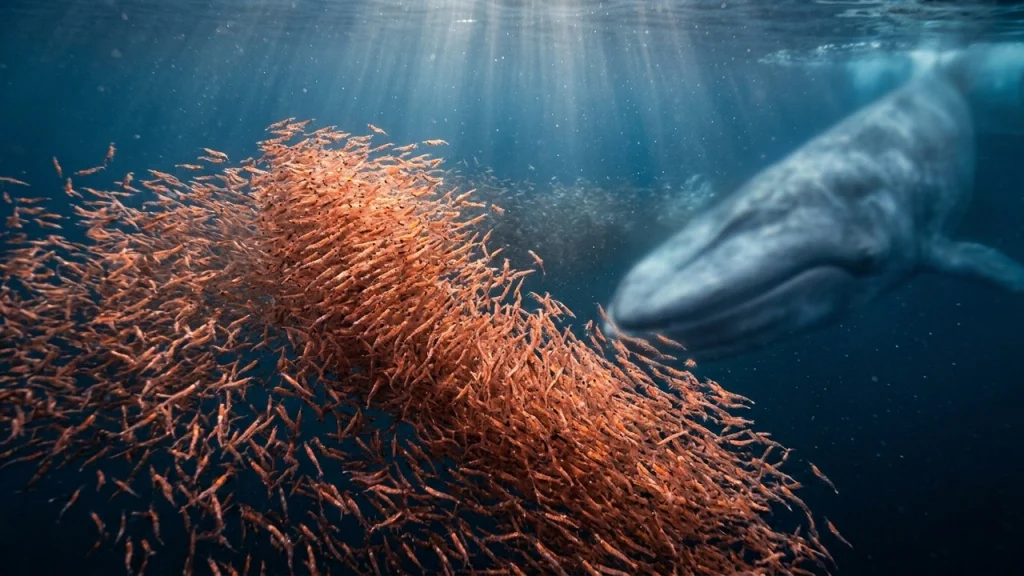
The same Biology Letters paper says the efficiency of lunge feeding depends strongly on how much prey is captured in each lunge, yet food resources tend to be patchy in both space and time. NOAA Fisheries says some of the largest of these whales may eat as much as 6 tons of krill in a day.
Sources
- NOAA Fisheries: Blue Whale | NOAA Fisheries
- Animal Diversity Web: Balaenoptera musculus (blue whale)
- San Diego Zoo Wildlife Alliance: Whale | San Diego Zoo Animals & Plants
- Biology Letters: Underwater acrobatics by the world’s largest predator: 360° rolling manoeuvres by lunge-feeding blue whales
- PLoS ONE: Metabolic Expenditures of Lunge Feeding Rorquals Across Scale: Implications for the Evolution of Filter Feeding and the Limits to Maximum Body Size
- Proceedings of the National Academy of Sciences: Extreme bradycardia and tachycardia in the world’s largest animal