
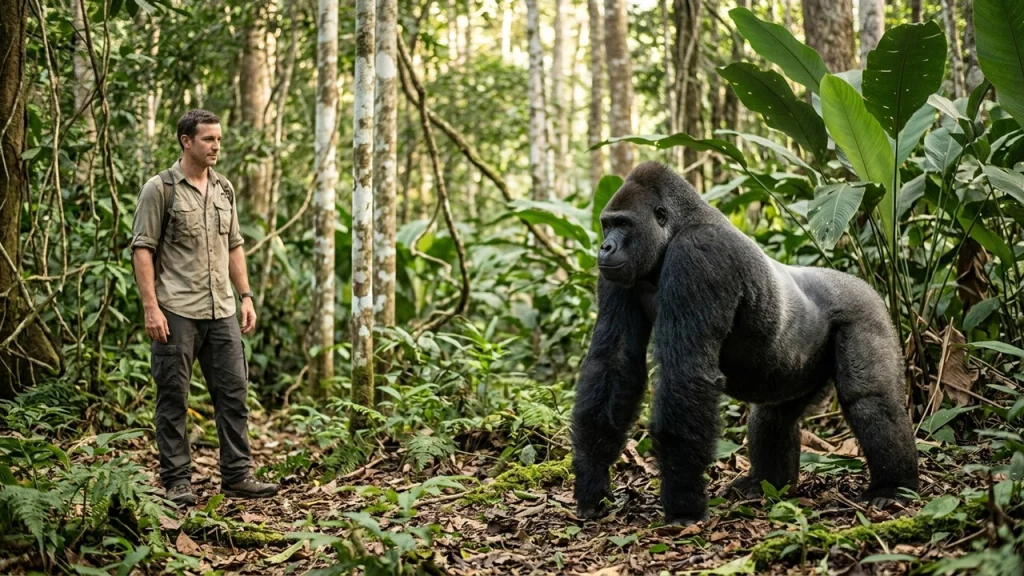
A male gorilla’s physical power is estimated at four to nine times that of a man, according to Dublin Zoo. According to the zoo, a silverback can hoist as much as 815 kilograms (1,800 pounds) in dead weight, whereas a well-trained person reaches an upper limit of 410 kilograms (900 pounds). This contrast represents a rough calculation, the zoo points out.
None of the zoo, wildlife agency or research sources behind this article records a fight between a gorilla and 100 men.
Gorilla arm span and knuckle-walking locomotion
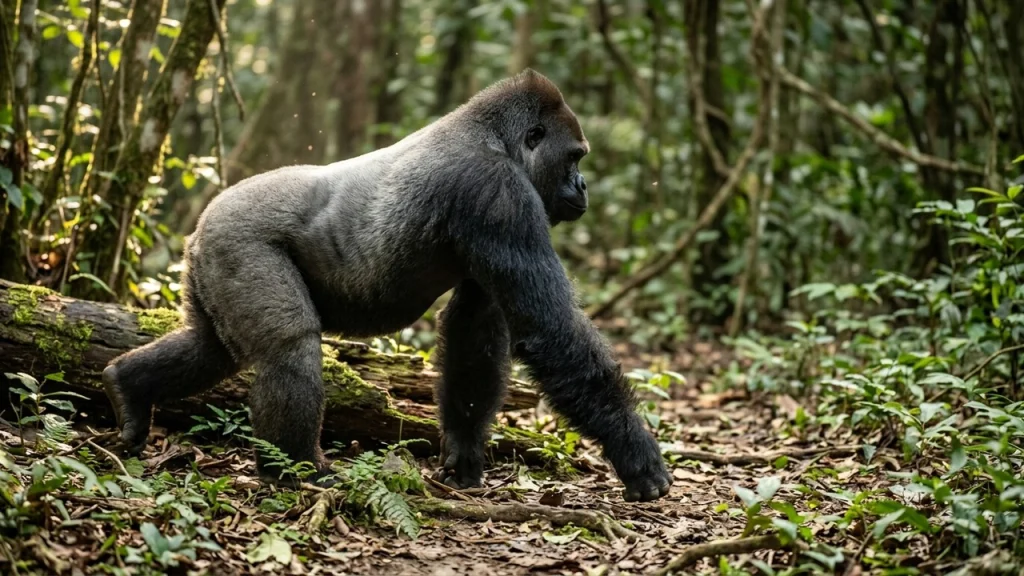
In adult male western lowland gorillas, fingertip-to-fingertip reach measures 8 feet (2.4 meters), according to Smithsonian’s National Zoo. Animal Diversity Web reports that a gorilla’s armspan is greater than its standing height. The national zoo also notes that gorillas have longer arms than legs. When walking on all fours, they knuckle-walk by placing their body weight across the third and fourth digits of each curled hand.
Body mass and physical features
Adult male western lowland gorillas stand up to 6 feet (1.8 meters) tall, according to Smithsonian’s National Zoo. The zoo records that these males average 300 pounds (136.1 kilograms) and can reach up to 500 pounds (226.8 kilograms). For male western gorillas, Animal Diversity Web reports an average weight of 180 kg in the wild, alongside captive individuals reaching up to 275 kg. Western gorillas also possess broad, strong teeth alongside large jaw muscles, according to the same database.
Troop defense and behavioral displays
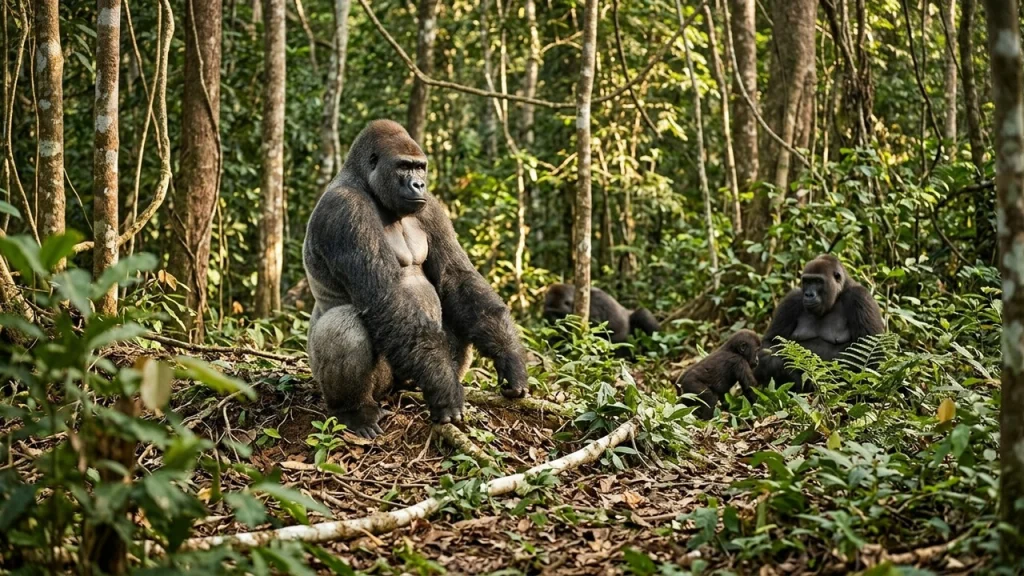
According to the San Diego Zoo Wildlife Alliance, a silverback oversees the protection and welfare of members in his troop. Gorillas also face no natural predators or enemies, the alliance notes. In general, Smithsonian’s National Zoo characterizes the western lowland gorilla as a quiet, peaceful and nonaggressive animal.
To scare away unwanted gorillas, the alliance reports that a silverback rushes forward, screams, exposes his teeth, and strikes his chest using cupped hands to produce loud sound. He may also snap off branches and wave them toward the intruder. Furthermore, records from the national zoo show that gorilla body language includes crouching low and approaching sideways when submissive, or standing upright, slapping the chest and advancing when aggressive.
Sources
- Smithsonian’s National Zoo: Western lowland gorilla | Smithsonian’s National Zoo and Conservation Biology Institute
- Animal Diversity Web: Gorilla gorilla (western gorilla) | INFORMATION | Animal Diversity Web
- San Diego Zoo Wildlife Alliance: Gorilla | San Diego Zoo Wildlife Alliance
- Dublin Zoo: Western lowland gorilla | Dublin Zoo
- Scientific Reports / PubMed Central: Gorilla knuckle-walking mechanics suggest independent evolution in African great apes (Scientific Reports)
- MDPI Life / PubMed Central: What Is a 2021 Reference Body? (Life)